During the moving process, there is likely to be a lot of paperwork for you to read, fill out, and sign.
Perhaps the most important document is the bill of lading.
The bill of lading serves as the contract between you and your mover and lays out all of the terms and conditions of the move.
Since most people have never even heard of a bill of lading until they move, let's take a closer look.
What is Bill of Lading?
The bill of lading is a legal document ensuring that a shipment of household goods will be picked up, transported, and received at the new home.
It is issued by the moving company to the customer and includes all the important details of the move.
For instance, if your goods are being transported by ship for an international move, the bill of lading will include the name, condition, and other information about the ship that will carry the load.
It will also contain the destination of the shipment and the initial cost of the transportation process.
The purpose of the bill of lading is to ensure that your goods are being carried legally and according to a binding contract.
Additionally, the bill of lading serves as the receipt proving that your shipment has been delivered to your home in good condition.
Did you know
The very first bill of lading appeared in Florence, Italy in 1526. Similar to how the bill of lading is used today, it was developed as a way of registering shipments for maritime trade.
Dissecting the Bill
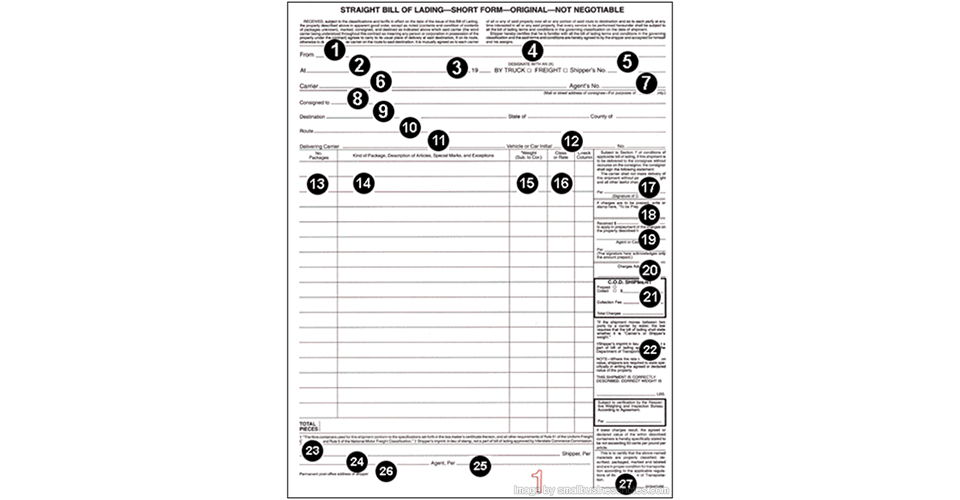
Below is a copy of a standard bill of lading.
To find out what each item means and how your mover will fill the form out, look up each number on the accompanying list.
- Name and address of shipper (the customer).
- City and state of the origin.
- Date goods will be picked up.
- Method of transportation.
- Unique shipment number.
- The Name of the carrier (the moving company).
- The agent's number, if applicable.
- Name of the person receiving the shipment.
- Address of the destination.
- The route the moving company will take (can also include specific docks and warehouses used along the way).
- Name of the company delivering the goods, if different from the one that picks up the goods.
- Identification number of the vehicle transporting the goods.
- The number of packages per item.
- A description of each item, noting the type of packaging and any special handling instructions.
- The total weight of each item.
- The class rate of each item according to Uniform Freight Classification or National Motor Freight Classification.
- Statementindicatingthe shipper is ultimately liable for freight charges, even when the shipment is sent on a collect basis to the consignee.
- Acknowledges whether the cost is prepaid or whether the carrier will collect payment upon delivery.
- Any amount of money received by the shipper in advance.
- Includes any advanced charges.
- This is where the total charges go.
- The declared value of the shipment.
- The company name of the shipper.
- The signature of the shipper's agent.
- The signature of the carrier's agent.
- The permanent address of the shipper, which can be the same as field.
- If shipping hazardous materials, a member of the Department of Transportation would have to sign here.
Tricky Terms and Fine Print on the Bill of Lading
During your move, you will likely come across the bill of lading.
This document serves as a contract between you and your moving company and lays out all the information regarding the move.
The bill of lading is full of legal jargon, which can make it difficult to understand.
That being said, here are explanations of some of the tricky terms and fine print you might encounter on your bill of lading.
- Shipper: While you might think the shipper is the company shipping the goods, the term actually refers to the customer sending out his or her shipment.
- Carrier: The moving company hired to transport the shipment is referred to as the carrier on the bill of lading.
- Delivering carrier: Should an additional carrier be used to handle the final leg of the delivery, that is where the delivering carrier term comes in.
If the same carrier handles the entire move, you won't have to worry about this term.
- Consignor and consignee: The consignor is the person who sends the shipment from the origin on behalf of the customer.
The consignee is the person who receives the shipment at the destination.
The consignor and consignee can be the same person.
- Shipment declared value: The shipment declared value is the value of your shipment, as determined by its weight.
- Without recourse: This term means that, under special circumstances, the customer can be freed from the liability of paying the carrier charges.
- Freight: This term simply refers to the type of vehicle used to transport your shipment, whether it's carried by a truck, train, or ship.
- Class or rate: The class or rate of the individual items in your shipment is determined according to the National Motor Freight Classification system.
This is a method for determining the transportability of a particular item based on its density, ability to be stowed, handling, and liability.
- Tariff: The tariff is a table comprised of such details as the moving company's rates, classifications, and rules.
It is designed to ensure your move is safe and regulated.
Now that you know what these tricky terms mean, you'll (hopefully) have an easier time understanding your bill of lading.
If you still have trouble with any of the terms or fine print on the bill, you can always ask your movers to explain them to you.
Conclusion
A bill of lading can be referred to as one of the most crucial documents you will be required to sign during your moving process, as it acts as your contract and receipt.
Your bill of lading will contain details of important aspects of your move that include your pick-up and delivery dates, charges, valuation, and what you and the moving company will be expected to do.
Before you sign your bill of lading, ensure that you read through it thoroughly so that you can be safe from any unexpected issues that might arise.
Want a safer and smoother move?
Find and compare reputable moving companies on movers.com!