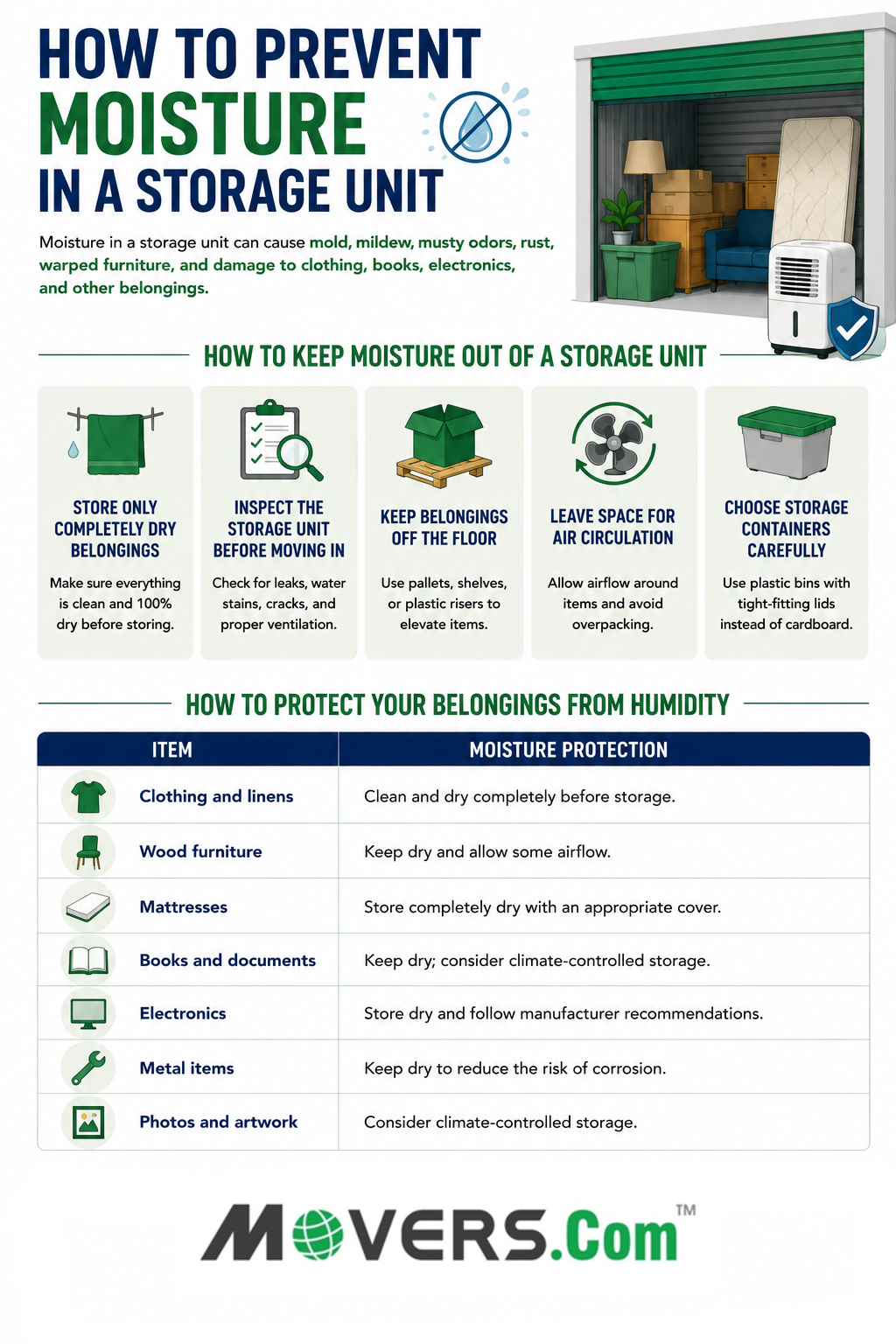
Moisture in a storage unit can cause mold, mildew, musty odors, rust, warped furniture, and damage to clothing, books, electronics, and other belongings.
To reduce the risk, store only completely dry belongings, inspect the unit for leaks, keep items off potentially damp floors, allow some airflow, and monitor humidity when practical. For moisture-sensitive belongings or long-term storage in a humid climate, consider a climate-controlled unit.
What Causes Moisture in a Storage Unit?
Moisture can enter or develop inside a storage unit because of:
- Humid outdoor air.
- Condensation.
- Roof, wall, or plumbing leaks.
- Water entering around doors or other openings.
- Damp belongings placed into storage.
- Poor air circulation.
Because mold requires moisture to grow, controlling humidity and addressing water intrusion are important parts of preventing mold and mildew.
What Humidity Level Helps Prevent Mold in Storage?
For moisture-sensitive belongings, aim for 30–50% relative humidity when possible.
The Environmental Protection Agency (EPA) recommends keeping indoor relative humidity below 60%, ideally between 30% and 50%. The Centers for Disease Control and Prevention (CDC) recommends keeping indoor humidity no higher than 50% throughout the day.
A small digital hygrometer can help you monitor humidity inside the unit. If readings remain consistently high, moisture absorbers alone may not provide enough protection.
Keep in mind that these humidity recommendations apply to indoor environments generally and aren't a specific standard that every self-storage facility is required to maintain.
How to Keep Moisture Out of a Storage Unit
Preventing moisture problems starts before you place your belongings in storage.
1. Store Only Completely Dry Belongings
Never put damp clothing, rugs, furniture, boxes, or other belongings into storage.
If you've cleaned upholstered furniture, rugs, appliances, or other items, allow them to dry completely before storing them.
If belongings become wet, dry them as quickly as possible. EPA guidance recommends drying wet materials within approximately 24–48 hours when possible to help prevent mold growth.
2. Inspect the Storage Unit Before Moving In
Check the unit for signs of moisture or water intrusion before bringing in your belongings.
Look for:
- Water stains.
- Damp walls or flooring.
- Visible mold.
- Musty odors.
- Signs of roof or wall leaks.
- Gaps around doors.
- Standing water nearby.
If you notice persistent dampness or signs of water intrusion, ask the storage facility to address the problem or request another unit.
3. Keep Belongings Off the Floor
Where permitted, use shelving, pallets, or another appropriate raised storage system to keep boxes and belongings off the floor.
This can provide additional protection from minor water intrusion or damp surfaces and can make moisture problems easier to spot.
Avoid placing cardboard boxes directly on flooring that is damp or shows signs of previous water damage.
4. Leave Space for Air Circulation
Avoid packing every box and piece of furniture tightly against the walls.
Leave some space around stored belongings where practical to improve airflow and make it easier to check for condensation, leaks, or mold.
Maintain enough access to periodically inspect belongings stored toward the back of the unit.
5. Choose Storage Containers Carefully
Plastic totes can protect many belongings from dust and incidental moisture, but never seal damp items inside an airtight container.
Cardboard can absorb moisture, so keep boxes away from damp surfaces and inspect them periodically during long-term storage.
For clothing, mattresses, upholstered furniture, and other materials that may need airflow, use an appropriate storage method for the specific item rather than automatically wrapping everything tightly in plastic.
Do Moisture Absorbers Work in Storage Units?
Yes. Moisture absorbers can help manage limited excess humidity, but they aren't a substitute for repairing leaks or addressing persistent condensation or severe humidity.
Common options include:
- Calcium chloride moisture absorbers.
- Silica gel or other desiccants.
- Rechargeable desiccant products.
Follow the manufacturer's instructions for placement, capacity, replacement, and safe handling. Check absorbers periodically because some products collect liquid and must be emptied or replaced.
For persistent high humidity throughout an entire storage unit, small moisture absorbers may not provide enough moisture control.
What Is the Best Moisture Absorber for a Storage Unit?
There isn't one option that's best for every storage unit. The appropriate moisture absorber depends on the size of the space, humidity level, storage duration, and what you're protecting.
| Option |
Best Used For |
Important Limitation |
| Calcium chloride absorber |
Small enclosed spaces with excess humidity |
Collects liquid and requires monitoring |
| Silica gel |
Boxes and smaller enclosed spaces |
Limited capacity for an entire storage unit |
| Rechargeable desiccant |
Containers and small spaces |
Must be periodically recharged |
Don't assume that adding more moisture absorbers will solve a significant moisture problem. If the unit has leaks, persistent condensation, or consistently high humidity, address the underlying cause or consider a different storage environment.
Should You Use Climate-Controlled Storage?
Climate-controlled storage may be worth considering for belongings that can be damaged by prolonged exposure to high humidity or temperature fluctuations.
It can be especially useful for:
- Wood furniture.
- Electronics.
- Books and important documents.
- Artwork and photographs.
- Musical instruments.
- Sensitive fabrics and clothing.
Climate control doesn't eliminate the need to store belongings properly. Items should still be clean and completely dry before going into storage.
Also, ask the facility what "climate-controlled" actually includes. Temperature and humidity conditions can vary between facilities, so find out what conditions are maintained before storing valuable or moisture-sensitive belongings.
How to Protect Your Belongings From Humidity
Different belongings may require different moisture precautions.
| Item |
Moisture Protection |
| Clothing and linens |
Clean and dry completely before storage |
| Wood furniture |
Keep dry and allow some airflow |
| Mattresses |
Store completely dry with an appropriate cover |
| Books and documents |
Keep dry; consider climate-controlled storage |
| Electronics |
Store dry and follow manufacturer recommendations |
| Metal items |
Keep dry to reduce the risk of corrosion |
| Photos and artwork |
Consider climate-controlled storage |
Don't tightly wrap damp belongings in plastic. Plastic can trap existing moisture rather than solve the problem.
For valuable or delicate belongings, check the manufacturer's storage recommendations when available.
How Often Should You Check Your Storage Unit?
Check your storage unit periodically, particularly during humid seasons, after severe weather, or when storing belongings long-term.
Look for:
- Musty odors.
- Condensation.
- Water stains or leaks.
- Damp boxes or belongings.
- Visible mold or mildew.
- Rust or corrosion.
- Consistently high hygrometer readings.
- Moisture absorbers that need replacement or emptying.
If you find water intrusion, notify the storage facility promptly and document the condition of the unit and affected belongings.
What Should You Do if You Find Mold in a Storage Unit?
If you discover mold, first identify and address the moisture source. Document the affected area and notify the storage facility if a leak or other building problem appears responsible.
EPA guidance indicates that mold covering less than about 10 square feet can generally be handled using its guidance for smaller mold problems. Larger areas, significant water damage, sewage-related water, or situations involving HVAC contamination may require additional precautions or professional assistance.
Heavily mold-damaged porous belongings can be difficult to clean completely and may need to be discarded.
Avoid simply cleaning visible mold while ignoring the source of moisture. If the moisture problem continues, mold can return.
Bottom Line
The best way to prevent mold and mildew in a storage unit is to control moisture before it becomes a problem.
Store only completely dry belongings, inspect the unit for leaks, keep items off potentially damp floors, allow airflow, and monitor humidity when practical. Moisture absorbers can help with limited excess humidity but won't solve leaks or persistent condensation.
For valuable or humidity-sensitive belongings, consider climate-controlled storage and ask the facility what conditions it actually maintains.
Editor's Note
Our comparison reviewed by our Moving Industry Analyst team is based on publicly available pricing, customer reviews, and regular moving scenarios.
Storage conditions vary by facility, unit type, location, and climate. Before renting a unit, inspect it for signs of previous water intrusion and ask about climate-control features, access policies, and any restrictions on moisture-control equipment.
For mold and moisture guidance, consult current recommendations from the Environmental Protection Agency (EPA) and Centers for Disease Control and Prevention (CDC).
Get expert moving tips and compare movers for free at Movers.com.
You can get free moving quotes from licensed and insured movers, compare moving companies near you, and plan your move with confidence using our step-by-step moving guides and checklists.
Whether you're planning a local move, a long-distance relocation, or need help with packing and loading, Movers.com connects you with trusted moving professionals and practical tools to make moving easier and more affordable.
Questions? Talk to our moving specialists.