Relocating to a new state can be very overwhelming and tedious, especially if not done right.
Whether you are a recent graduate, a working professional or moving with family, you want things to go as smooth as possible.
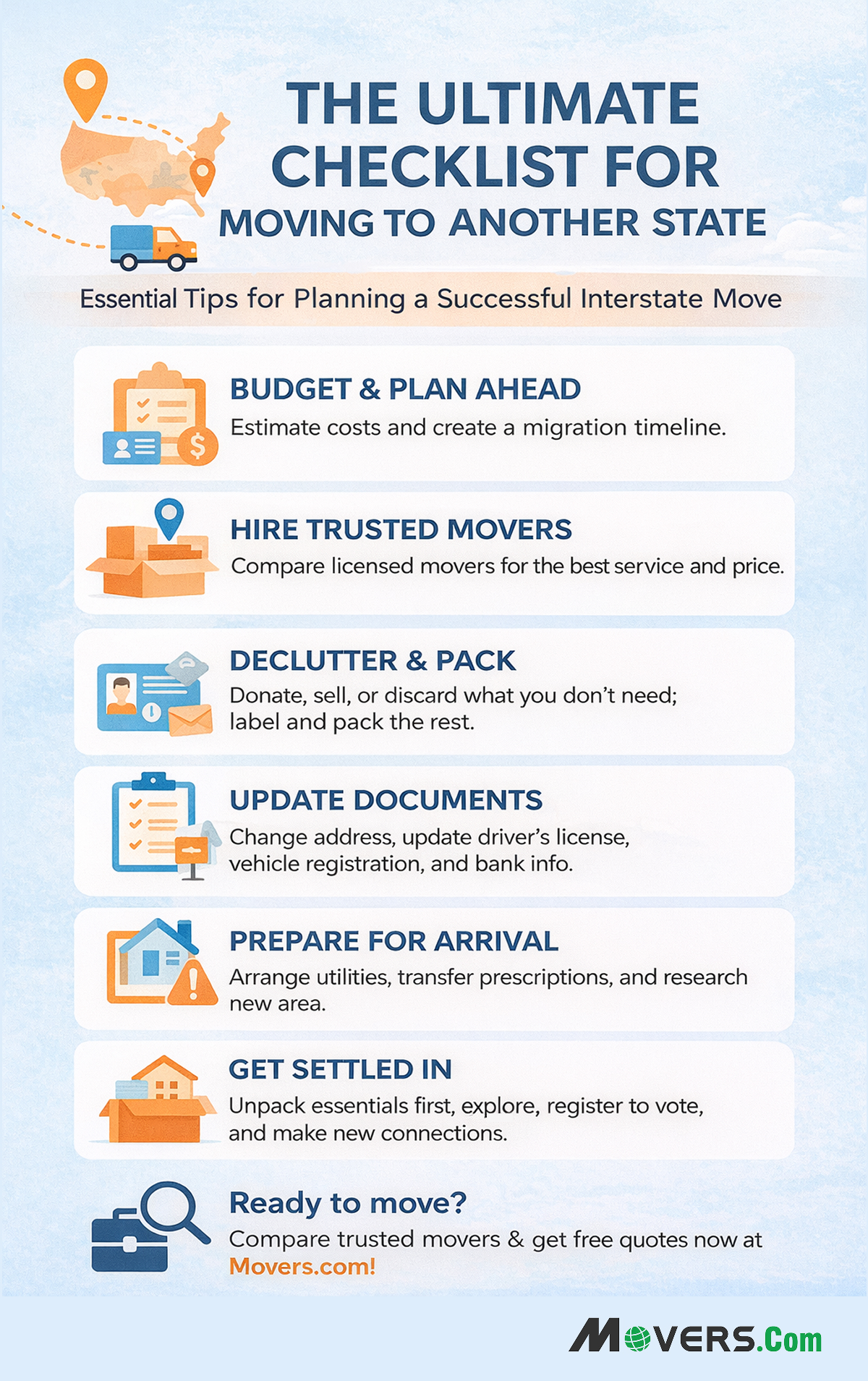
We put together the ultimate checklist to assist you on moving to another state.
These tips will help you be efficient and well prepared in the moving process.
Eight Weeks Before the Move
Find moving companies who perform interstate moves
If you plan on moving a lot of your belongings with you, finding a good moving company should be at the top of your list.
Shipping your belongings out early, so they arrive to your destination on time, will make your move a lot less stressful.
There are many moving companies across the country that offer different services to meet your needs.
Moving companies will know the intricacies of an interstate move, such as the weight regulations of highways and federal regulations of moving from one state to another.
Get quotes from at least three companies, so you can compare prices and quality of service before choosing who to hire.
Create a realistic moving budget plan and stick to it
Creating a budget for yourself will take away from spending money on unnecessary expenses.
Moving is not cheap, and the price will increase with the distance traveled.
It's best to know how much you can spend on the move and plan accordingly.
Putting 10 percent of the final total aside will help cover any surprises or hidden fees.
Create a moving budget spreadsheet to conveniently share your budget.
Spreadsheets are the easiest way to stay organized.
Research new schools and notify the current school
If you're moving with children, search for the best school district for your family.
There are several websites that rate the effectiveness of the school's education based on standardized tests as well as percentage of students who attend college.
Don't forget to check the websites that allow students and parents to rate the culture of the district - just because a school looks good on paper doesn't mean it'll be a good fit.
Once you decide on a location, notify the current school to obtain copies of educational records.
The current school will contact the new one for enrollment protocol and record-transfer procedures.
Lay out a plan of action for packing and collecting documents
- Clean up your old place and get rid of things you won't need at your new place
- Purge unwanted clothing and items through a garage sale or donations
- Make an inventory of everything you own for insurance purposes
- Start packing up things you don't plan to use, such as out of season clothing and photos
- Collect official records from doctors and other healthcare providers
Four Weeks Before the Move
Change your mailing address before you move
You'll want to change your address with the USPS before you leave, so your financial records and important documents aren't being delivered to your old address.
- Immediately start forwarding your mail if no one is at your new address
- You can rent a PO Box in your new location
- Regular mail forwarding costs $1, and premium costs $20 per month
Secure your living arrangement
You should never move without having a home to go to first.
If you can't visit the state to secure your living arrangements, do so online and over the phone.
It's very important you thoroughly research the cost of living, the safety and culture of the neighborhood as well as realistic, photos of the area.
Renting for a short time works the best in these situations.
You don't want commit to long-term contract living in a place that you may not like over time.
Your landlord should send you a lease to sign 4 to 5 weeks before your move-in day.
Contact utility companies about transfer of service
Contact your service providers early, and let them know you want to transfer your utilities to a new address.
Schedule a date, preferably the day after you move in, for installation or activation.
Having internet, cable and a security system will greatly help you ease into your new environment.
Two Weeks Before the Move
Confirm all moving services that you will be using
Call up the moving company representative or rental truck company to confirm reservation details, like a pick-up time.
If you are shipping your car, prepare it for transport.
Finish packing the essentials
With the high costs of moving, it's best to save money by packing items you know are essential to you.
You should have already started packing, but now is time to finish.
When packing, remember to:
- Label boxes by room instead of listing what is inside
- Create a photographic inventory
- Measure your larger items
- Not pack important documents and identification cards moved in
Get ready for moving day
You will need cash and essentials for moving day.
You will need cash to tip your moving crew and to pay for any food you order.
When you move everything into your new house, you might need a little time to unwind before you start unpacking.
Therefore, having 24 hours’ worth of essential items in an overnight bag is beneficial.
After You’ve Moved In
Check that all of your belongings arrived safely
Go through the inventory you created and check for lost or damaged items.
The movers will have their own sheet, called the bill of lading, which lists everything they loaded onto the truck and the condition it was originally in.
If everything showed up safely, sign the inventory sheet and ask for a copy for your own records.
A moving company representative should sign off on the document as well.
If the company leaves before you notice damage, take pictures for evidence and file a claim.
Establish residency for legal reasons
Once you've moved in, you'll need to establish legal domicile for tax and voting purposes.
Every state has different specifications and requirements for residency, but most need you to live in the state for at least 6 months.
Other things you'll be expected to have to establish residency:
- A real street address, not just a PO Box
- Relinquished residency in previous state
- Bank account in new state
- Important documents transferred to new address
- Local business or social relations
Update your driver's license and vehicle registration
We all know how much of a hassle the Motor Vehicle Agency can be.
To avoid long lines after work or on Saturday mornings, schedule a time on or around your move date when you have off from work during the week.
Bring the necessary documents to apply for a new state driver's license, such as your current license, proof of residency and social security card.
Certain states have different requirements for obtaining a new license after moving, so check local DMV's website for more information.
In addition to transferring your license, you must also update your vehicle's title, registration and license plates.
Once transferring the appropriate documents for your vehicle, you must also have it inspected in your new state.
Finally, check that your auto insurance is registered in your new state.
Conclusion
Moving and relocation are huge transitions, but with the aid of a well-organized timeline, you can make this task much more manageable.
Planning in advance is the key to ensuring that you do not get left with any costly last-minute troubles.
When you’re ready for your interstate relocation, turn to movers.com for assistance at every turn.
Compare reputable interstate moving companies, plan with certainty, and receive free estimates for your relocation that take your destination goals into consideration.
Compare Interstate Movers - Get Free Moving Estimates at movers.com.