This guide explains the most common reasons people move, the benefits of relocating, signs it may be time to move, and situations where waiting may be the better choice.
| Reason |
Common Situation |
| New job or career |
Better employment opportunities |
| More space |
Growing family |
| Smaller home |
Empty nesters or retirees |
| Lower housing costs |
Reduce monthly expenses |
| Better schools |
Families with children |
| Retirement |
Lifestyle changes |
| Closer to family |
Family support |
| Better neighborhood |
Safety and amenities |
| Shorter commute |
Better work-life balance |
| Climate or lifestyle |
Personal preference |
| Health or accessibility |
Changing mobility needs |
| Fresh start |
Major life changes |
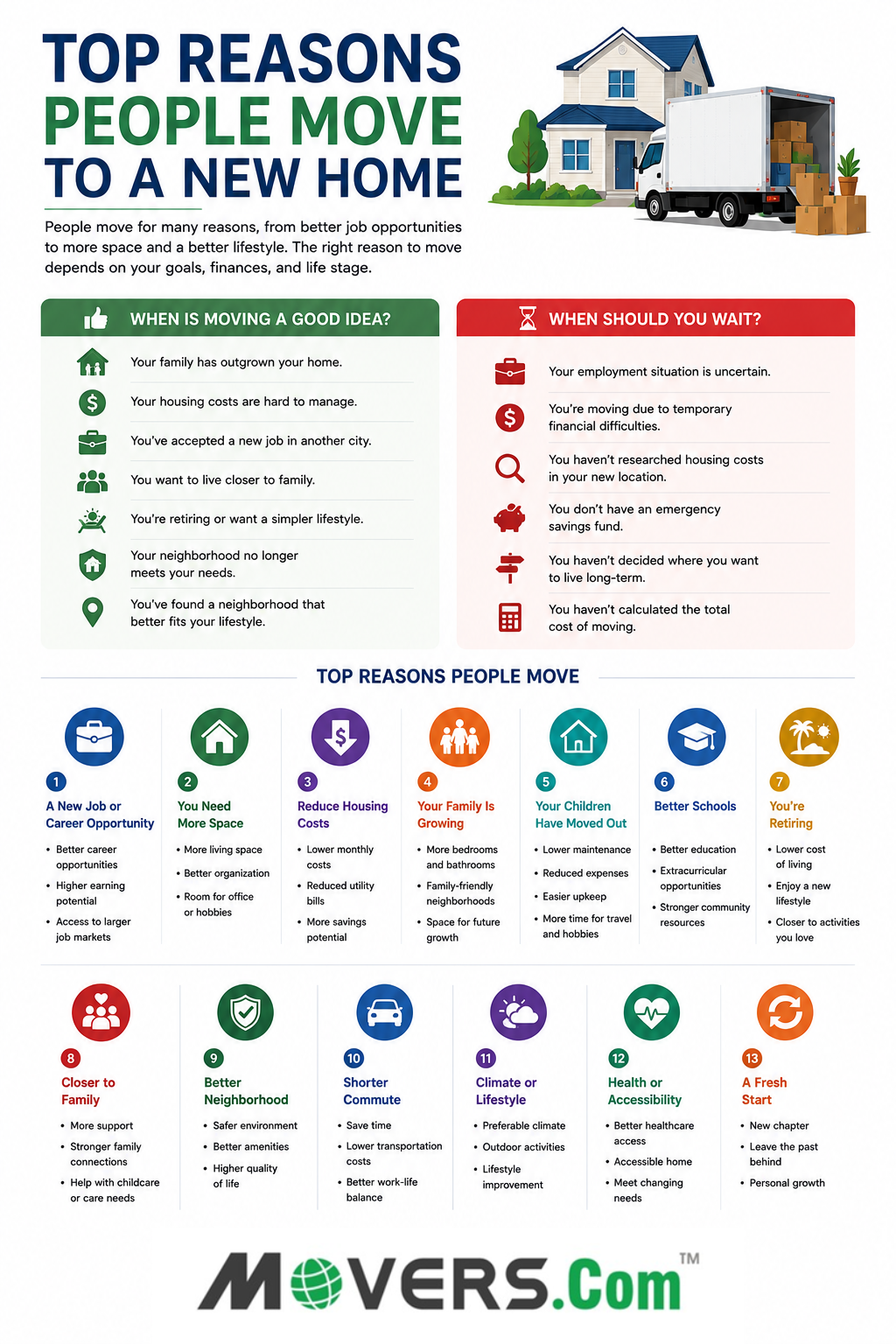
When Is Moving a Good Idea?
The best time to move is when the benefits of relocating outweigh the financial costs and lifestyle adjustments. If your current home no longer fits your situation, relocating may provide better opportunities and long-term savings.
You may benefit from moving if:
- Your family has outgrown your home.
- Your housing costs have become difficult to manage.
- You've accepted a new job in another city.
- You want to live closer to family.
- You're retiring or looking for a simpler lifestyle.
- Your current neighborhood no longer meets your needs.
- You've found a neighborhood that better fits your lifestyle.
When Should You Wait Before Moving?
While moving can be a positive change, it's not always the right decision. Rushing into a move without careful planning can lead to unnecessary expenses and added stress.
You may want to delay moving if:
- Your employment situation is uncertain.
- You're moving because of temporary financial difficulties.
- You haven't researched housing costs in your new location.
- You don't have an emergency savings fund.
- You haven't decided where you want to live long-term.
- You haven't calculated the total cost of moving.
Taking time to evaluate your options can help you avoid costly mistakes.
1. A New Job or Career Opportunity
One of the most common reasons people move is to accept a new job or advance their careers. Relocating may provide better salaries, improved benefits, or opportunities that aren't available in your current area.
Before moving for work, compare your expected income with the cost of living in the new location. Also consider state income taxes, commuting costs, and housing availability before accepting a relocation offer. A higher salary doesn't always translate into greater purchasing power if housing, transportation, and everyday expenses are significantly higher.
Benefits
- Better career opportunities
- Higher earning potential
- Professional growth
- Access to larger job markets
2. You Need More Space
A growing family often means it's time for a larger home. Additional bedrooms, storage space, and outdoor areas can make daily life more comfortable and accommodate changing family needs.
Many homeowners also move because they now work remotely and need a dedicated home office.
Benefits
- More living space
- Better organization
- Additional storage
- Room for a home office or hobbies
3. You Want to Reduce Housing Costs
Moving to a more affordable home or city can help lower your monthly expenses and improve your financial stability. Downsizing or relocating to an area with lower housing prices may reduce mortgage payments, rent, property taxes, utilities, and maintenance costs.
Lower housing expenses can also free up money for savings, travel, retirement, or other financial goals.
Benefits
- Lower monthly housing costs
- Reduced utility bills
- Increased savings potential
- Better financial flexibility
4. Your Family Is Growing
Life changes such as marriage, having children, or caring for aging parents often create the need for more space and a home that's better suited to your family's future.
Many families also prioritize neighborhoods with parks, healthcare facilities, and highly rated schools.
Benefits
- More bedrooms and bathrooms
- Family-friendly neighborhoods
- Better access to schools and parks
- Space for future growth
5. Your Children Have Moved Out
After children leave home, many homeowners discover they no longer need a large house. Downsizing can reduce maintenance responsibilities, lower monthly expenses, and simplify everyday living.
A smaller home or apartment may also provide greater flexibility for travel and retirement.
Benefits
- Lower maintenance
- Reduced housing costs
- Easier upkeep
- More time for travel and hobbies
6. Better Schools
Families often relocate to give their children access to stronger school districts, extracurricular activities, and educational opportunities.
School attendance zones can change over time, so always verify the assigned school before buying or renting a home.
When researching a new area, consider school ratings, graduation rates, transportation options, and nearby community resources rather than relying on school reputation alone.
Benefits
- Better educational opportunities
- Access to extracurricular programs
- Stronger community resources
- Improved long-term opportunities for children
7. You're Retiring
Retirement is a common reason to move, especially for homeowners looking to reduce living expenses, simplify home maintenance, or enjoy a different lifestyle. Many retirees relocate to smaller homes, warmer climates, or communities that offer convenient access to healthcare, recreation, and everyday amenities.
Before relocating, compare housing costs, healthcare availability, taxes, and proximity to family members.
Benefits
- Lower housing and maintenance costs
- Easier home upkeep
- Access to retirement-friendly communities
- Lifestyle and climate preferences
8. You Want to Live Closer to Family
Many people move to be closer to parents, children, grandchildren, or other relatives. Living nearby can make it easier to provide support, spend time together, and reduce travel expenses for regular visits.
Moving closer to family may also provide practical help with childcare, caregiving, or emergencies.
Benefits
- Stronger family connections
- Easier caregiving and childcare
- Reduced travel time
- More opportunities to spend time together
9. You're Looking for a Better Neighborhood
Your neighborhood can have a significant impact on your daily life. People often move to areas that offer better safety, improved amenities, lower crime rates, or a stronger sense of community.
When comparing neighborhoods, consider factors such as:
- Safety
- Walkability
- Parks and recreation
- Schools
- Healthcare
- Shopping and restaurants
- Public transportation
- Community activities
Benefits
- Improved quality of life
- Better amenities
- Greater sense of community
- Increased property value potential
10. You Want a Shorter Commute
Long commutes can increase transportation costs, reduce personal time, and contribute to stress. Moving closer to work may improve your work-life balance while lowering fuel, parking, and commuting expenses.
If you work remotely only part of the week, consider whether relocating still makes financial sense before making a decision.
Benefits
- More personal time
- Lower transportation costs
- Reduced commuting stress
- Better work-life balance
11. You Want a Different Climate or Lifestyle
Sometimes people simply want a change of scenery. Whether it's moving to a warmer climate, living closer to the beach, mountains, or countryside, relocating can support a lifestyle that's better aligned with your interests and long-term goals.
Lifestyle changes may also include moving to a more walkable community, a quieter neighborhood, or a city with more entertainment and cultural opportunities.
Benefits
- Better climate
- Improved lifestyle
- Access to outdoor activities
- New personal experiences
Before relocating, research seasonal weather patterns, natural disaster risks, homeowners insurance costs, and utility expenses to make sure the area fits your long-term needs.
12. You're Ready for a Fresh Start
Major life events such as marriage, divorce, graduation, retirement, or other personal changes often inspire people to begin a new chapter in a different location.
A move can provide a fresh environment, but lasting improvements usually depend on the decisions and habits you build after relocating.
Before making a major move, make sure your decision is based on practical considerations as well as personal goals.
Benefits
- New opportunities
- Personal growth
- New social connections
- A fresh perspective
Benefits of Moving to a New Place
Moving isn't just about changing your address. It can improve many aspects of your life when the decision is carefully planned.
Some of the most common benefits include:
- Better employment opportunities
- Lower housing or living costs
- More suitable living space
- Improved schools and community services
- Shorter commute
- Closer proximity to family
- Access to new recreational activities
- Better work-life balance
- Greater access to amenities and services
- Opportunity to simplify your lifestyle
The benefits you'll experience depend on your reasons for moving and the location you choose.
Move or Stay?
| If... |
Consider... |
| You need more space |
Moving |
| Your home still meets your needs |
Staying |
| Housing costs are too high |
Downsizing or relocating |
| You like your location |
Renovating |
| Your commute is too long |
Relocating closer to work |
| You're unsure |
Compare the costs of moving versus staying |
Signs It May Be Time to Move
Not sure whether it's time to relocate? These signs may indicate your current home no longer meets your needs.
You may be ready to move if:
- Your home feels too small or too large.
- Your current home no longer supports your future plans.
- Housing costs have become difficult to manage.
- Your commute has become too long.
- You need better schools or healthcare access.
- Major life changes have altered your housing needs.
- You're spending more time maintaining your home than enjoying it.
- You've accepted a new job in another city or state.
Evaluating both your current needs and future plans can help you decide whether moving is the right choice.
Bottom Line
People move for many different reasons, from career opportunities and growing families to retirement and lifestyle changes. While every situation is unique, the best reason to move is one that supports your long-term financial, personal, and family goals.
Before deciding to relocate, compare housing costs, moving expenses, neighborhood amenities, commuting costs, and long-term living expenses to determine whether moving is the right financial and lifestyle decision
Editor's Note
This guide was reviewed by the Movers.com Moving Industry Analyst team using publicly available housing resources, relocation trends, demographic data, and common residential moving scenarios.
Every move is unique, and the reasons for relocating vary based on personal circumstances, financial goals, career opportunities, and family needs. This guide is intended to help you evaluate common reasons people move so you can make an informed decision that's right for your situation.
Get expert moving tips and compare movers for free at Movers.com.
You can compare licensed and insured movers, request free moving quotes, and plan your move with confidence using our step-by-step moving guides, checklists, and practical relocation resources.
Whether you're moving across town or across the country, Movers.com connects you with trusted moving professionals and helpful tools to make your move easier and more affordable.
Questions? Talk to our moving specialists.