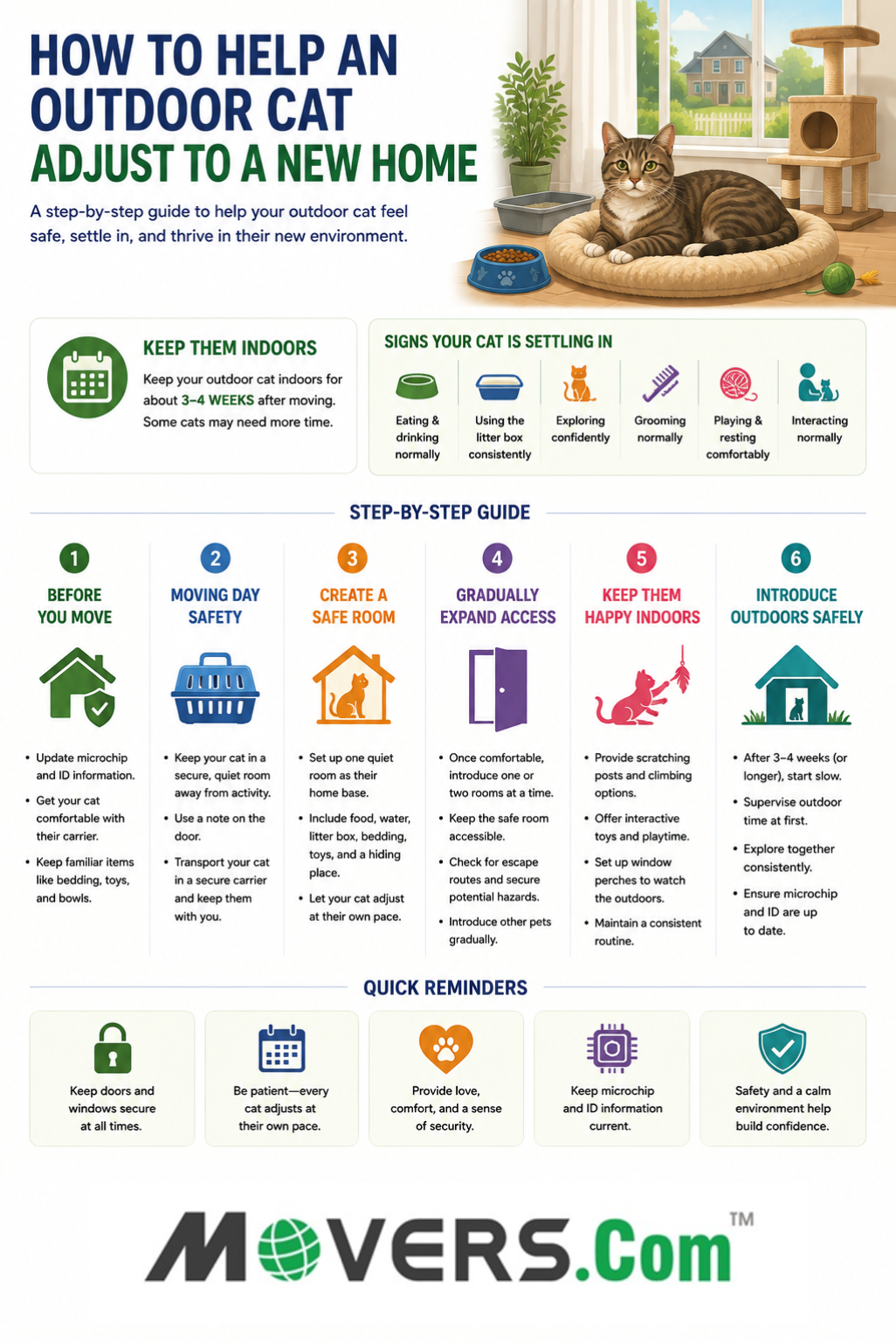
When moving an outdoor cat to a new home, it's generally a good idea to keep your cat indoors for about three to four weeks before allowing outdoor access. Some cats may need longer depending on their temperament, previous outdoor habits, and how quickly they adjust.
This adjustment period gives your cat time to become familiar with the new home and recognize it as a safe place before exploring unfamiliar surroundings.
Start your cat in a quiet room with familiar bedding, food, water, a litter box, toys, a scratching post, and places to hide. Gradually introduce the rest of the home as your cat becomes more comfortable. Before allowing your cat outside, update their microchip information and make sure they appear settled and confident.
This guide explains how to relocate an outdoor cat safely, help them adjust to a new home, and gradually introduce them to their new outdoor environment.
How Long Should an Outdoor Cat Stay Inside After Moving?
Outdoor cats should generally remain indoors for about three to four weeks after moving, although some cats may need longer. This gives them time to become familiar with the sights, sounds, smells, and routines of their new home.
Don't let your cat outside simply because they're eager to leave. Look for signs that they've settled in, such as:
- Eating and drinking normally
- Using the litter box consistently
- Exploring confidently
- Grooming normally
- Playing and resting comfortably
- Interacting normally with household members
If your cat remains frightened, hides frequently, or constantly attempts to escape, they may need additional time indoors.
During the adjustment period, maintain consistent feeding times, provide familiar bedding and toys, and keep exterior doors and windows secure. Treat three to four weeks as a general guideline rather than a strict deadline. Your cat's behavior should also help determine when they're ready for outdoor access.
Before Moving Your Outdoor Cat
A few preparations before moving day can make the transition safer and easier.
Update Microchip and Identification Information
If your cat is microchipped, update the registered address and contact information when you move. This is especially important before allowing your cat to explore an unfamiliar neighborhood.
If your cat wears a collar, make sure the identification tag has your current phone number and address, if included. Use a properly fitted breakaway collar designed for cats.
Current identification information can make it easier for a shelter, veterinarian, or neighbor to contact you if your cat becomes lost.
Prepare Your Cat for Transportation
Get your cat comfortable with their carrier before moving day. Leave it open in a familiar room and place bedding, treats, or toys inside so your cat can investigate it voluntarily.
During transportation, always keep your cat secured in an appropriate carrier. Never allow a cat to travel loose inside a moving truck or vehicle.
If you're moving a long distance, talk to your veterinarian beforehand about your cat's health, medications, vaccinations, and any concerns about traveling. You may also want copies of their medical records if you'll be changing veterinarians.
Keep Familiar Items Accessible
Bring belongings that carry scents your cat recognizes, such as:
- Bedding or blankets
- Favorite toys
- Scratching posts
- Food and water bowls
Avoid washing all of your cat's bedding immediately before the move. Familiar scents can make the new environment feel less unfamiliar.
Keep Your Cat Safe on Moving Day
Moving day creates a particularly high escape risk because doors are frequently open and unfamiliar people may be entering and leaving the home.
Before movers arrive, place your cat in a secure, quiet room with:
- Food and water
- A litter box
- Familiar bedding
- A hiding place
- A few familiar toys
Place a note on the door so movers and family members know not to open it unnecessarily.
Another option is to arrange for your cat to stay with a trusted friend, family member, veterinarian, or boarding facility during the busiest part of the move.
When it's time to leave, transport your cat in a secure carrier and keep them with you rather than putting them in the moving truck.
Create a Safe Room at the New Home
When you arrive at your new home, don't immediately give your cat access to the entire house.
Start with one quiet room that can serve as a temporary home base.
Include:
- Food and fresh water
- A litter box placed away from food and water
- Familiar bedding
- Toys
- A scratching post
- Comfortable hiding places
Keep windows and exterior doors securely closed.
Spend quiet time with your cat, but don't force them to come out of hiding or explore. Some cats may begin investigating quickly, while others need more time.
Gradually Introduce the Rest of the House
Once your cat appears comfortable in the safe room, gradually allow them to explore other areas of the home.
Start with one or two additional rooms and keep the safe room accessible so your cat always has a familiar place to return to.
Before expanding their access, check for possible escape routes or hazards, including:
- Open windows
- Loose window screens
- Exterior doors
- Pet doors
- Open vents or crawl spaces
- Accessible balconies
If you have other pets, introduce them gradually rather than forcing interaction while your cat is still adjusting to the new environment.
How to Keep an Outdoor Cat Happy While Indoors
A cat accustomed to outdoor access may become restless during the indoor adjustment period. Providing physical activity and mental stimulation can make the transition easier.
Useful enrichment includes:
- Interactive toys
- Puzzle feeders
- Scratching posts
- Cat trees or climbing areas
- Window perches
- Cardboard boxes and hiding places
- Regular play sessions
If possible, place a perch near a securely closed window so your cat can observe the outdoors safely.
Keep feeding, playtime, and other routines consistent. A predictable routine can help your cat become more comfortable with the new home.
What If Your Outdoor Cat Won't Use a Litter Box?
A cat that normally eliminates outdoors may need time to adjust to using a litter box while being kept inside.
Place the litter box in a quiet, easily accessible location away from food and water.
To make the transition easier:
- Use a large, accessible litter box.
- Consider unscented litter.
- Keep the box clean.
- Provide more than one box when appropriate.
- Avoid repeatedly changing the litter type or location.
- Give your cat privacy.
Don't punish your cat for eliminating outside the litter box.
If the problem continues, or your cat shows signs such as straining, frequent urination, discomfort, or other unusual behavior, contact your veterinarian.
Note: This guide is intended for pet cats that normally have outdoor access. Relocating feral or community cats requires a different process and should be coordinated with an experienced animal welfare or community cat organization.
How to Introduce Your Cat to the Outdoors After Moving
Once your cat appears comfortable in the new home and has completed an appropriate indoor adjustment period, begin introducing the new outdoor environment gradually.
For the first few outings:
- Choose a quiet time of day.
- Keep the outing short and supervised.
- Let your cat explore at their own pace.
- Use the same door for going outside and returning inside when possible.
- Stay nearby while your cat becomes familiar with the area.
- Avoid storms, fireworks, construction, or other noisy conditions.
- Gradually increase outdoor time as your cat becomes more confident.
Maintaining a regular feeding schedule can also help establish a routine for returning home. For early outings, consider letting your cat explore shortly before their usual mealtime so you have a familiar reason to call them back inside.
Don't force your cat outside if they're hesitant. If they appear frightened or immediately want to return indoors, let them and try again another day.
Before outdoor access begins, make sure your cat's microchip and identification information are current.
Can an Outdoor Cat Return to Its Old Home?
Some cats may attempt to return to their previous home or familiar territory after moving, particularly when the old home is nearby.
This is one reason the indoor adjustment period is important. It gives your cat time to become familiar with the new house before exploring unfamiliar territory.
If your previous home is nearby, consider informing the new residents or neighbors that your cat has moved. Give them your contact information and ask them to contact you if your cat appears around the property rather than encouraging the cat to stay.
If your cat repeatedly returns to the old property, bring them back to the new home and consider extending the indoor adjustment period before trying outdoor access again.
Don't rely on your cat's ability to find either the old or new home. Cats vary considerably in how they respond to relocation.
How Do You Know Your Cat Is Ready to Go Outside?
There's no single behavior that guarantees your cat is ready. Instead, look at their overall adjustment to the new home.
Positive signs include:
- Eating and drinking normally
- Using the litter box consistently
- Exploring confidently
- Grooming normally
- Sleeping comfortably
- Playing and interacting normally
- Following a predictable daily routine
If your cat remains highly fearful, hides most of the time, or seems unsettled in the house, give them more time before introducing outdoor access.
What If Your Cat Is Struggling to Adjust?
Moving can temporarily affect a cat's behavior. Some cats may hide more, eat less, vocalize, pace, scratch at doors, or become more clingy or withdrawn.
Maintain a consistent routine and give your cat access to quiet hiding and resting areas. Avoid forcing interaction or outdoor access before they're comfortable.
Contact your veterinarian if your cat stops eating, appears ill, has difficulty using the litter box, or shows significant or persistent changes in behavior.
Don't assume every behavioral change is caused by moving stress. Medical problems can sometimes cause similar symptoms.
What Should You Do If Your Cat Escapes After Moving?
If your cat gets outside before they're fully adjusted to the new home, begin searching as soon as possible.
Start close to the house and carefully check places where a frightened cat could hide, including:
- Under porches or decks
- Beneath vehicles
- Garages and sheds
- Bushes and landscaping
- Crawl spaces
- Other quiet or enclosed areas
Ask neighbors to check garages, sheds, and other spaces on their properties.
Contact local animal shelters, animal control agencies, veterinary clinics, and local lost-pet groups. Make sure the contact information associated with your cat's microchip is current.
If your previous home is nearby, ask someone there to watch for your cat as well.
Should You Keep Your Cat Indoors Permanently After Moving?
A move can be an opportunity to consider transitioning your outdoor cat to indoor living.
Indoor living can reduce exposure to risks such as traffic, fights with other animals, parasites, infectious diseases, toxic substances, and becoming lost.
Cats accustomed to outdoor access may need additional enrichment to adjust. Regular play, climbing areas, scratching posts, window perches, puzzle feeders, and hiding places can help.
A secure catio or supervised outdoor access can also provide outdoor stimulation without unrestricted roaming.
Quick Checklist for Moving an Outdoor Cat
| Before Moving |
After Moving |
| Update microchip information |
Start with a quiet safe room |
| Check identification |
Maintain familiar routines |
| Prepare a secure carrier |
Gradually introduce the house |
| Keep familiar bedding and toys |
Allow an appropriate indoor adjustment period |
| Arrange veterinary care if needed |
Watch for signs your cat is settling in |
| Keep your cat secure on moving day |
Introduce outdoor access gradually |
| Keep food and medication accessible |
Supervise the first outdoor outings |
Bottom Line
Moving an outdoor cat to a new home requires patience and a gradual transition. Keep your cat secure during moving day, establish a safe space at the new home, and give them enough time to become comfortable indoors before allowing outdoor access.
When your cat appears settled, begin with short, supervised outings and gradually increase their time outside. Make sure their microchip and identification information are current before they explore the new neighborhood.
Every cat adjusts differently, so pay attention to your cat's behavior rather than rushing the process.
Editor's Note
This guide was reviewed by the Movers.com Moving Industry Analyst team using publicly available pet relocation guidance and common residential moving practices.
Every cat responds differently to relocation. Age, health, temperament, previous outdoor habits, and the new environment can affect how quickly a cat adjusts. Consult your veterinarian if you have concerns about your cat's health or behavior before or after moving.
Get expert moving tips and compare movers for free at Movers.com.
You can get free moving quotes from licensed and insured movers, compare moving companies near you, and plan your move with confidence using our step-by-step moving guides and checklists.
Whether you're planning a local move, a long-distance relocation, or need help with packing and loading, Movers.com connects you with trusted moving professionals and practical tools to make moving easier and more affordable.
Questions? Talk to our moving specialists.