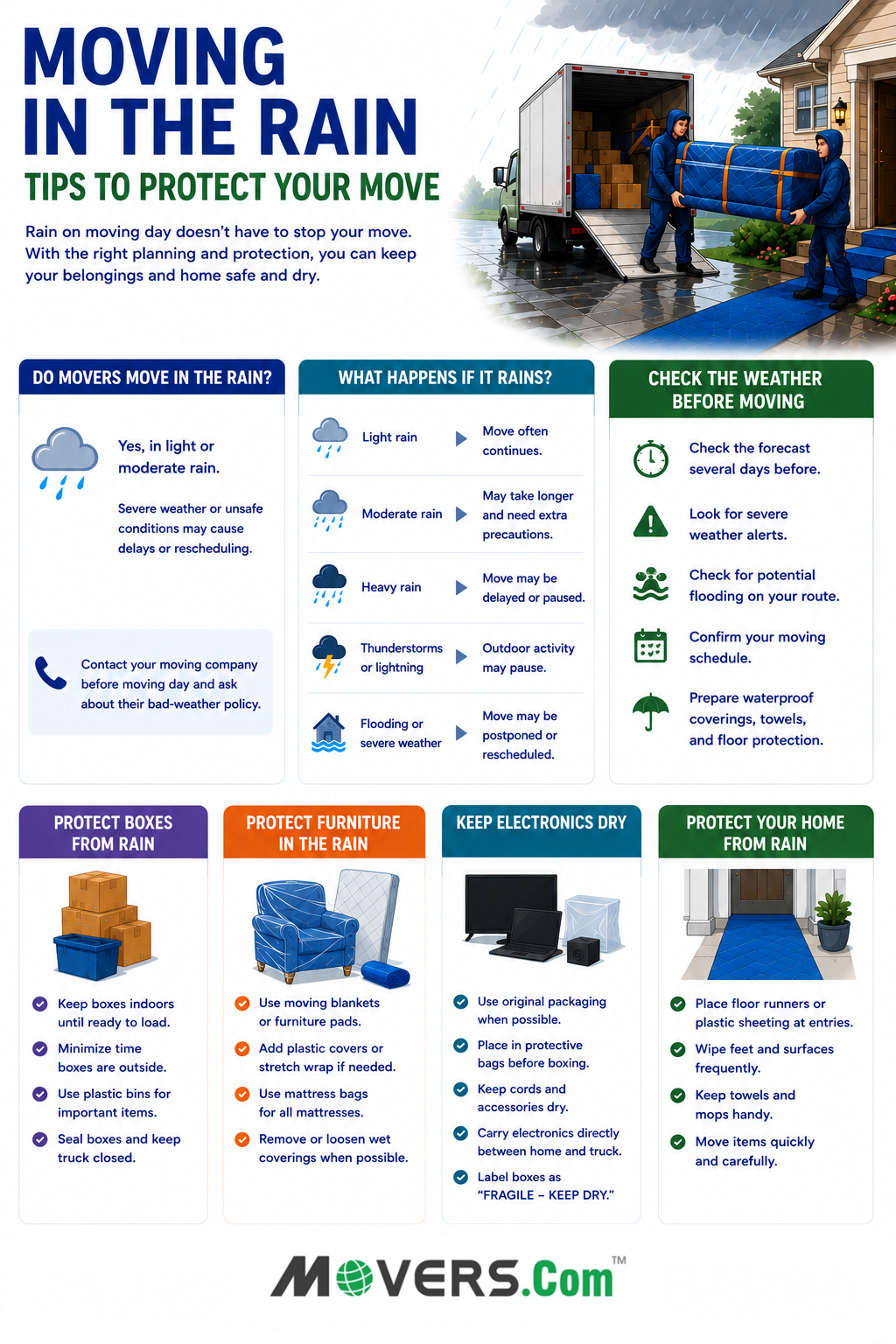
If it rains on moving day, your move usually doesn't need to be canceled. Professional movers can often continue working in light or moderate rain as long as conditions remain safe. However, severe weather, flooding, lightning, high winds, or unsafe road conditions may cause delays or require the move to be rescheduled.
If rain is expected, protect furniture and boxes from moisture, cover floors at both homes, keep electronics and appliances dry, and reduce the distance between the moving truck and the entrance whenever possible.
This guide explains how to move safely in the rain, what may happen if bad weather affects your moving day, and how to protect your belongings and home from water damage.
Do Movers Move in the Rain?
Yes, professional movers will often continue working in light or moderate rain. However, whether your move continues depends on the severity of the weather, road conditions, safety risks, and the moving company's policies.
Movers may slow down, temporarily pause loading or unloading, or reschedule the move if conditions become unsafe.
Weather conditions that could affect your move include:
- Heavy rain
- Lightning or thunderstorms
- Flash flooding
- High winds
- Hurricanes or tropical storms
- Unsafe roads
- Slippery stairs, ramps, or walkways
If rain is forecast, contact your moving company before moving day and ask how they handle weather-related delays or rescheduling.
What Happens If It Rains on Moving Day?
What happens depends largely on the severity of the weather and whether conditions are safe enough for movers to continue working.
| Weather Conditions |
What May Happen |
| Light rain |
The move will often continue with additional protection |
| Moderate rain |
Loading and unloading may take longer and require extra precautions |
| Heavy rain |
The move may be delayed or temporarily paused |
| Thunderstorms or lightning |
Outdoor moving activity may pause for safety |
| Flooding or severe weather |
The move may need to be postponed or rescheduled |
These are general scenarios. Your moving company's policies and local weather conditions will ultimately determine whether the move can safely continue.
Don't assume rain automatically means cancellation. If the forecast looks concerning, contact your moving company and confirm the plan before moving day.
Check the Weather Before Moving
Start checking the forecast several days before moving day. Weather predictions can change, but monitoring conditions gives you time to prepare protective materials and discuss contingency plans with your movers.
The day before your move:
- Check the hourly forecast.
- Look for severe weather alerts.
- Check for potential flooding along your route.
- Confirm your moving schedule.
- Ask your mover about its bad-weather policy if necessary.
- Prepare waterproof coverings, towels, and floor protection.
Continue monitoring conditions on moving day, especially if thunderstorms, heavy rain, flooding, or high winds are possible.
How to Protect Moving Boxes From Rain
Cardboard moving boxes should be kept as dry as possible. Even brief exposure to rain can soften the cardboard, while heavier or prolonged exposure can weaken the bottom and seams and allow moisture to reach the belongings inside.
To protect your moving boxes:
- Keep boxes indoors until they're ready to be loaded.
- Minimize the amount of time boxes remain outside.
- Use plastic bins for important or moisture-sensitive belongings when practical.
- Keep towels available to wipe wet boxes and surfaces.
- Make sure boxes are securely taped along the bottom.
- Keep the moving truck closed between loading periods when possible.
For important documents, photographs, and other moisture-sensitive items, place them inside sealed waterproof bags or containers before packing them into boxes.
Never leave cardboard boxes sitting directly on wet pavement, grass, or other damp surfaces.
How to Protect Furniture When Moving in the Rain
Furniture should be protected before it's carried outside.
Moving blankets help prevent scratches and dents, but they aren't necessarily waterproof. When rain is expected, use appropriate waterproof coverings over padded furniture where necessary.
Depending on the item, protection may include:
- Moving blankets or furniture pads
- Plastic furniture covers
- Mattress bags
- Stretch wrap applied over protective padding
- Waterproof tarps for temporary protection
Pay particular attention to:
- Mattresses
- Upholstered furniture
- Wood furniture
- Artwork
- Antiques
Avoid placing plastic wrap directly against delicate or finished wood for extended periods. Use moving blankets or another protective layer between the furniture and plastic covering when appropriate.
Once furniture reaches the moving truck or new home, remove or loosen wet coverings when practical so moisture doesn't remain trapped against the item.
Keep Electronics Dry
Electronics need extra protection during a rainy move because moisture can damage internal electrical components.
Whenever possible:
- Use the original packaging.
- Place electronics in protective bags before boxing them.
- Keep cords and accessories dry.
- Carry electronics directly between the home and moving truck.
- Avoid setting electronic equipment on wet surfaces.
- Clearly label boxes containing electronics.
If an electronic device becomes significantly wet, don't plug it in or turn it on until you're confident it is completely dry and safe to operate. If water may have entered the device, follow the manufacturer's guidance or consider having it professionally inspected before use.
Can a Refrigerator Get Wet in the Rain?
A small amount of rain during the short trip between your home and the moving truck doesn't necessarily mean a refrigerator will be damaged. However, refrigerators contain electrical components that should be kept as dry as possible.
Use an appliance cover, moving blanket with appropriate waterproof protection, or another suitable covering when transporting a refrigerator through rain.
Pay particular attention to the:
- Power cord
- Controls
- Wiring
- Other exposed electrical components
If a refrigerator has been heavily exposed to rain or you suspect water entered its electrical components, do not plug it in until you're confident it is completely dry and safe to operate.
Follow the manufacturer's instructions, and if you're uncertain whether water entered the electrical components, have the appliance inspected by a qualified technician before using it.
Preventing water exposure is much easier than determining whether internal electrical components have been affected afterward.
Protect Floors and Entryways
Rain can quickly make floors, stairs, and entryways slippery. Water and mud can also damage carpet, hardwood, and other flooring as movers repeatedly enter and leave the home.
Protect high-traffic areas with:
- Floor runners designed for moving
- Absorbent entrance mats
- Towels near doorways
- Appropriate floor protection for carpet or hardwood
Avoid loose plastic sheeting or other materials that can become slippery or create a tripping hazard.
Keep towels nearby so wet areas can be dried throughout the move rather than allowing water to accumulate.
Create a Covered Loading Path
The less time your belongings spend exposed to rain, the lower the risk of water damage. Before loading begins, create the shortest and safest route between your home and the moving truck.
When possible:
- Park the moving truck as close to the entrance as safely and legally permitted.
- Use a garage, covered porch, or other sheltered entrance.
- Keep doors open only when necessary.
- Have boxes and furniture ready near the exit before carrying them outside.
- Use a team approach so items can be moved quickly between the home and truck.
A canopy may provide temporary protection in some situations, but only use one when it can be safely secured. Wind can make temporary shelters unstable or dangerous.
Wear the Right Clothing and Footwear
Moving in the rain creates slippery conditions, so proper footwear is especially important.
Wear:
- Water-resistant shoes or boots.
- Footwear with good traction.
- Lightweight rain gear.
- Comfortable clothing that allows easy movement.
Avoid footwear with smooth or worn soles. Wet stairs, sidewalks, loading ramps, and truck surfaces can become slippery even during light rain.
Keep a change of clothes and dry socks accessible rather than packing them deep inside the moving truck.
Slow Down and Prioritize Safety
Trying to move faster because it's raining can increase the risk of falls, injuries, and damaged belongings.
Take extra care around:
- Stairs
- Loading ramps
- Wet sidewalks
- Tile or hardwood floors
- Driveways
- Truck entrances
Wipe up standing water and mud as the move progresses. If conditions become unsafe, stop and wait for the weather to improve or follow your moving company's instructions.
Protecting your belongings is important, but preventing injuries should always come first.
What Should You Do During Severe Weather?
Ordinary rain and severe weather should be treated differently.
Thunderstorms, lightning, flash flooding, high winds, hurricanes, and other dangerous conditions can make loading, driving, and unloading unsafe.
If severe weather is expected, contact your moving company as early as possible. Depending on the conditions, you may need to:
- Pause loading or unloading.
- Wait for the storm to pass.
- Use an alternate safe route if appropriate.
- Reschedule the move if conditions remain unsafe.
Never drive a moving truck through flooded roads or ignore official weather warnings to stay on schedule.
If authorities issue evacuation orders, flash flood warnings, or other emergency instructions, follow official guidance rather than attempting to continue the move.
Moving in the Rain Checklist
| Before the Move |
During the Move |
| Check the weather forecast |
Keep boxes and furniture covered |
| Monitor severe weather alerts |
Minimize outdoor exposure |
| Confirm plans with your mover |
Protect floors and entryways |
| Prepare waterproof coverings |
Wipe up water and mud |
| Protect electronics and appliances |
Watch for slippery surfaces |
| Keep towels and mats accessible |
Keep truck doors closed when possible |
| Prepare both entrances |
Pause if conditions become unsafe |
Preparing before the rain starts can prevent unnecessary delays and reduce the risk of water damage.
What Should You Keep With You During a Rainy Move?
Keep essential and moisture-sensitive items with you rather than loading them deep inside the moving truck:
- Important documents
- Medications
- Phones and chargers
- Valuables
- Dry clothing and socks
- Rain gear
Store documents and electronics in waterproof bags or containers.
Should You Reschedule Your Move Because of Rain?
Light rain alone usually isn't a reason to reschedule a move. With proper preparation, many moves can continue safely in rainy conditions.
However, delaying or rescheduling may be necessary if weather conditions create a safety risk, particularly during severe thunderstorms, lightning, flooding, dangerous winds, or unsafe road conditions.
If you're using professional movers, contact the company rather than assuming your move will be canceled. Ask whether the move will continue and how weather-related delays or rescheduling are handled under your agreement.
Does Rain on Moving Day Mean Good Luck?
Some traditions and superstitions consider rain on moving day a sign of good luck, renewal, cleansing, or a fresh start. Other beliefs interpret rainy weather less positively.
There is no practical connection between rain and whether your move will be successful. If it rains, focus on protecting your belongings, keeping walkways safe, and adjusting your moving plan when necessary.
 Bottom Line
Rain on moving day doesn't necessarily stop a move. Light or moderate rain can often be managed by protecting boxes, furniture, electronics, appliances, and floors while minimizing outdoor exposure.
Severe weather is different. Lightning, flooding, high winds, and dangerous road conditions may require your move to be delayed or rescheduled.
Stay in contact with your moving company, monitor local weather alerts, and prioritize safety over staying on schedule.
Editor's Note
This guide was reviewed by the Movers.com Moving Industry Analyst team using common residential moving practices, weather-related moving considerations, and general safety guidance.
Weather conditions and moving company policies vary. If severe weather is expected on moving day, contact your mover directly and follow local weather alerts and emergency guidance.
Get expert moving tips and compare movers for free at Movers.com.
You can get free moving quotes from licensed and insured movers, compare moving companies near you, and plan your move with confidence using our step-by-step moving guides and checklists.
Whether you're planning a local move, a long-distance relocation, or need help with packing and loading, Movers.com connects you with trusted moving professionals and practical tools to make moving easier and more affordable.
Questions? Talk to our moving specialists.