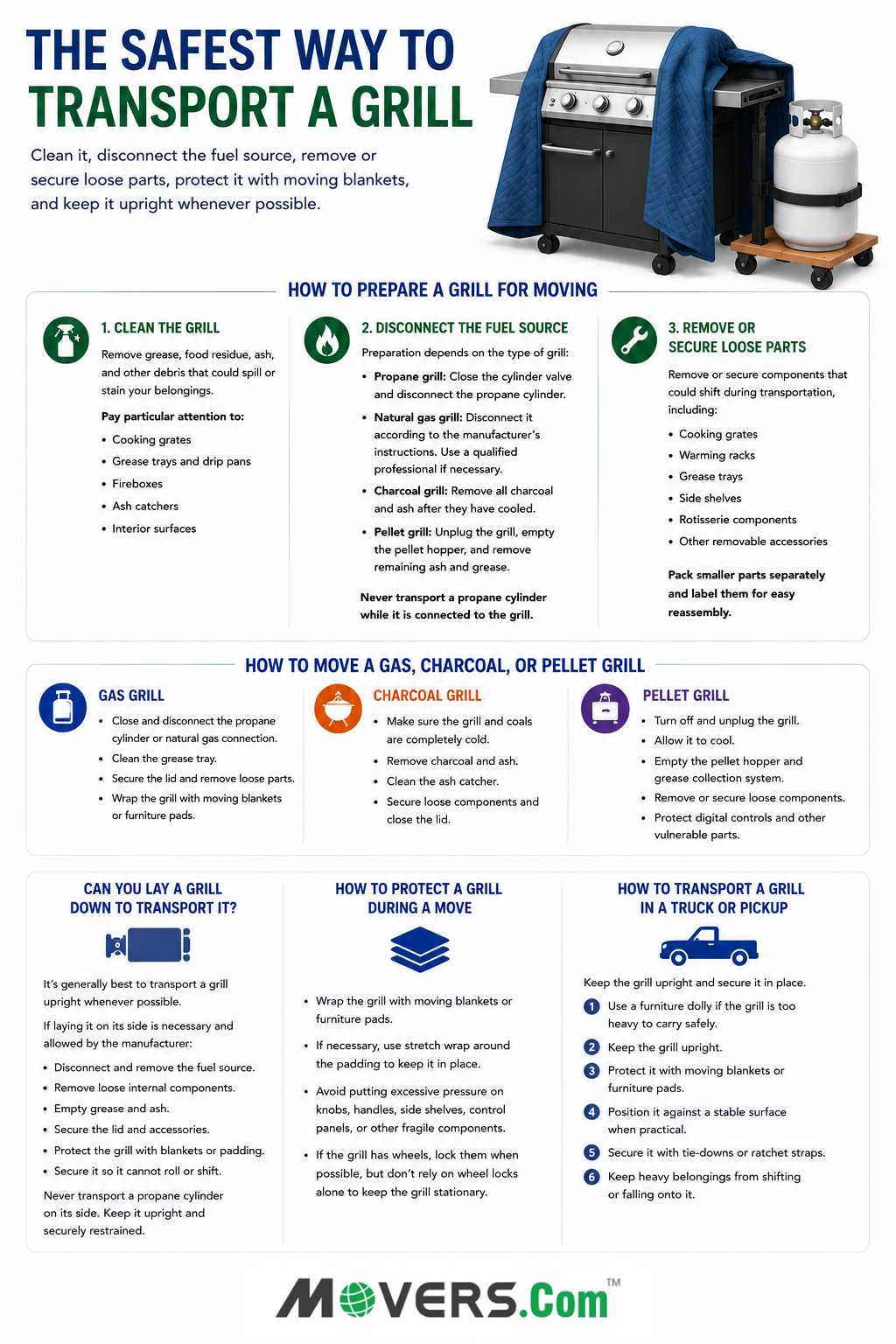
The safest way to transport a grill is to clean it, disconnect the fuel source, remove or secure loose parts, protect it with moving blankets, and keep it upright whenever possible.
If you have a propane grill, disconnect the propane cylinder before moving the grill. The cylinder should be transported separately, upright, and secured so it cannot tip or roll.
How to Prepare a Grill for Moving
Before loading your grill, make sure it is completely cool and properly prepared.
Clean the Grill
Remove grease, food residue, ash, and other debris that could spill or stain your belongings during transportation.
Pay particular attention to:
- Cooking grates
- Grease trays and drip pans
- Fireboxes
- Ash catchers
- Interior surfaces
Disconnect the Fuel Source
Preparation depends on the type of grill:
- Propane grill: Close the cylinder valve and disconnect the propane cylinder.
- Natural gas grill: Disconnect it according to the manufacturer's instructions. Use a qualified professional if necessary.
- Charcoal grill: Remove all charcoal and ash after they have completely cooled.
- Pellet grill: Unplug the grill, empty the pellet hopper, and remove remaining ash and grease.
Never transport a propane cylinder while it is connected to the grill.
Remove or Secure Loose Parts
Remove or secure components that could shift during transportation, including:
- Cooking grates
- Warming racks
- Grease trays
- Side shelves
- Rotisserie components
- Other removable accessories
Pack smaller parts separately and label them for easy reassembly.
How to Move a Gas, Charcoal, or Pellet Grill
Different grill types require slightly different preparation.
Gas Grill
Close and disconnect the propane cylinder or natural gas connection. Clean the grease tray, secure the lid, remove loose parts, and wrap the grill with moving blankets or furniture pads.
If you're hiring professional movers, ask about propane cylinders before moving day. Many moving companies restrict or prohibit transporting propane and other flammable materials.
Charcoal Grill
Make sure the grill and coals are completely cold. Remove charcoal and ash, clean the ash catcher, secure loose components, and close the lid.
When practical, properly dispose of leftover charcoal and ash instead of transporting them with your household belongings.
Pellet Grill
Turn off and unplug the grill, allow it to cool, and empty the pellet hopper and grease collection system. Remove or secure cooking grates and other loose components.
Protect digital controls and other vulnerable parts during transportation.
Can You Lay a Grill Down to Transport It?
It's generally best to transport a grill upright whenever possible.
Laying a grill on its side can cause burners, grates, grease trays, shelves, or other components to shift or become damaged. Residual grease or debris may also leak.
If transporting the grill upright isn't practical and the manufacturer allows the grill to be transported on its side:
- Disconnect and remove the fuel source.
- Remove loose internal components.
- Empty grease and ash.
- Secure the lid and accessories.
- Protect the grill with moving blankets or padding.
- Secure it so it cannot roll or shift.
Check the manufacturer's instructions before transporting a grill in a position other than upright.
Never transport a propane cylinder on its side. Keep it upright and securely restrained.
How to Protect a Grill During a Move
Wrap the grill body with moving blankets or furniture pads to protect it from scratches and dents. If necessary, use stretch wrap around the outside of the padding to keep it in place.
Avoid putting excessive pressure on knobs, handles, side shelves, control panels, or other fragile components.
If the grill has wheels, lock them when possible, but don't rely on the wheel locks alone to keep the grill stationary during transportation.
How to Transport a Grill in a Moving Truck or Pickup
Keep the grill upright whenever possible and position it where it can be securely restrained.
When loading the grill:
- Use a furniture dolly if the grill is too heavy to carry safely.
- Keep the grill upright.
- Protect it with moving blankets or furniture pads.
- Position it against a stable surface when practical.
- Secure it with appropriate tie-downs or ratchet straps.
- Keep heavy belongings from shifting or falling onto it.
How to Tie Down a Grill in a Truck
Attach straps to sturdy structural parts of the grill frame and suitable anchor points in the truck or pickup bed.
Avoid attaching straps to:
- The lid
- Control knobs
- Plastic handles
- Side shelves
- Thin exterior panels
Use multiple secure points when necessary to prevent the grill from tipping or sliding.
Tighten the straps enough to hold the grill firmly without bending the frame or exterior panels. Before driving, gently test the grill to make sure it cannot move or tip.
Can You Transport a Grill in a Car or SUV?
A small portable grill may fit safely in a car or SUV, but a full-size barbecue grill is generally better transported in a moving truck, pickup, or trailer.
If transporting a grill inside a passenger vehicle:
- Clean it thoroughly and remove the fuel source.
- Remove or secure loose components.
- Protect the vehicle interior from grease and debris.
- Secure the grill so it cannot shift while driving.
- Make sure it doesn't block the driver's visibility.
Never transport a propane cylinder while it is attached to the grill.
How to Transport a Propane Cylinder Safely
Propane is flammable, so cylinders require careful handling during transportation.
Before transporting a propane cylinder:
- Close the cylinder valve completely.
- Disconnect it from the grill.
- Keep the cylinder upright.
- Secure it so it cannot tip, roll, or slide.
- Transport it in a well-ventilated area.
- Keep it away from flames, sparks, and other ignition sources.
- Don't smoke near the cylinder.
- Don't leave it inside a hot vehicle.
- Remove it from the vehicle promptly after reaching your destination.
If the cylinder appears damaged, heavily rusted, or leaking, don't transport it normally. Contact a propane supplier or qualified professional for safe handling or disposal guidance.
Will Professional Movers Transport a Propane Grill?
Professional movers may transport the grill itself after it has been cleaned, prepared, and disconnected from the propane cylinder.
However, many moving companies restrict or prohibit propane cylinders and other flammable materials.
Before moving day, ask your mover:
- Whether they will transport the grill.
- How the grill should be prepared.
- Whether propane cylinders are prohibited.
Don't assume the mover will accept a propane cylinder simply because it is empty or disconnected.
Grill Moving Checklist
| Before Loading |
During Transport |
| Let the grill cool completely |
Keep the grill upright when possible |
| Clean grease, ash, and debris |
Secure it against tipping or sliding |
| Disconnect the fuel source |
Use sturdy tie-down points |
| Remove or secure loose parts |
Protect it with moving blankets |
| Empty the pellet hopper if applicable |
Keep heavy items away from the grill |
| Secure the grill lid |
Transport propane separately |
 Bottom Line
The best way to transport a grill is to clean it, disconnect the fuel source, remove or secure loose components, protect it with moving blankets, and keep it upright whenever possible.
When transporting a grill in a moving truck or pickup, secure it to sturdy anchor points so it cannot tip or slide. For propane grills, disconnect the cylinder and transport it separately using appropriate safety precautions.
If you're hiring professional movers, confirm their grill and propane policies before moving day.
Editor's Note
This guide was reviewed by the Movers.com Moving Industry Analyst team using current propane transportation safety guidance, manufacturer considerations, and common residential moving practices.
Grill designs and fuel systems vary. Follow the manufacturer's instructions for your specific grill and check your moving company's policies before transporting propane cylinders or other restricted materials.
Get expert moving tips and compare movers for free at Movers.com.
You can get free moving quotes from licensed and insured movers, compare moving companies near you, and plan your move with confidence using our step-by-step moving guides and checklists.
Whether you're planning a local move, a long-distance relocation, or need help with packing and loading, Movers.com connects you with trusted moving professionals and practical tools to make moving easier and more affordable.
Questions? Talk to our moving specialists.