Moving in together with kids works best when you and your partner plan the transition before moving day, talk openly with the children, and agree on household expectations, routines, and personal space.
Discuss finances and parenting responsibilities with your partner, and help the children understand what will change and what will stay familiar. Don't expect everyone to immediately feel like one family—focus on creating a stable, respectful household where relationships can develop gradually.
Talk With Your Partner Before Moving In Together
Discuss major parenting and household decisions before combining homes rather than assuming you'll work everything out after the move.
Important topics include:
- Household expenses.
- Parenting responsibilities.
- Discipline and household rules.
- School and transportation arrangements.
- Work and childcare schedules.
- Chores and household responsibilities.
- Privacy and personal space.
- Co-parenting arrangements, when relevant.
You and your partner don't need to agree on every detail, but major differences in parenting or household expectations are easier to address before everyone is living under the same roof.
Make sure both of you understand how day-to-day responsibilities will be divided and how parenting decisions will be handled.
Talk to Your Kids About Moving In With Your New Partner
Tell your children about the move before it happens and give them an age-appropriate opportunity to ask questions and express concerns.
Children may want to know:
- Where will I sleep?
- Will I change schools?
- Who will live in the home?
- What happens to my belongings?
- Will my routines or household rules change?
- Will I still see friends and relatives regularly?
Be clear about what you've already decided and what hasn't been finalized yet.
Avoid promising that nothing will change. Instead, explain what will change and what will remain familiar.
Depending on their age, involve children in smaller decisions when practical. For example, they may be able to help arrange their room or decide which belongings they want to bring first. This can help them prepare for the transition without placing major household decisions on them.
Don't Force the New Family Relationship
Living together doesn't mean children will immediately view your partner or the other children in the household as family. Give those relationships time to develop naturally.
Avoid pressuring children to use family labels they're uncomfortable with, become close to your partner immediately, or treat other children in the household as instant siblings or close friends.
Encourage respect and basic household cooperation without forcing emotional closeness. Different family members may adjust and develop relationships at different speeds.
Decide Where Everyone Will Sleep
Plan bedroom and personal-space arrangements before moving day whenever possible.
Consider:
- Each child's age.
- Privacy needs.
- Whether children will share bedrooms.
- Where clothing and personal belongings will be stored.
- Space for toys, school supplies, and hobbies.
- Whether children who stay part-time will have dedicated space.
If children from both households will live in the new home, try to avoid an arrangement where one child consistently feels like a guest in a home that is also meant to be theirs.
If children will share a bedroom, explain the arrangement before the move and discuss practical expectations around privacy, storage, and shared space.
Agree on Household Rules and Routines
You and your partner don't need identical parenting styles, but children should understand the basic rules and expectations in the new household.
Discuss expectations involving:
- Bedtimes.
- Screen time.
- Homework.
- Meals.
- Chores.
- Guests.
- Privacy and shared spaces.
Try to avoid introducing too many new rules immediately after the move unless they're necessary. Where possible, preserve familiar routines while gradually establishing expectations for the combined household.
Clear and consistent expectations can help reduce confusion while children adjust to the new household.
Help Children Adjust After the Move
Give children time to adjust to the new home, routines, and relationships rather than expecting everyone to feel settled immediately.
After moving in:
- Maintain familiar routines where possible.
- Help children unpack and organize their personal spaces.
- Continue spending individual time with your children.
- Give everyone appropriate privacy and personal space.
- Keep important family traditions.
- Introduce new household traditions gradually.
- Check in with each child individually about how they're adjusting.
Some children may adjust faster than others. Continue communicating after the move and be willing to adjust household routines when something isn't working.
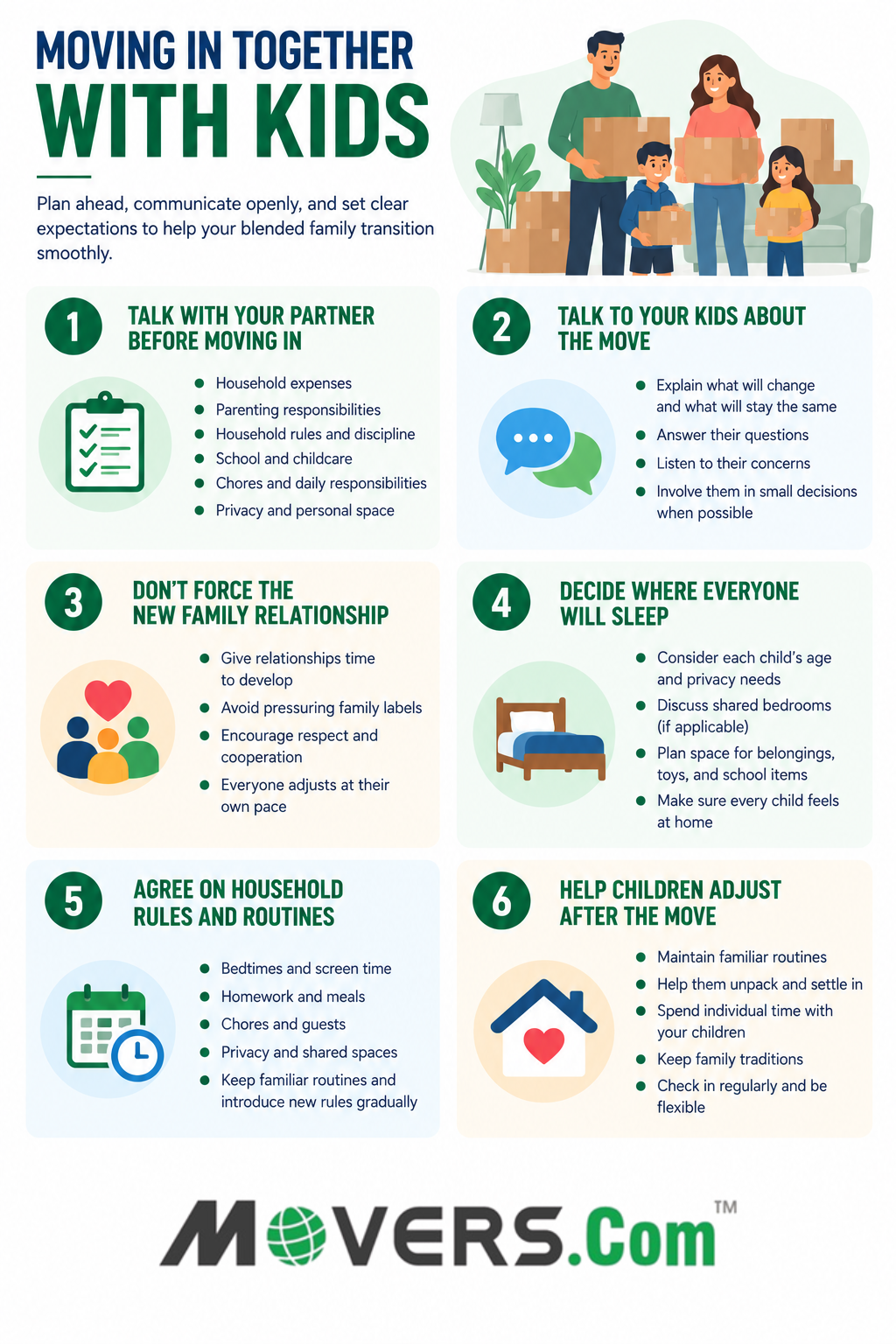
Bottom Line
Moving in together with kids means combining routines, responsibilities, relationships, and personal spaces—not just belongings.
Plan parenting and household expectations with your partner before the move, prepare the children for what will change, and give everyone time and space to adjust after moving in.
Editor's Note
Our comparison reviewed by our Moving Industry Analyst team is based on publicly available pricing, customer reviews, and regular moving scenarios.
Every family and household is different. Consider the children's ages, existing routines, living arrangements, and individual needs when planning the transition.
Get expert moving tips and compare movers for free at Movers.com.
You can get free moving quotes from licensed and insured movers, compare moving companies near you, and plan your move with confidence using our step-by-step moving guides and checklists.
Whether you're planning a local move, a long-distance relocation, or need help with packing and loading, Movers.com connects you with trusted moving professionals and practical tools to make moving easier and more affordable.
Questions? Talk to our moving specialists.