Vacuum storage bags can save space during a move by compressing clothes, bedding, linens, and other soft items. They're especially useful for bulky but lightweight belongings that take up a lot of room in moving boxes.
However, not everything should be vacuum packed. Delicate fabrics, structured clothing, leather, and other compression-sensitive materials may require a different packing method.
Most importantly, vacuum packing reduces volume, not weight. Your belongings take up less space, but they still weigh essentially the same.
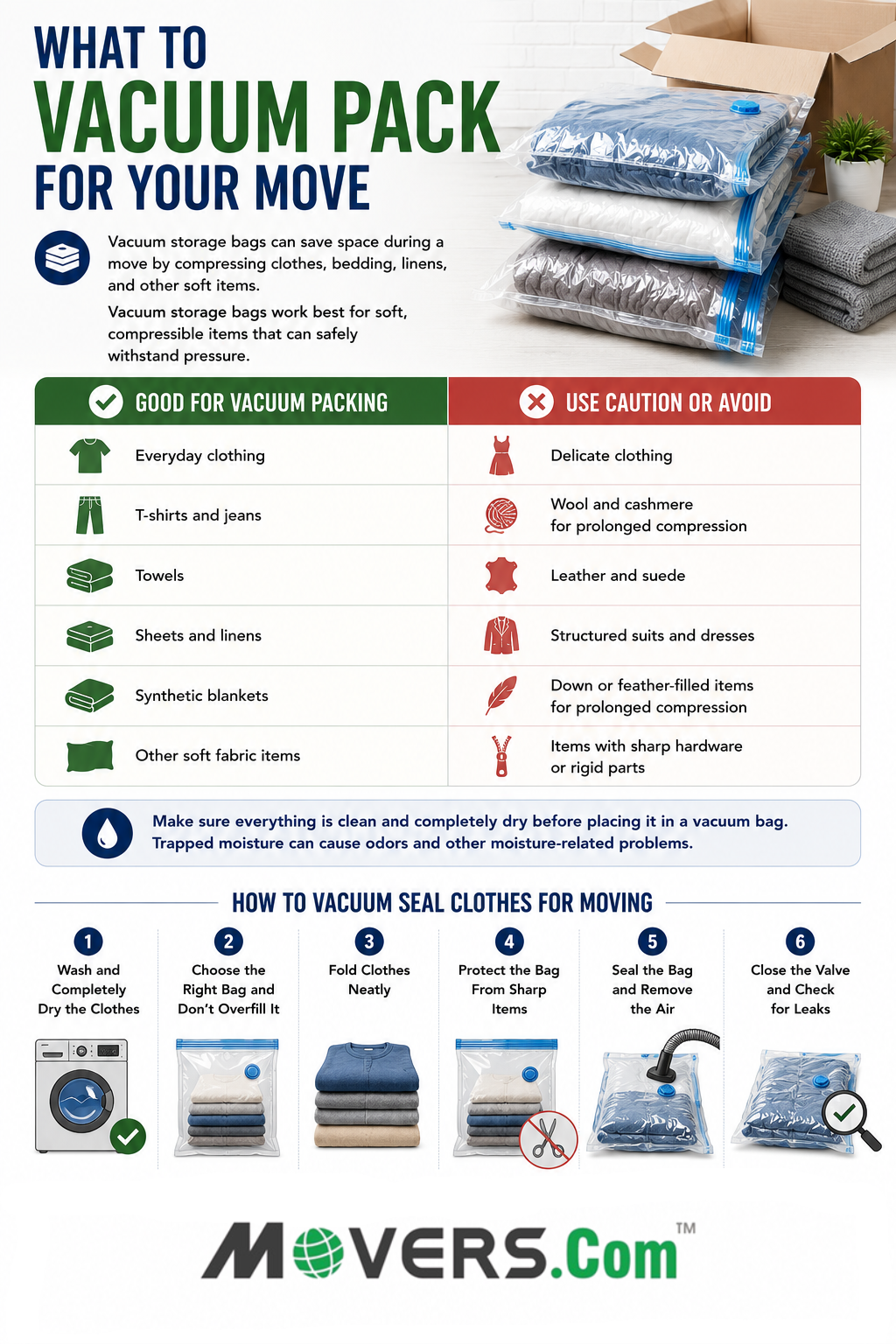
What Should You Vacuum Pack for Moving?
Vacuum storage bags work best for soft, compressible items that can safely withstand pressure.
| Good for Vacuum Packing |
Use Caution or Avoid |
| Everyday clothing |
Delicate clothing |
| T-shirts and jeans |
Wool and cashmere for prolonged compression |
| Towels |
Leather and suede |
| Sheets and linens |
Structured suits and dresses |
| Synthetic blankets |
Down or feather-filled items for prolonged compression |
| Other soft fabric items |
Items with sharp hardware or rigid parts |
Make sure everything is clean and completely dry before placing it in a vacuum bag. Trapped moisture can cause odors and other moisture-related problems.
For valuable, delicate, or specialty items, check the item's care instructions before compressing it.
How Does Vacuum Packing Work?
Vacuum storage bags reduce the amount of space soft items occupy by removing much of the air around them.
After filling and sealing the bag, you attach a vacuum cleaner or compatible pump to the valve. As the air is removed, the bag compresses around the contents.
This makes bulky clothes, towels, bedding, and linens easier to fit into moving boxes, suitcases, or storage containers.
Vacuum packing doesn't remove meaningful weight from your belongings. It only reduces their volume.
How to Vacuum Seal Clothes for Moving
Proper preparation helps prevent trapped moisture, damaged bags, and excessive wrinkling.
- Wash and Completely Dry the Clothes
Only vacuum pack clean, completely dry clothing. Don't seal damp clothes inside a vacuum bag.
- Choose the Right Bag and Don't Overfill It
Choose a bag large enough for the clothing you're packing and stay below the manufacturer's fill line.
Overfilling can make the bag difficult to seal and may put unnecessary pressure on the seams and closure.
- Fold Clothes Neatly
Fold clothing before placing it inside instead of stuffing it loosely into the bag.
This makes the compressed bag easier to pack and can help limit severe wrinkling.
- Protect the Bag From Sharp Items
Position zippers, buckles, hooks, and other hard components carefully so they don't puncture the plastic during compression or transportation.
- Seal the Bag and Remove the Air
Close the bag according to the manufacturer's instructions and make sure the seal is complete.
Attach the vacuum hose or compatible pump to the valve and remove the air gradually. Don't compress the bag beyond the manufacturer's recommendations.
- Close the Valve and Check for Leaks
Secure the valve and make sure the bag remains compressed.
If it begins expanding quickly, check the closure, valve, and bag for leaks before packing it into a moving box or suitcase.
Does Vacuum Packing Make Clothes Lighter?
No. Vacuum packing doesn't make clothes significantly lighter.
Removing air reduces how much space clothing occupies, but it doesn't reduce the weight of the clothing itself.
In fact, a vacuum-packed bag can feel surprisingly heavy because you're able to fit more clothing into a much smaller space.
When placing vacuum bags inside moving boxes:
- Don't overload the box.
- Keep each box at a manageable lifting weight.
- Use smaller boxes for particularly heavy compressed bags.
- Don't assume a smaller package is a lighter package.
Vacuum bags are best used to save space, not reduce shipment weight.
What Should You Avoid Vacuum Packing?
Not every item is suitable for heavy or prolonged compression.
Avoid or use extra caution with:
- Leather and suede.
- Structured suits, jackets, and dresses.
- Delicate or easily creased fabrics.
- Wool and cashmere, particularly for prolonged compression.
- Down or feather-filled bedding and clothing, especially for prolonged compression.
- Items with sharp hardware or rigid components.
- Damp or dirty clothing.
- Fragile objects.
If clothing or bedding will remain compressed for an extended period, check the item's care instructions and the vacuum-bag manufacturer's recommendations.
For delicate, structured, or valuable belongings, a garment bag, moving box, breathable storage container, or another appropriate packing method may provide better protection.
Are Vacuum Bags Good for Long-Distance Moving?
Yes. Vacuum storage bags can be useful for long-distance moves because they reduce the space needed for clothes, towels, linens, and other soft fabric items.
They can also help keep belongings organized and protected from dust and dirt during transportation.
For better protection, place vacuum-sealed bags inside:
- Moving boxes.
- Plastic totes.
- Suitcases.
- Other sturdy containers.
Don't rely on the vacuum bag itself as the primary shipping container. The plastic can be punctured or damaged during handling.
Vacuum bags may help you use space more efficiently, but whether that lowers your moving cost depends on how the service is priced. They do not reduce the actual weight of your shipment.
How to Pack Vacuum Bags in Moving Boxes
Once your bags are compressed and sealed, pack them carefully so they don't get punctured or make the box too heavy.
Keep these points in mind:
- Check the seal. Make sure each bag remains compressed before placing it in a box.
- Protect the valve. Avoid crushing or placing heavy objects directly against it.
- Keep sharp objects separate. Don't pack tools, hangers, or other sharp items against the bags.
- Watch the box weight. Several compressed bags can make one box surprisingly heavy.
- Use sturdy containers. Make sure the box or tote can support the contents.
Avoid packing boxes so tightly that an expanding vacuum bag could damage the container or nearby belongings.
How to Pack a Vacuum Cleaner for Moving
Packing a vacuum cleaner is different from vacuum packing clothes, but preparing it properly can help prevent damage during transportation.
Before packing:
- Empty the dust bin or remove the vacuum bag, depending on the model.
- Clean the vacuum and remove accumulated dust or debris.
- Remove detachable hoses, attachments, and accessories.
- Secure or neatly wrap the power cord.
- Pack small attachments together in a labeled bag or container.
- Use the original packaging if available, or place the vacuum in a sturdy moving box with appropriate padding.
- Fill empty space in the box so the vacuum doesn't shift significantly during transportation.
For cordless vacuums, check the manufacturer's instructions for handling and transporting the battery, particularly if the vacuum will be shipped rather than moved as part of your household belongings.
Bottom Line
Vacuum storage bags are useful for compressing clothes, towels, linens, and other soft items during a move. They save space but don't make your belongings lighter. Use them only for items that can safely handle compression, make sure everything is completely dry, and place compressed bags inside sturdy boxes, totes, or suitcases for added protection.
Editor's Note
Our comparison reviewed by our Moving Industry Analyst team is based on publicly available pricing, customer reviews, and regular moving scenarios.
Vacuum storage bags and clothing materials vary. Follow the bag manufacturer's instructions and the care recommendations for your clothing, bedding, or other textiles, especially when dealing with delicate or specialty materials.
Get expert moving tips and compare movers for free at Movers.com.
You can get free moving quotes from licensed and insured movers, compare moving companies near you, and plan your move with confidence using our step-by-step moving guides and checklists.
Whether you're planning a local move, a long-distance relocation, or need help with packing and loading, Movers.com connects you with trusted moving professionals and practical tools to make moving easier and more affordable.
Questions? Talk to our moving specialists.