Bubble wrap, plastic stretch wrap, moving blankets, packing paper, and other materials can protect your belongings during a move, but using the wrong material can sometimes cause damage instead of preventing it.
The right material depends on what you're packing, the surface you're protecting, and the temperature and moisture conditions during transportation or storage.
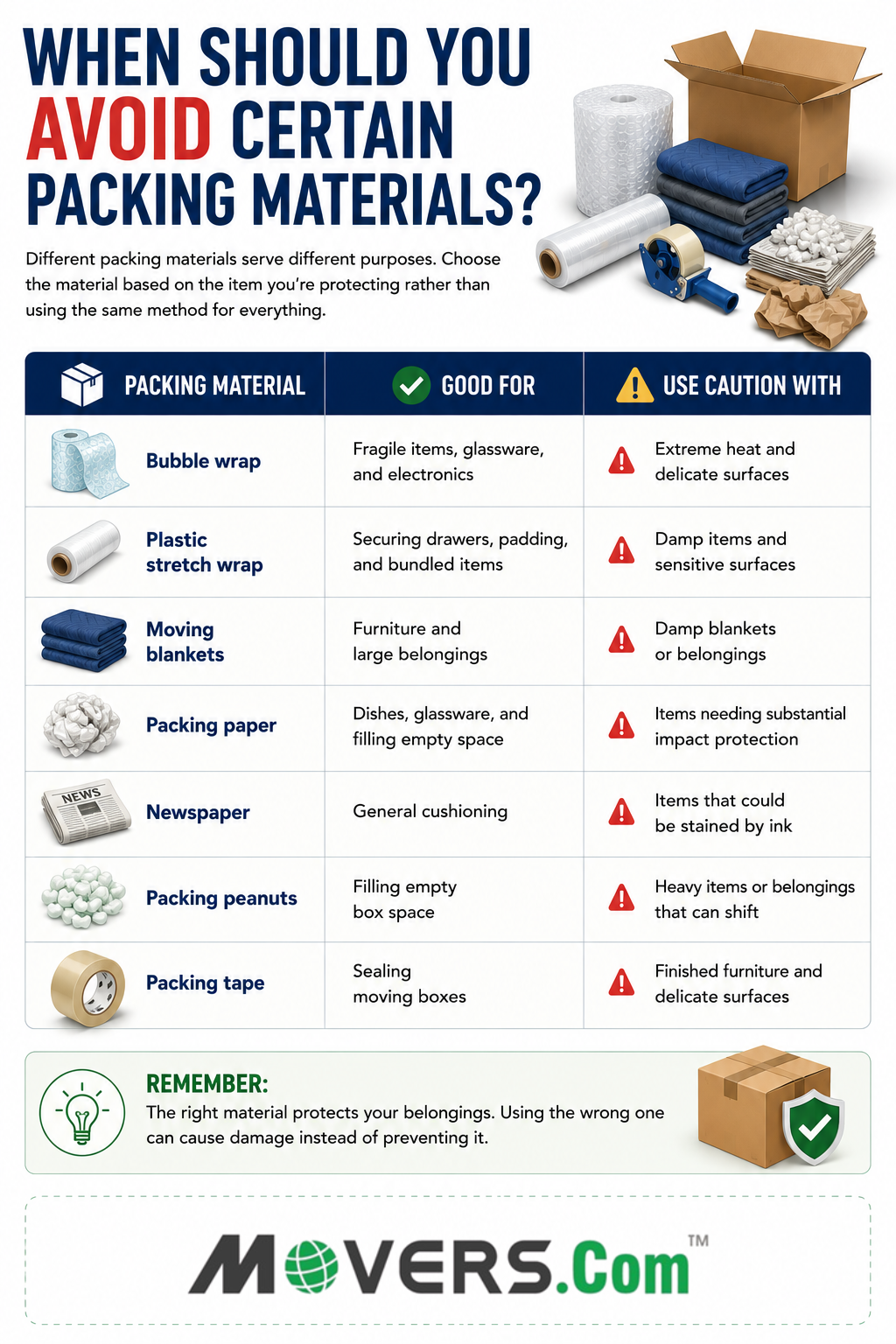
When Should You Avoid Certain Packing Materials?
Different packing materials serve different purposes. Choose the material based on the item you're protecting rather than using the same method for everything.
| Packing Material |
Good For |
Use Caution With |
| Bubble wrap |
Fragile items, glassware, and electronics |
Extreme heat and delicate surfaces |
| Plastic stretch wrap |
Securing drawers, padding, and bundled items |
Damp items and sensitive surfaces |
| Moving blankets |
Furniture and large belongings |
Damp blankets or belongings |
| Packing paper |
Dishes, glassware, and filling empty space |
Items needing substantial impact protection |
| Newspaper |
General cushioning |
Items that could be stained by ink |
| Packing peanuts |
Filling empty box space |
Heavy items or belongings that can shift |
| Packing tape |
Sealing moving boxes |
Finished furniture and delicate surfaces |
Packing materials aren't inherently good or bad. Problems usually occur when a material is used on the wrong surface, exposed to unsuitable conditions, or left in place longer than appropriate.
Does Bubble Wrap Melt in Heat?
Bubble wrap can soften, deform, or eventually melt when exposed to sufficiently high temperatures, but ordinary warm weather doesn't automatically cause it to melt.
Bubble cushioning is commonly made from plastic films, but its exact composition and heat tolerance vary by product.
Avoid leaving bubble-wrapped belongings unnecessarily exposed to extreme heat or prolonged direct sunlight, particularly inside hot vehicles or non-climate-controlled storage spaces.
If heat exposure is a concern, check the manufacturer's specifications for the specific bubble-wrap product you're using.
Is Bubble Wrap Good for Protecting Items From Damage?
Yes. Bubble wrap can provide cushioning against impacts, vibration, and movement when used properly.
It's particularly useful for:
- Glassware and dishes.
- Ceramics.
- Small electronics.
- Fragile décor.
- Other breakable belongings.
For fragile items, wrap them appropriately and place them inside a sturdy moving box. Fill empty space with suitable packing material so the contents can't shift significantly during transportation.
Bubble wrap provides cushioning, but it doesn't replace the structural protection of an appropriate moving box.
Can You Use Bubble Wrap on Furniture?
Yes, but bubble wrap is generally better for protecting specific fragile parts of furniture rather than covering an entire piece.
It can be useful for protecting:
- Glass panels.
- Mirrors.
- Corners and edges.
- Furniture legs.
- Decorative details.
For many furniture pieces, a clean, dry moving blanket or furniture pad is a better primary protective layer, with bubble wrap added where extra cushioning is needed.
Use caution when leaving plastic directly against delicate finishes or moisture-sensitive materials for extended periods, particularly in hot or humid conditions.
Bubble Wrap vs. Stretch Wrap: What's the Difference?
Bubble wrap and plastic stretch wrap perform different jobs during a move.
| Material |
Primary Purpose |
| Bubble wrap |
Cushioning and impact protection |
| Plastic stretch wrap |
Securing belongings, drawers, bundled items, or protective padding |
| Shrink wrap |
Plastic film designed to contract when heat is applied |
People sometimes use "shrink wrap" and "stretch wrap" interchangeably, but they aren't the same product.
For household moving, stretch wrap is commonly used because it stretches around an item and holds protective materials in place. True shrink wrap is designed to contract when heat is applied.
Bubble wrap cushions. Stretch wrap secures. Shrink wrap contracts when heat is applied.
When Should You Avoid Plastic Wrap for Moving?
Plastic stretch wrap can be useful during a move, but it shouldn't automatically be applied directly to every surface.
Use extra caution with:
- Delicate wood finishes.
- Leather.
- Damp furniture or fabrics.
- Items going into long-term storage.
- Belongings exposed to prolonged heat or humidity.
Never tightly wrap damp belongings in plastic. Trapped moisture can contribute to musty odors, mildew, mold, or material damage.
For sensitive furniture, consider placing a clean moving blanket, furniture pad, or another appropriate protective layer between the furniture and plastic wrap.
Remove temporary moving wrap after the move rather than leaving sensitive furniture unnecessarily wrapped for extended periods.
Are Moving Blankets Safe to Use?
Moving blankets are commonly used to protect furniture and other large belongings from scratches, dents, and rubbing during transportation.
Materials vary by manufacturer. If you're concerned about composition, allergens, odors, or contact with a sensitive item, check the product's material and safety information.
Always use clean, completely dry moving blankets. Damp or dirty blankets can transfer moisture, dirt, or odors to furniture.
When Should You Avoid Newspaper for Packing?
Newspaper can provide inexpensive cushioning, but the ink may transfer to some belongings.
Avoid placing newspaper directly against:
- Light-colored dishes or ceramics.
- Clothing and fabrics.
- Porous surfaces.
- Valuable or delicate belongings.
For these items, use clean, unprinted packing paper or another suitable protective material instead.
Don't Apply Packing Tape Directly to Furniture
Packing tape is intended primarily for sealing boxes. Applying it directly to furniture can leave adhesive residue or damage some finishes.
Use tape to secure protective materials to themselves, rather than applying it directly to finished wood, painted surfaces, leather, upholstery, antiques, or other delicate finishes.
What Packing Materials Should You Avoid for Long-Term Storage?
Materials that work well during transportation aren't always appropriate for months of storage.
When preparing belongings for long-term storage:
- Never seal damp belongings tightly in plastic.
- Don't leave adhesive tape directly on furniture.
- Use clean, completely dry furniture pads or covers.
- Consider appropriate breathable covers for materials that shouldn't remain tightly sealed in plastic.
- Use an appropriate storage environment for temperature- or humidity-sensitive belongings.
If stretch wrap was used only to secure furniture during transportation, remove it after the move unless the material and storage conditions make continued use appropriate.
 Bottom Line
Match the packing material to the item you're protecting rather than using the same material for everything.
Bubble wrap is useful for cushioning fragile belongings, while stretch wrap is primarily used to secure items or protective padding. Moving blankets are generally better suited to protecting large furniture surfaces.
Avoid trapping moisture, exposing packing materials unnecessarily to extreme heat, or leaving temporary moving materials on sensitive surfaces for extended periods.
Editor's Note
Our comparison reviewed by our Moving Industry Analyst team is based on publicly available pricing, customer reviews, and regular moving scenarios.
Packing materials vary by manufacturer, and their suitability can depend on the item, surface, temperature, humidity, and length of use. Check manufacturer instructions when packing valuable, delicate, or temperature-sensitive belongings.
Get expert moving tips and compare movers for free at Movers.com.
You can get free moving quotes from licensed and insured movers, compare moving companies near you, and plan your move with confidence using our step-by-step moving guides and checklists.
Whether you're planning a local move, a long-distance relocation, or need help with packing and loading, Movers.com connects you with trusted moving professionals and practical tools to make moving easier and more affordable.
Questions? Talk to our moving specialists.