Portable storage containers are a convenient option for moving and temporary storage. Instead of renting a truck or making trips to a storage facility, a company delivers a container to your home. You load your belongings, and the company either stores the container or transports it to your new location.
This service sits between traditional self-storage and full-service movers. It offers flexibility and convenience while allowing you to pack and load your items yourself.
Average Portable Storage Unit Costs
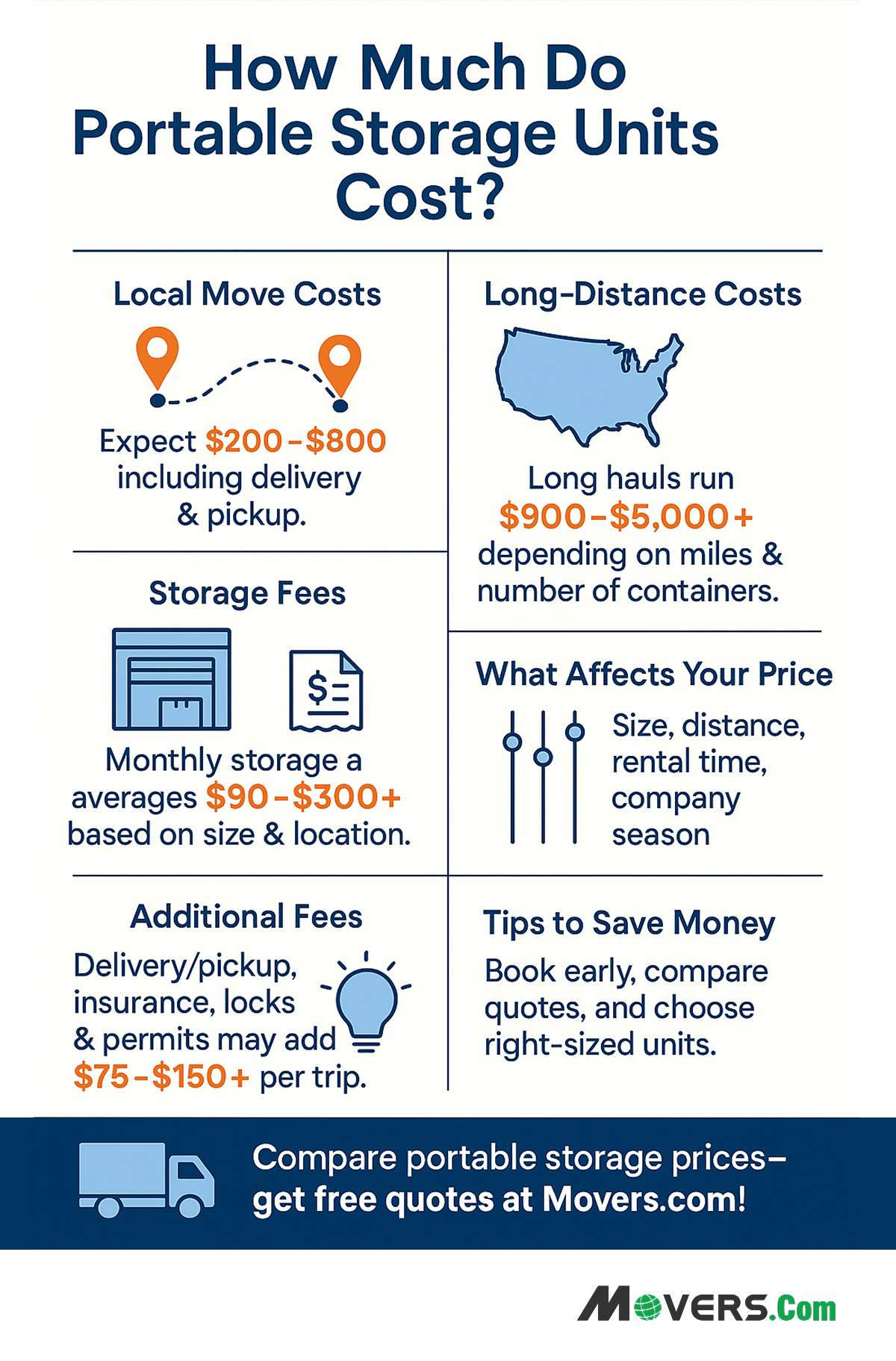
Portable storage unit pricing depends on the container size, rental duration, transportation distance, and storage location. While costs vary by provider and region, portable storage pricing generally includes four common cost categories:
| Service |
General planning range |
| Monthly container rental |
$100–$350+ |
| Delivery or pickup |
$75–$250 per service |
| Local container move |
$300–$1,500+ |
| Long-distance container move |
$1,500–$7,500+ |
*Prices are estimates and vary by provider, location, season, and container size.
Many people choose portable storage because it offers:
• Convenience
• Flexible timelines
• Door-to-door delivery
• No long-distance truck driving and fewer handling steps
However, the total cost can vary depending on factors such as container size, delivery distance, rental duration, and the time of year. Larger containers generally cost more to rent but may eliminate the need for multiple smaller containers, potentially reducing your total moving costs.
This guide explains typical portable storage costs, what affects pricing, and how to avoid unnecessary expenses. To make comparisons easier, the key container sizes, average monthly costs, and delivery fees are outlined clearly below.
Portable Storage Cost Snapshot
The table below compares common container sizes, estimated monthly rental costs, delivery or pickup charges, and key features offered by major portable storage providers. Prices vary by location, move distance, container size, rental period, and availability.
| Company |
Sizes Offered |
Monthly Storage |
Delivery & Pickup |
Perks |
| PODS® |
8', 12', 16'
|
~$150–$359/month varies by size |
~$75–$150 per delivery/pickup |
Widely available nationwide, supports both local and long-distance moves |
| Go Mini’s |
12', 16', 20' |
~$164–$217/month varies by market |
~$115–$140 per service |
Offers larger 20' container option and flexible local service |
| 1-800-PACK-RAT |
8', 12', 16' |
Quote required; varies by market and move details |
~$75–$150 per delivery/pickup |
All-steel containers, price-matching and discounts |
| U-Haul® (U-Box) |
Approx. 8' × 5' × 7.5' exterior |
Varies by region |
Varies |
Compact container holding about 257 cubic feet or 1½ rooms |
| COWS |
8', 16' |
Varies
|
Varies
|
Movable steel containers |
| Smartbox |
8' |
Quote required |
Varies |
Compact containers for moving and storage |
| U-Pack ReloCube |
~8' ReloCube |
Depends on long-distance usage |
Included in long-distance quote |
Compact cube that can fit in a parking space |
| Zippy Shell® |
10', 15' |
Varies |
Varies |
Street-legal containers with license plate capability |
Provider prices are approximate and may change based on location, container size, route, rental period, availability, and seasonal demand. Request a current itemized quote before booking.
PODS advertises storage starting at $149 per month, with delivery and pickup fees averaging about $74.99. Actual pricing varies by market, container size, rental period, availability, and service details.
What Affects Portable Storage Pricing?
The total cost of renting a portable storage container depends on several factors:
- Container size
- Length of the rental
- Delivery location
- Distance transported
- Local vs. long-distance move
- Whether the container is stored on your property or at the company's storage facility
- Seasonal demand
- Additional insurance or protection plans
Understanding these costs makes it easier to compare quotes from different providers.
This snapshot gives you a quick overview of the typical costs. In the sections below, we explain container sizes, monthly rental charges, additional fees, location-based pricing, and the main differences between portable and traditional storage.
Portable Storage Unit Rental Cost by Size
The size of the container you choose plays a major role in determining the cost of portable storage. Different container sizes are designed to handle different moving and storage needs, and selecting the right one can help you avoid unnecessary expenses. A container that is too small may require renting an additional unit, while a larger container than needed can increase your monthly rental cost.
Most portable storage companies offer containers ranging from about 8 feet to 16 feet long, with some providers also offering 20-foot containers for larger moves. Smaller containers are typically suitable for apartments or small moves, while larger containers are better for multi-room homes or households with more furniture and belongings.
Here is what most households need:
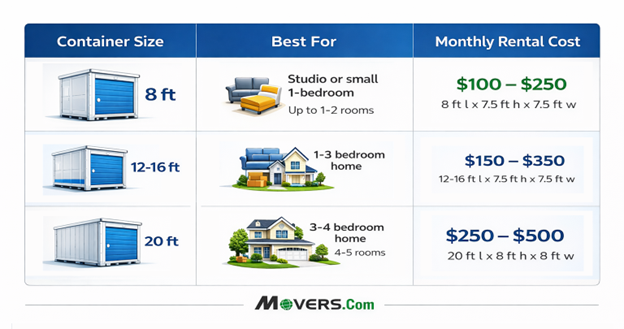
The right container size depends on several factors, including:
- The number of rooms in your home
- The amount of furniture and large items you need to move
- Whether you are storing items short-term or long-term
- If you plan to combine storage and transportation
Choosing the right container size based on these factors can help you manage your moving budget and avoid paying for space you do not need.
Small containers (around 8 feet)
Small portable storage containers, usually around 8 feet long, are the most compact option offered by most storage companies. They are designed for smaller moves, minimal household items, or situations where you only need to store a limited amount of belongings. Because of their smaller size, these containers are typically the most affordable option and are easier to place in tighter spaces such as driveways, apartment parking areas, or small residential streets.
Small containers are commonly used for:
- Studio apartments
- Small one-bedroom apartments
- Dorm room moves
- Temporary storage during home renovations
These containers usually hold one room’s worth of furniture and boxes, including items such as a mattress, small sofa, chairs, boxes, and basic appliances. They work best for individuals or couples who have a relatively small amount of furniture and household goods.
Small containers are also a practical choice for short-term storage projects, such as storing items while repainting, remodeling a room, or decluttering a home before selling it. Because they take up less space and cost less to rent, they are often the most cost-effective option when you do not need a full-size moving container.
Medium containers (12–16 feet)
Medium-sized portable storage containers, typically 12 to 16 feet long, are the most commonly used option for residential moves. They provide a good balance between capacity and cost, making them suitable for many households that need to move a moderate amount of furniture and boxes without renting multiple containers.
Medium containers are typically suitable for:
- One- to two-bedroom homes
- Small family moves
- Apartment moves with full furniture sets
A medium container can usually hold several large furniture items, including beds, couches, dining tables, dressers, and multiple packed boxes. Because of this capacity, many people choose this size when moving from an apartment or small house where the belongings exceed what a small container can hold.
Medium containers are also a popular option for short-term storage during renovations or temporary relocations, since they provide enough space to store furniture from multiple rooms while work is being done in the home. For many households, this size offers the most practical solution because it provides adequate storage space without significantly increasing rental costs.
Large containers (around 20 feet)
Some portable storage companies offer larger containers around 20 feet long, which are designed for bigger households or moves that involve a large number of belongings. These containers provide significantly more storage capacity and are often used when moving from larger homes or when additional items such as garage equipment and outdoor furniture need to be included.
A 20-foot portable storage container may hold the contents of several rooms or a moderately furnished household. However, capacity varies by provider, container dimensions, furniture size, number of boxes, and packing method.
Some providers describe 20-foot containers as suitable for a full-home move or approximately four to six rooms. However, this estimate should not be applied to every company because internal dimensions and capacity may differ.
Before booking, provide the company with a detailed inventory of your furniture, appliances, boxes, garage items, and outdoor equipment. The provider can then recommend whether one container is enough or whether you may need additional space.
How Much Does Portable Storage Cost Per Month?
Most portable storage companies charge a monthly rental fee in addition to delivery and transportation costs. Monthly pricing generally depends on:
- Container size
- Storage location
- Rental length
- Local demand
Keeping the container longer increases the overall cost, so ask whether discounts are available for extended rentals.
What You Are Really Paying For
The monthly rental rate for a portable storage container is only part of the total cost. While companies often advertise the monthly price, several additional fees can affect the final amount you pay for your move or storage.
In most cases, portable storage pricing includes a combination of services such as container delivery, transportation, storage time, and optional protection plans. Understanding these extra costs can help you estimate your total moving budget more accurately.
In addition to the monthly rental fee, you may also pay for:
- Delivery and pickup: typically $75 to $250 per service
- Transportation: varies based on the route, distance, container size, number of containers, and whether the unit is moved locally or long-distance
- Extended rental time: additional monthly fees if you keep the container longer than planned
- Insurance or protection coverage: optional coverage for your belongings while in storage or transit
When people ask, “How much does portable storage cost?”, they are usually referring to the total cost of the service, not just the monthly container rental.
How Location Affects Portable Storage Costs
Portable storage pricing can vary widely depending on where you live and where you are moving. Companies adjust their prices based on regional demand, population density, local operating costs, and availability of containers in a specific market. As a result, the same container and rental period can cost noticeably different amounts from one city to another.
Portable storage prices may be higher in dense metropolitan areas because of stronger demand, higher operating costs, limited container availability, parking restrictions, permit requirements, and more complex delivery conditions.
Pricing may be lower in markets with greater container availability and fewer placement or transportation restrictions. Because rates can vary even within the same metropolitan area, request location-specific quotes rather than relying on a national average.
How Much Does a Storage Container Cost to Buy?
Buying a shipping container generally costs several thousand dollars, plus delivery, placement, permits, and site-preparation expenses. The final price depends on the container size, condition, age, location, and transportation distance.
Used containers usually cost less but may show rust, dents, worn flooring, or door damage. New or “one-trip” containers cost more but are generally in better condition.
Buying normally makes sense only when you need permanent storage. For moving or temporary storage, renting a portable container is usually simpler.
How Much Does a Storage Unit Cost to Rent?
Traditional self-storage prices depend on the unit size, location, demand, access, security, and climate-control features. Smaller units for boxes and limited belongings generally cost less, while larger or climate-controlled units cost more.
Below are the typical monthly rental price ranges for storage units in the United States, based on common unit sizes.
| Storage Unit Size |
Typical Monthly Cost |
|
5×5
|
$50 – $70
|
|
5×10
|
$80 – $110
|
|
10×10
|
$120 – $160
|
|
10×15
|
$160 – $210
|
|
10×20
|
$200 – $270
|
|
10×30
|
$300 – $400+
|
These are general planning ranges. Actual rates vary by unit size, location, facility features, availability, and current demand. Units in major metropolitan areas or facilities with premium features may cost more than the ranges listed above.
Is Portable Storage Cheaper Than Traditional Storage?
It depends on your specific needs. Traditional self-storage is often cheaper per month, but you may also need to consider truck rental, fuel, repeated trips, and loading labor. If you only need long-term storage and live near a facility, traditional storage may be less expensive in the long run.
Portable storage may cost more upfront, but you can load your belongings all at once. The container is picked up from your location and delivered directly to your destination. If you are moving and storing at the same time, portable storage may provide better overall value by reducing truck rentals, repeated loading, and transportation between your home and a storage facility.
Comparing Portable Storage vs Traditional Storage
| Feature |
Portable Storage |
Traditional Storage |
|
Container delivery
|
Available, usually for a fee |
Not applicable
|
|
Transportation required by customer
|
Usually no
|
Often
|
|
Loading and unloading
|
Usually once at each end
|
May require multiple handling steps
|
|
Access during storage
|
Depends on provider and location
|
Usually easier
|
|
Best for
|
Moving plus temporary storage
|
Long-term storage and frequent access
|
If you’re moving and storing at the same time, portable containers may reduce handling, truck-rental needs, and transportation between your home and a storage facility.
With traditional storage, you often need to rent a truck, move items to the facility, unload them, and then move everything again later. Portable containers simplify the process because the container is delivered to your home, loaded once, and then stored or transported by the company.
For many households, this makes portable storage a more convenient and efficient option when a move and temporary storage overlap.
What Is a Good Price for a Storage Unit?
A good storage price includes more than a low advertised monthly rate. Compare administrative fees, required protection coverage, locks, access hours, rate increases, cancellation terms, and any introductory pricing.
Choose the option that provides transparent fees, suitable access, appropriate security, and enough space without paying for capacity you do not need.
A Simple Way to Avoid Overpaying
- Get at least three quotes
Prices can vary significantly between companies. Comparing a few providers helps you understand the real market rate and avoid paying more than necessary.
- Confirm delivery and pickup fees
Some companies advertise low monthly prices but charge separate fees for container delivery, pickup, or transportation. Always ask what is included in the quote.
- Ask about extra time charges
If you keep the container longer than planned, additional monthly fees may apply. Understanding the daily or monthly extension cost can help you plan your timeline better.
- Choose the correct container size
Renting a container that is too small may force you to rent a second one. Renting one that is too large means paying for unused space. Estimating your size needs correctly can save money.
- Read the agreement before signing
Check the contract for cancellation policies, rate increases, insurance requirements, and access rules so there are no surprises later.
Storage should make your move easier, not more complicated. When you understand the full cost and terms ahead of time, you can make a calm and confident decision.
Where Do I Rent Portable Storage Units?
If you are looking to rent a portable storage unit, you have several reliable national options, along with regional providers that may operate in your area. Most people start with the larger national companies because they offer broader coverage, flexible scheduling, and support for both local and long-distance moves.
Top Portable Storage Companies
Several portable storage companies operate across large parts of the United States and are widely used for residential moves, temporary storage, and relocation projects. While most companies offer similar core services, such as delivering a container to your home and transporting or storing it later, they may differ in container design, service areas, pricing structure, and scheduling flexibility.
Many companies offer flexible month-to-month rentals, allowing you to keep the container as long as needed. Always ask whether discounted long-term rates are available.
Below are some of the most commonly used portable storage providers in the U.S., along with the situations where each company may be a good fit.
PODS®
PODS® is one of the most recognized portable storage brands in the United States and operates in many cities nationwide. The company offers several container sizes and flexible rental timelines, which makes it a common choice for both short-term storage and full household moves.
With PODS®, a container is delivered directly to your home so you can load your belongings at your own pace. Once it is packed, the company can either store the container at one of its facilities or transport it to your new home, depending on your moving plan.
Best for:
PODS® pricing can vary depending on container size, distance of the move, rental duration, and seasonal demand. Because the company operates in many markets, availability is usually strong in both suburban and urban areas.
1-800-PACK-RAT
1-800-PACK-RAT offers a service model similar to PODS® but is known for using all-steel containers, which can provide additional durability and security compared with some other portable storage units.
Customers can load the container at their home, and the company will then store it at a secure facility or transport it to the destination address. The company also frequently offers price-matching and promotional discounts, which can make it competitive with other major providers.
Best for:
- Combined moving and storage
- Durable, secure steel containers
- Clear container size options for different home sizes
1-800-PACK-RAT operates in many major metropolitan areas and often competes directly with PODS® in both pricing and service coverage.
UNITS® Moving & Portable Storage
UNITS operates through a network of locally owned franchises under a national brand. This structure often allows customers to receive more personalized service while still benefiting from a recognized portable storage provider.
Like other portable storage companies, UNITS delivers a container to your home so you can load it. The container can then be kept on your property, transported to a new address, or stored at a secure facility until you need it.
Best for:
• Local residential moves
• Flexible rental periods
• More personalized customer service
Because each location is locally operated, pricing and availability can vary by region, but some UNITS franchises offer competitive rates compared with larger national brands.
U-Haul® U-Box
U-Haul®’s U-Box containers are smaller than many traditional portable storage containers, which makes them a practical option for smaller moves or limited storage needs.
These containers are delivered to your home for loading and can then be transported to a U-Haul® storage facility or shipped to another city. Because of their compact size, they are often easier to place in smaller spaces and can cost less than larger container options.
Best for:
- Studio apartment moves
- Small one-bedroom relocations
- College students or short-distance moves
- Budget-conscious customers
Since the containers are smaller, larger households may need multiple U-Box units to move all of their belongings.
Zippy Shell®
Zippy Shell offers a slightly different approach to portable storage. Instead of leaving the container at your home for long periods, the company often stores containers at a warehouse-style facility after they are loaded.
This system can be useful in urban areas where driveway space or street parking is limited, since the container does not need to remain on your property during the storage period.
Best for:
- Urban environments with limited parking
- Flexible storage solutions
- Door-to-door delivery service
Availability for Zippy Shell can vary depending on location, but the service can be especially helpful in densely populated cities where traditional container placement may be difficult.
How to Compare Portable Storage Prices
When comparing providers, don't focus only on the monthly rental fee.
Also compare:
- Delivery charges
- Pickup fees
- Minimum and included rental periods
- Customer reviews
- Customer-support responsiveness
- Transportation costs
- Insurance options
- Cancellation policies
- Availability in your area
Request a complete written quote from each provider that clearly lists all charges. This makes the prices easier to compare and helps you avoid unexpected fees.
The best portable storage company is not always the largest or most well-known brand. Often, the right choice is the provider that offers transparent pricing, reliable delivery schedules, and a straightforward process that makes your move easier to manage.
Compare Portable Storage and Moving Quotes in Minutes
Before booking a container, it’s smart to compare your options.
At Movers.com, you can:
- Compare licensed and insured movers
- Get free, no-obligation moving quotes
- Review trusted moving companies near you
- Access step-by-step moving checklists
Whether you’re planning a local move or a cross-country relocation, comparing prices helps you avoid overpaying. Start with free quotes and make your decision with confidence.
Editor's Note
Our comparison, reviewed by our Moving Industry Analyst team, is based on publicly available pricing, customer reviews, and common moving scenarios.
Get expert moving tips and compare movers for free at Movers.com. You can get free moving quotes from licensed and insured movers, compare moving companies near you, and plan your move with confidence using our step-by-step moving guides and checklists.
Whether you’re planning a local move, a long-distance relocation, or need help with packing and loading, Movers.com connects you with trusted moving professionals and practical tools to make moving easier and more affordable.
Questions? Talk to our moving specialists.