Moving back to your hometown as an adult can make sense for many reasons. You may want to be closer to family, reduce living expenses, return after a job or relationship change, raise children near relatives, or simply realize that your current location isn't the right fit.
But moving back doesn't mean returning to the life you left. Your hometown, relationships, finances, and priorities may have changed while you were away.
Before moving, consider why you want to return, whether it makes financial sense, where you'll live, and what you want your life there to look like now.
Should You Move Back to Your Hometown?
Moving back home can be a good decision if it improves your finances, family support, career situation, or quality of life. However, familiarity alone isn't necessarily a reason to relocate.
Before deciding, ask yourself:
- Why do I want to move back?
- Is my reason temporary or long-term?
- Can I afford to live there?
- What are my employment opportunities?
- Where will I live?
- How has my hometown changed since I left?
- What will I gain and give up by returning?
If you're reacting to a temporary setback, consider whether moving home would address the underlying problem or simply change your location.
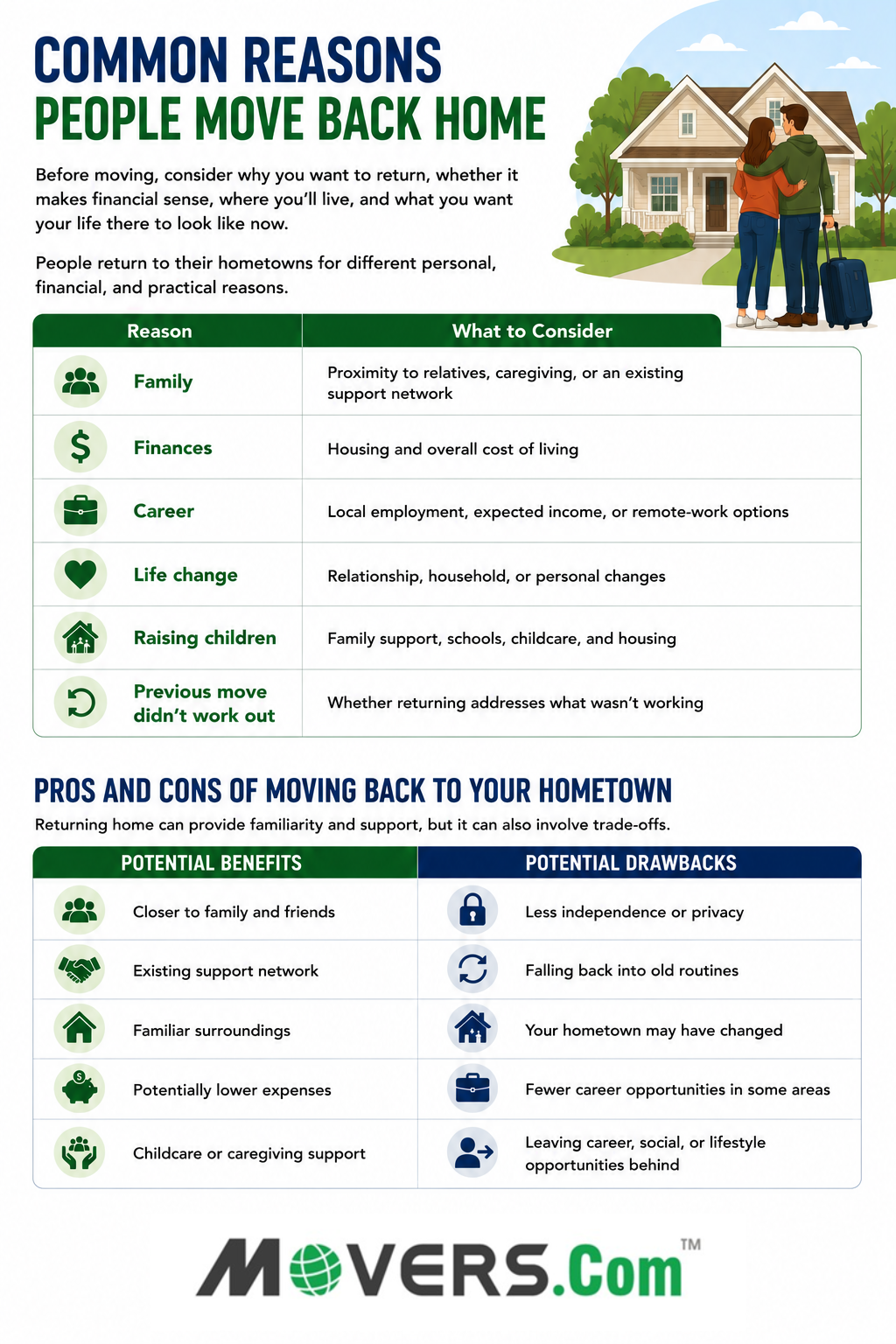
Common Reasons People Move Back Home
People return to their hometowns for different personal, financial, and practical reasons.
| Reason |
What to Consider |
| Family |
Proximity to relatives, caregiving, or an existing support network |
| Finances |
Housing and overall cost of living |
| Career |
Local employment, expected income, or remote-work options |
| Life change |
Relationship, household, or personal changes |
| Raising children |
Family support, schools, childcare, and housing |
| Previous move didn't work out |
Whether returning addresses what wasn't working |
Having several reasons to return can strengthen the case for moving, but compare those benefits with the opportunities, relationships, and lifestyle you'll leave behind.
I Moved Away and Now I Want to Move Back — Is That a Bad Idea?
No. Realizing that another city isn't right for you doesn't necessarily mean your original move was a mistake.
Living somewhere else may have helped you better understand what you value in a community, career, lifestyle, or support network.
Before moving back, identify what isn't working in your current location and what would genuinely improve in your hometown.
Compare:
- Employment and income.
- Housing and overall living costs.
- Family and social support.
- Lifestyle.
- Long-term opportunities.
If your hometown clearly fits your current priorities better, returning may be practical. If you're mainly missing familiar people or routines, consider whether visiting more frequently could address that without another major relocation.
Pros and Cons of Moving Back to Your Hometown
Returning home can provide familiarity and support, but it can also involve trade-offs.
Pros
- Closer to family and friends
- Existing support network
- Familiar surroundings
- Potentially lower expenses
- Childcare or caregiving support
Cons
- Less independence or privacy
- Falling back into old routines
- Your hometown may have changed
- Fewer career opportunities in some areas
- Leaving career, social, or lifestyle opportunities behind
These aren't universal. Your hometown could be more expensive than where you currently live or offer better career opportunities.
Compare your actual circumstances rather than assuming moving home will automatically save money or limit your options.
Research Your Hometown Again Before Moving Back
Even if you grew up there, research your hometown as though you're considering it as a new place to live.
Cities and towns change, and so do your needs. Check current:
- Housing costs and availability.
- Employment opportunities and wages.
- Neighborhoods.
- Overall cost of living.
- Healthcare.
- Transportation and commute.
- Schools or childcare, if relevant.
- Local services and amenities.
If you've been away for several years, visit before committing to the move when practical. Spend time in the neighborhoods you're considering and evaluate the area based on your current lifestyle rather than your memories of living there.
Research Employment Before Moving Back
If possible, understand the local job market before relocating. Compare available jobs, expected pay, commute, and longer-term career opportunities.
If you work remotely, confirm that your employer allows you to continue working from your hometown before making the move.
Lower housing costs won't necessarily improve your finances if your income also drops substantially. If you're moving without a job, determine how long your savings can reasonably cover your expenses while you look for work.
Where Will You Live After Moving Back?
Your housing plan can significantly affect whether moving home makes financial sense.
Renting or Buying Your Own Home
Research current housing prices rather than assuming costs are similar to when you previously lived there.
Compare neighborhoods based on your budget, commute, transportation, space requirements, and everyday needs.
If you're buying, consider whether you expect to stay long enough for homeownership to fit your financial and personal plans.
Moving Back in With Your Parents as an Adult
Moving back in with your parents can reduce immediate housing expenses and give you time to find work, rebuild savings, or plan your next step.
Before moving in, discuss:
- How long you expect to stay.
- Whether you'll pay rent or contribute to household expenses.
- Groceries and utilities.
- Household chores.
- Privacy and guests.
- Parking and storage.
- Your longer-term housing plans.
Treat it as a new adult living arrangement rather than assuming the household will operate exactly as it did when you were younger.
If the arrangement is temporary, having a general timeline or financial goal can help everyone understand what you're working toward.
Rebuild Your Social Life
Returning to your hometown doesn't necessarily mean your old social life will immediately return.
Friends may have moved away, started families, changed careers, or developed different routines. Your interests and priorities may have changed as well.
Reconnect with people you want to see, but also look for opportunities to build new connections through:
- Community activities.
- Recreational groups.
- Professional organizations.
- Classes or hobbies.
- Volunteering.
- Local events.
Focus on creating a social life that fits who you are now rather than trying to recreate the one you had before you moved away.
Plan the Move Back Home
Once you've decided to return, create a practical moving plan.
1. Set a Moving Budget
Estimate expenses for:
- Professional movers or a rental truck.
- Packing supplies.
- Travel.
- Housing deposits.
- Storage, if needed.
- Utility setup.
- Other relocation costs.
If you're moving home partly to save money, make sure the cost of relocating fits your short-term financial plan.
2. Decide What to Bring
If you're moving into a smaller home or staying with family, you may not have room for everything you currently own.
Before packing:
- Sell or donate belongings you no longer need.
- Measure your new space.
- Ask about available storage.
- Avoid paying to move furniture you won't use.
This is particularly important if you're moving from your own home or apartment into a bedroom or shared family space.
3. Compare Your Moving Options
Depending on the distance and amount you're moving, you might use:
Compare total cost, convenience, distance, and how much work you're comfortable handling yourself.
If you hire professional movers for an interstate move, verify the company through the Federal Motor Carrier Safety Administration (FMCSA) and review your estimate and moving documents carefully.
4. Create a Moving Timeline
Work backward from your moving date. Schedule housing, movers, packing, utilities, address changes, any necessary records transfers, and travel.
Starting early gives you more time to compare moving options and handle unexpected changes.
5. Keep Essentials With You
Keep important items accessible during the move, including:
- Identification and important documents.
- Medications.
- Chargers.
- Basic toiletries.
- A few changes of clothing.
- Valuables.
- Keys.
- Essential work items.
If you're staying with family temporarily, separate the belongings you'll use regularly from anything that can remain packed or go into storage.
Give Yourself Time to Adjust After Moving Back
Even when you're returning somewhere familiar, moving back can require an adjustment period.
You may need to establish:
- A new daily routine.
- Boundaries with family.
- New friendships or social activities.
- Employment or career plans.
- Financial goals.
- Long-term housing plans.
Evaluate the move based on your current life rather than comparing everything with how your hometown felt years ago.
If you returned temporarily, set measurable goals. For example, if you moved home to save for your own apartment, establish a savings target and periodically review your progress.
 Bottom Line
Moving back to your hometown can be a practical decision if it better fits your finances, family needs, career, or lifestyle.
But don't assume returning home means returning to the life you had before. Research the area again, understand why you want to move back, make a realistic financial and housing plan, and set clear expectations if you'll be living with family.
The goal isn't to recreate your past. It's to determine whether your hometown fits the next stage of your life.
Editor's Note
Our comparison reviewed by our Moving Industry Analyst team is based on publicly available pricing, customer reviews, and regular moving scenarios.
Housing costs, employment opportunities, and other local conditions can change significantly over time. Research current conditions in your hometown before making a relocation decision, even if you previously lived there.
Get expert moving tips and compare movers for free at Movers.com.
You can get free moving quotes from licensed and insured movers, compare moving companies near you, and plan your move with confidence using our step-by-step moving guides and checklists.
Whether you're planning a local move, a long-distance relocation, or need help with packing and loading, Movers.com connects you with trusted moving professionals and practical tools to make moving easier and more affordable.
Questions? Talk to our moving specialists.