Shipping antiques internationally can involve more than standard customs paperwork. Requirements may depend on the item's age, value, materials, country of origin, destination, and whether it contains protected wildlife, plant materials, or culturally significant objects.
An item being old, collectible, inherited, or described as an antique doesn't automatically exempt it from customs requirements or import restrictions.
Before shipping, identify what the item is made from, gather available documentation showing its age and value, and check the import requirements of the destination country.
What Is Considered an Antique?
There isn't one definition of "antique" that applies to every international shipment. The age threshold and other requirements can depend on the customs classification, tariff provision, wildlife law, or other regulation involved.
For example, an item relying on the U.S. Endangered Species Act antiques exemption must generally be at least 100 years old and satisfy additional conditions. That doesn't mean every item over 100 years old automatically qualifies for every customs or regulatory exemption.
Other countries and customs rules may use different definitions, age thresholds, or requirements.
For international shipping, don't assume an item qualifies for special treatment simply because a seller, appraiser, or owner describes it as an antique.
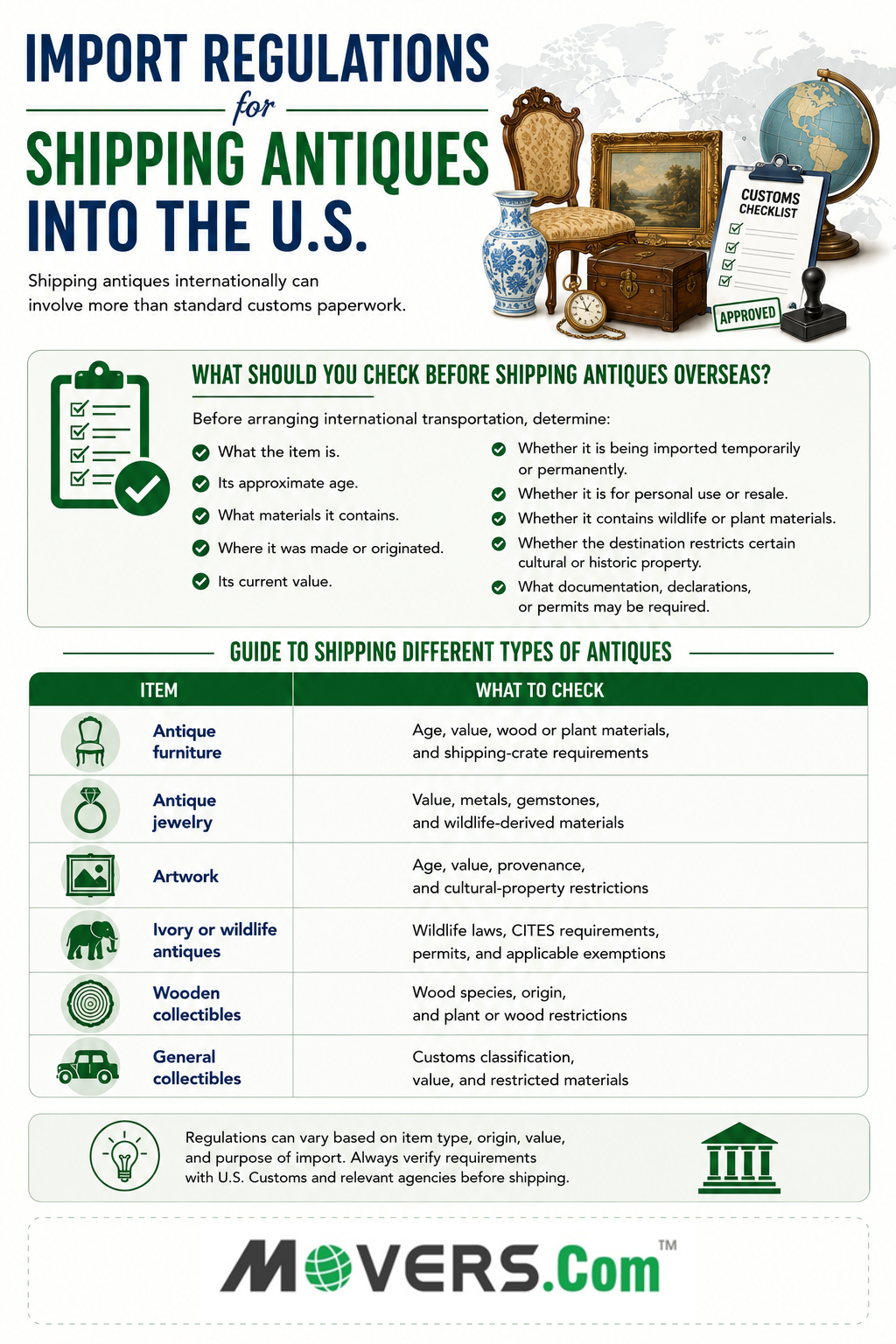
What Should You Check Before Shipping Antiques Overseas?
Before arranging international transportation, determine:
- What the item is.
- Its approximate age.
- What materials it contains.
- Where it was made or originated.
- Its current value.
- Whether it is being imported temporarily or permanently.
- Whether it is for personal use or resale.
- Whether it contains wildlife or plant materials.
- Whether the destination restricts certain cultural or historic property.
- What documentation, declarations, or permits may be required.
Pay particular attention to antiques containing materials such as ivory, tortoiseshell, coral, fur, feathers, certain woods, shell, horn, bone, or reptile skin. These materials may be subject to additional restrictions even when the finished item is old.
Check both the country you're shipping from and the country you're shipping to before the item leaves.
What Documents May Be Needed When Importing Antiques?
Documentation requirements depend on the item, destination, and applicable regulations.
Useful records may include:
- Purchase receipt or invoice, when available.
- Professional appraisal.
- Photographs of the item.
- Provenance or ownership history.
- Description of the materials.
- Approximate date or period of manufacture.
- Country of origin.
- Customs declarations.
- Required permits or certificates.
- Shipping and insurance documents.
Keep copies of important documentation accessible during the move rather than packing every record inside the shipment.
For high-value or unusual antiques, confirm documentation requirements with the appropriate customs or regulatory authority before shipping.
What If You Don't Have a Receipt for an Antique?
Not having the original purchase receipt doesn't necessarily mean you can't ship or import an antique. However, customs or another regulatory agency may still require evidence of the item's age, origin, value, materials, ownership, or eligibility for a particular exemption.
Depending on the item, other supporting documentation may include:
- Professional appraisals.
- Previous insurance records.
- Auction records.
- Catalog descriptions.
- Family photographs.
- Historical records.
- Previous customs documentation.
- Detailed ownership or provenance records.
For antiques involving protected wildlife under U.S. rules, records such as family photographs, art-history publications, catalogs, price lists, provenance records, and qualified appraisals may help establish an item's age and history.
Don't create or alter documentation to replace a missing receipt. Provide accurate information and ask the relevant customs or regulatory authority what alternative evidence it will accept.
Be Careful With Antiques Made From Wildlife Materials
Antiques containing wildlife-derived materials can be significantly more complicated to import or export.
Examples include items containing:
- Ivory.
- Tortoiseshell.
- Coral.
- Fur.
- Feathers.
- Bone.
- Horn.
- Shell.
- Reptile skin.
- Other animal-derived materials.
An item's age doesn't automatically make wildlife material legal to import or export.
In the United States, certain qualifying antiques may be eligible for an exemption under the Endangered Species Act, but the item must satisfy the applicable conditions.
Qualifying for an Endangered Species Act antiques exemption also doesn't automatically eliminate requirements that may apply under CITES or other wildlife laws and regulations.
If you're unsure what animal material an antique contains, identify it before arranging international transportation. Depending on the species, item, origin, destination, and type of transaction, permits or additional documentation may be required.
Can You Ship Antique Jewelry Internationally?
Antique jewelry can often be shipped internationally, but requirements depend on its materials, value, origin, destination, and applicable customs rules.
Pay particular attention to jewelry containing:
- Ivory.
- Coral.
- Tortoiseshell.
- Certain shells.
- Feathers.
- Other wildlife-derived materials.
Jewelry made from commonly traded metals and gemstones may present different regulatory issues than jewelry containing protected wildlife materials.
Before shipping valuable antique jewelry, document its condition and value and check whether the destination country requires specific customs documentation, permits, or declarations.
What About Antique Furniture and Wooden Collectibles?
Antique furniture and wooden collectibles may require additional attention because requirements can depend on the type of wood or plant material, country of origin, and destination.
Before shipping, determine whether the antique contains regulated plant materials or wood species that may require additional documentation or permits.
Also distinguish between the antique itself and the wood packaging used to transport it. If an antique is shipped in a solid-wood crate, pallet, or other regulated wood packaging material, the packaging itself may be subject to ISPM 15 requirements, separate from any rules applying to the antique.
For shipments entering or transiting the United States, regulated wood packaging material must comply with ISPM 15 requirements, including applicable treatment and marking requirements. Other countries may impose their own ISPM 15 requirements.
If an antique requires custom crating, confirm the destination country's requirements for the packaging before shipping.
Shipping Collectibles Internationally
A collectible isn't necessarily an antique.
Coins, memorabilia, vintage toys, watches, books, artwork, and other collectibles may be valuable or old without meeting a particular legal or customs definition of an antique.
Before importing or exporting collectibles:
- Identify and describe the item accurately.
- Determine its approximate value.
- Check whether it contains restricted materials.
- Photograph and document its condition.
- Check the destination country's customs requirements.
- Determine whether permits or certificates are required.
- Consider appropriate insurance for valuable items.
Don't declare an item as an antique solely because it is collectible or described as "vintage."
Importing Antiques for Resale
Importing an antique for personal use and importing merchandise for resale or other commercial purposes may involve different customs, tax, business, or regulatory requirements.
If an antique is being imported for resale, accurately describe the purpose of the shipment on customs documents and determine whether commercial import requirements apply.
Don't assume that an exemption or procedure available for personal belongings also applies to merchandise intended for sale. Requirements can become particularly complex when commercially importing antiques containing protected wildlife or plant materials.
Check Both Export and Import Rules
International antique shipments can be subject to regulations on both sides of the move.
Country of origin → Export requirements
The country the item is leaving may restrict the export of certain antiques, artwork, archaeological objects, culturally significant property, wildlife products, or plant materials.
Destination country → Import requirements
The destination country may have separate customs declarations, duties, permits, inspections, or restrictions.
An item being legal to buy or own in one country doesn't automatically mean it can legally cross an international border.
Check both sets of requirements before shipping, particularly when dealing with valuable antiques, cultural property, wildlife products, or regulated plant materials.
Quick Guide to Shipping Different Types of Antiques
| Item |
What to Check |
| Antique furniture |
Age, value, wood or plant materials, and shipping-crate requirements |
| Antique jewelry |
Value, metals, gemstones, and wildlife-derived materials |
| Artwork |
Age, value, provenance, and cultural-property restrictions |
| Ivory or wildlife antiques |
Wildlife laws, CITES requirements, permits, and applicable exemptions |
| Wooden collectibles |
Wood species, origin, and plant or wood restrictions |
| General collectibles |
Customs classification, value, and restricted materials |
Requirements vary by item and country, so use this table as a starting point rather than assuming the same rules apply to every international shipment.
How to Protect Antiques During an International Move
Once you've confirmed that an antique can legally be shipped:
- Photograph its condition before packing.
- Obtain an appraisal for valuable pieces when appropriate.
- Keep customs, permit, ownership, and appraisal documents accessible.
- Use appropriate cushioning and avoid applying adhesive directly to antique finishes.
- Consider custom crating for fragile, oversized, or high-value pieces.
- Confirm what insurance or transportation protection applies.
For especially valuable or fragile antiques, ask your international mover or shipping provider about packing requirements before preparing the shipment.
Bottom Line
Shipping antiques overseas requires more than determining whether an item is old. Age, materials, value, origin, destination, and whether the item is for personal use or resale can all affect the requirements.
Gather as much documentation as possible, especially for valuable antiques or items containing wildlife or plant materials. A missing receipt doesn't necessarily prevent shipment, but alternative evidence of age, value, ownership, or provenance may be required.
Most importantly, check both the export rules of the country the antique is leaving and the import rules of its destination before shipping it.
Editor's Note
Our comparison reviewed by our Moving Industry Analyst team is based on publicly available pricing, customer reviews, and regular moving scenarios.
International customs, wildlife, plant, cultural-property, and carrier requirements vary by country and can change.
Before shipping a valuable, unusual, or regulated antique, verify current requirements with the relevant customs or government authority and your international moving or shipping provider.
Get expert moving tips and compare movers for free at Movers.com.
You can get free moving quotes from licensed and insured movers, compare moving companies near you, and plan your move with confidence using our step-by-step moving guides and checklists.
Whether you're planning a local move, a long-distance relocation, or need help with packing and loading, Movers.com connects you with trusted moving professionals and practical tools to make moving easier and more affordable.
Questions? Talk to our moving specialists.