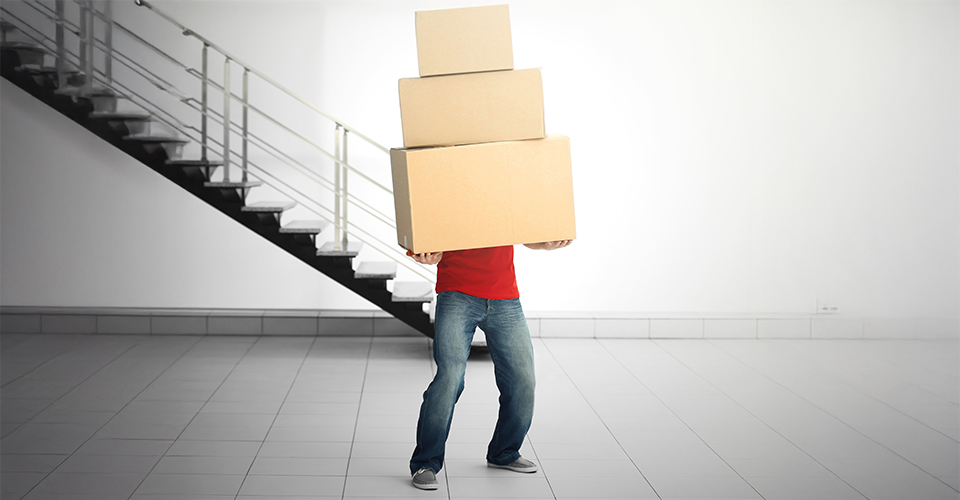
The pressure and anxiety of planning and executing a move can be excruciating.
One of the most arduous tasks during a move is the packing, maneuvering, and transport of our most cumbersome items.
Our furniture, appliances, and electronics are not only some of our most valuable possessions but also our heaviest.
The following are some tips on how to easily and safely move your bulky belongings.
The Basics of Moving Heavy Items Easily
Moving items without hurting yourself, breaking the item, or causing a mess is never easy.
Here are some tips that you can follow to save your back and your items:
Get help.
The aid of professional movers is of course an effective way to lighten the load of moving.
However, if this is not an option for you, friends are a wonderful asset when you are planning a move.
Call a few pals to lend a hand.
You can prevent moving day injuries or accidents by enlisting the assistance of others when moving heavy items.
Plan the route.
Make sure the path you will be moving the item is clear and free of obstacles.
It is also helpful to measure the item as well as any doorways, hallways, or tight spaces it will have to pass through to ensure that it will fit.
Lift carefully.
When lifting heavy items, test the weight of the object to be moved by carefully lifting one corner off of the ground.
Do not try to move something too heavy by yourself, get help from a friend or two.
When lifting an item or placing it down, bend at the knees, not the waist; keep your back straight and upright. Keep the item close to your body while carrying it.
Push, don't pull.
When possible, it is easier to push a large item rather than pull it.
This way, you are more aware of the path you are moving the item and have more control.
To push a large item, lean forward, and use the strength in your legs to start moving.
Moving Heavy Furniture Easily
Make it lighter.
Remove any drawers, shelves, or other contents before attempting to move furniture.
This will make the piece lighter and much easier to lift.
It will also prevent loose items from rattling around and damaging the furniture during the move.
If a cabinet or bookcase is easy to reassemble, you may want to take it apart and move it piece by piece.
If so, be sure to keep track of the nuts and bolts and store them in a secure place.
Use furniture pads.
Furniture pads can be rented from most moving truck rental companies and are essential to protect your furniture from scratches and damage while it is in transit.
Furniture pads come in two varieties, paper and fabric.
While fabric will offer more protection, the paper is cheaper and helpful for smaller appliances like a coffee-maker or microwave.
Use furniture sliders.
Sliders can make the heaviest piece of furniture glide across the floor effortlessly.
Tilt the piece of furniture and place a pad under the raised corner.
Do the same for each of the remaining three corners and you can then push the piece through the room with ease.
Quilts, fabric, old newspapers, or sheets of plastic or cardboard can also be used if you are pushing a piece through the room.
It will facilitate movement, as well as protect the floor and the furniture from abrasion.
Moving Heavy Appliances Easily
Prepare the appliances.
Make sure all shelves, racks, and contents are removed from the appliance.
Unplug refrigerators and freezers 24 hours in advance to defrost.
Turn off any gas connections and disconnect/drain the water lines from washing machines.
Tape the electrical cord to the back of the unit to keep it out of the way.
TIP: Always read the owner's manual for any special instructions on moving the appliance.
Use a dolly.
Refrigerators cannot be laid down or tipped on their side because the oil from the compressor can flood the cooling lines.
To prevent a ruined fridge, a dolly can assist you in keeping the heavy appliance upright during a move.
You simply slide the dolly beneath one side of the appliance and secure it using moving straps.
Lastly, set your foot on the dolly and tilt it back.
- It is helpful to have friends aid you in wheeling the appliance away.
When moving it downstairs, it is best to go bottom first, slowly moving the dolly downwards one step at a time.
Have a helper at the other end of the dolly to help support the weight.
Moving Heavy Items on Stairs
Have you ever tried to lug a couch or refrigerator up or down a flight of stairs?
It's not that easy, and the slightest misstep could result in a painful injury or serious damage to your furniture or appliance.
If you are planning an upcoming move, use these techniques to stay safe on moving day:
Analyze the surroundings.
Know the exact number of stairs you will need to climb or descend and take note of any uneven steps or loose boards that could cause an accident.
Measure the width of the stairway, the placement of corners, and the height of the ceiling and railings to determine how the furniture will need to be moved (and if it should be lifted and carried or pushed).
Measure your piece of furniture or appliance as well as the stairway before you begin.
This way you can better strategize how to effectively carry the item and plan for any twists or turns you may need to make on the way up or down.
Disassemble and wrap your furniture.
It's important to properly wrap your items to protect from scratches, dents, or other damage while hauling them up and down the stairs.
Moving blankets, stretch wrap, and bubble wrap are all effective materials to shield your furniture from damage, dirt, and debris during a move.
Avoid placing plastic bubble wrap or stretch wrap directly on the surface of leather or wood, because the plastic can melt or trap condensation and ruin the delicate surface.
If your furniture can be taken apart, it will make it easier and less cumbersome to carry. Entertainment centers, bookshelves, bedroom sets, and tables can often be disassembled and the pieces wrapped separately.
Build a makeshift ramp out of two boards.
While slowly sliding the item down the boards, you can carefully back down in between them.
Have a friend help you by supporting the item from the other side and directing your footing.
Blankets can also be used to slide heavy items down short flights of stairs.
Some pieces may be more easily moved down the stairs with a makeshift ramp fashioned out of two boards.
While slowly sliding the item down the boards, you can carefully back down in between them.
Have a friend help you by supporting the item from the other side and directing your footing.
Blankets can also be used to slide heavy items down short flights of stairs.
Use moving straps or hand trucks.
Helpful moving tools can be used to make moving heavy items on the stairs a little easier and with less strain on your back.
- Moving straps lower the center of gravity for the item, redistribute the weight, and make it easier to lift.
Since you do not have to bend, it causes your body less stress and helps you move heavy items easily.
- Hand trucks are vertical, two-wheeled dollies used to transport tall-standing appliances or large furniture items like sofas.
Hand trucks must be maneuvered with extreme caution on stairs with assistance to direct you-especially if the item obstructs your view.
Keep the path clear.
Make sure the stairway and the immediate area surrounding the top and bottom of the stairs are clear and free from any obstacles.
Once you have moved your piece up or down the stairs, it should be placed in a safe spot out of the way. This will ensure that other movers don't trip over it.
Get help.
You should never attempt to move heavy or bulky items on your own, especially on a staircase.
Maneuvering a cumbersome piece of furniture or heavy appliance is more difficult on the stairs and can obstruct your view.
Get a few strong helpers, one to help you balance the weight of the item and another to direct your footing and offer instruction from the floor.
Communicate.
Ask a friend to stand at the top of the stairs while another one stands at the bottom to guide you through.
Make sure that they have a clear sight of your path so that they can give instructions on how to maneuver the object effectively.
Move slowly and carefully.
Stairs pose extra difficulty and possible danger compared to moving heavy items on a level surface.
The safest way to negotiate a staircase while carrying anything would be to walk very slowly and carefully.
Either come up the stairs step by step, making sure to plant both feet on a stairway step before going to the next one, or come down the stairs this way.
Conclusion
The process of relocating heavy items does not necessarily have to pose a threat either to your body or your belongings.
With the relevant expertise and equipment, it is easy even for heavy items like furniture and appliances.
However, some items and moves, especially the ones involving many stairs, require expertise.
In instances where the weight seems like a lot, professionals will come in handy and carry out the process effectively.
Do not struggle with the process of relocating heavy items.
Get the best quotes from movers.com.