| Factor |
City Living |
Country Living |
| Housing and space |
Typically denser housing and smaller lots |
Larger properties and more space may be available |
| Transportation |
Public transportation may be available |
A personal vehicle is often more important |
| Shopping and services |
Usually more options nearby |
Some services may require longer drives |
| Employment |
Greater proximity to many employers |
Local opportunities may be more limited or farther away |
| Privacy |
Homes and neighbors are often closer together |
Greater separation between properties may be available |
| Entertainment |
More restaurants, venues, and activities nearby |
Fewer entertainment options may be available nearby |
| Property maintenance |
Often less land to maintain |
Larger properties can require more upkeep |
| Utilities |
Municipal services are common |
Some properties use wells, septic systems, propane, or other private systems |
| Internet and cell service |
High-speed options are generally more widely available |
Availability and reliability can vary by location |
Neither city nor country living is inherently better. The right choice depends on your household's priorities, budget, employment, transportation needs, and preferred lifestyle.
Is Country Living Cheaper Than City Living?
Country living can be less expensive in some locations, but moving to the country doesn't guarantee a lower overall cost of living.
Housing is only part of the calculation. Depending on the location and property, rural households may spend differently on:
- Transportation and fuel
- Vehicles
- Utilities
- Internet service
- Property maintenance
- Well or septic system maintenance
- Heating and other property-specific expenses
For example, lower housing costs could be partially offset by longer driving distances or greater property-maintenance expenses.
Instead of assuming that moving to the country will save money, compare the costs that would actually change for your household in the specific communities you're considering.
What to Consider Before Moving to the Country
Moving from the city to the country can change how you commute, shop, maintain your home, and access everyday services. Before choosing a property, look beyond the additional space or quieter surroundings and consider how the location will work throughout the year.
Transportation and Commute
A personal vehicle is often more important in rural areas, particularly where public transportation is limited or unavailable.
Check the actual driving time from a prospective home to:
- Work
- Schools or childcare
- Grocery stores
- Healthcare providers
- Pharmacies
- Other places you visit regularly
Also consider how seasonal weather and road conditions could affect those trips.
Healthcare and Essential Services
Before moving, check how far the property is from primary care, pharmacies, urgent care, hospitals, grocery stores, schools, and other services your household regularly uses.
For some people, traveling farther for these services is an acceptable trade-off for additional space or privacy. For others, convenient access may be a higher priority.
Internet and Cell Service
Don't assume internet service advertised for a general area is available at every property.
If you work remotely, attend online classes, stream entertainment, or otherwise depend on a reliable connection, confirm the providers and service options available at the specific address before committing to the move.
Check cellular coverage as well, especially if you depend on your phone for work or plan to use mobile service as a backup connection.
Utilities and Property Systems
Some country properties use systems that may be unfamiliar to someone moving from an urban home.
Depending on the property, these can include:
- A private well
- A septic system
- Propane or another heating fuel
- Private trash or recycling service
- Private driveways or access roads
Before buying or renting, understand which systems serve the property, their condition, and who is responsible for maintaining them.
Property Maintenance
More space can also mean more work.
Depending on the property, maintenance could include mowing, landscaping, tree care, snow removal, pest management, fence repairs, driveway maintenance, and upkeep of sheds or other structures.
Consider both the time and expense involved, especially if you're moving from an apartment, condominium, or smaller urban property where many exterior maintenance responsibilities were handled for you.
What Are the Disadvantages of Moving to the Country?
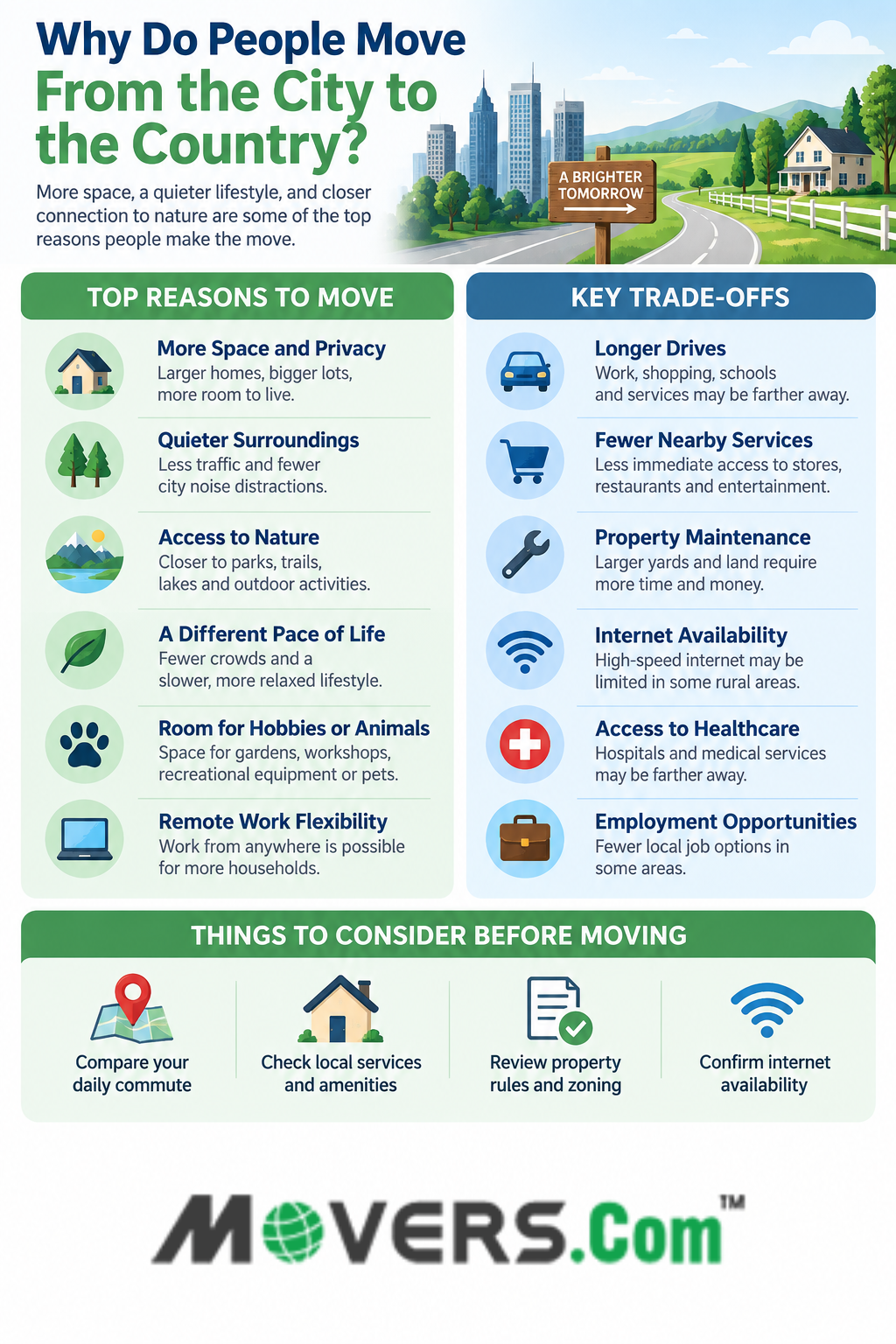
Country living has advantages, but some of the same characteristics that attract people to rural areas can also create challenges.
More distance between homes may provide privacy but require longer trips for work and essential services. More land can provide space for hobbies and outdoor activities but also require additional maintenance.
Potential disadvantages of moving to the country include:
- Longer drives for work, shopping, school, or healthcare
- Limited public transportation in some areas
- Fewer nearby restaurants, stores, and entertainment options
- Internet and cellular service that varies by location
- More property and land maintenance
- Greater dependence on a personal vehicle
- Fewer nearby employment opportunities in some communities
- Responsibility for wells, septic systems, private roads, or other property systems
These aren't necessarily reasons to avoid country living. They're trade-offs to consider when deciding whether a particular location fits your lifestyle and daily needs.
Questions to Ask Before Moving From the City to the Country
Before choosing a country property, think about how the move would affect your everyday routine.
Ask yourself:
- How far will I need to drive for work and everyday necessities?
- Is reliable internet available at the specific property?
- What is cellular coverage like?
- How will my transportation costs change?
- What utilities and property systems will I be responsible for?
- How much property maintenance can I realistically handle?
- How close are healthcare facilities and emergency services?
- Are the schools, childcare options, or other services my household needs available nearby?
- Which conveniences I use now would be harder to access?
- Would this location still work if my employment or commuting needs changed?
Whenever possible, visit the area more than once before deciding. Seeing the community at different times of day can give you a better idea of traffic, noise, travel times, and everyday conditions than a single property viewing.
Planning a Move From the City to the Country
Once you've decided that country living is right for you, consider how the location could affect the move itself.
Rural properties may have long driveways, narrow roads, low branches, unpaved access, gates, limited parking, or other conditions that affect whether a moving truck can reach the home.
Before moving day:
- Check moving-truck access. Confirm that the truck can safely reach the property and that there is an appropriate place to park and unload.
- Tell your movers about access conditions. Provide details about narrow roads, gates, stairs, long carries, steep driveways, or other conditions that could affect the move.
- Arrange essential utilities and services. Confirm electricity, water, internet, heating fuel, and other necessary services before arrival when possible.
- Bring immediate essentials. If stores are farther away, make sure you have medications, food, toiletries, household supplies, and other necessities available for your first few days.
- Review what you're moving. Consider whether all the furniture, appliances, and other belongings from your city home make sense for the layout and needs of the new property.
Providing your moving company with accurate information about the destination helps the crew prepare for the conditions they'll encounter.
Is Moving to the Country Right for You?
Moving from the city to the country may be a good fit if you value space, privacy, outdoor access, and a less densely populated environment and you're comfortable traveling farther for some services.
Country living may be less suitable if you:
- Depend heavily on public transportation
- Need frequent access to specialized healthcare or other services
- Want restaurants, shopping, and entertainment within walking distance
- Prefer minimal property maintenance
- Need to remain close to a large concentration of employers
- Depend on internet or cellular services that aren't reliably available at the property
Instead of asking whether city or country living is better overall, consider which environment better supports your household's priorities, budget, work arrangements, transportation needs, and daily routine.
Most importantly, compare specific communities and properties rather than relying on general assumptions about rural life. Country living can look very different depending on how remote the property is and how close it is to a city or town.
The Bottom Line
People move from the city to the country for different combinations of space, privacy, quieter surroundings, outdoor access, and lifestyle preferences. But those benefits can come with trade-offs, including longer travel distances, additional property responsibilities, and less convenient access to some services.
Before moving, compare the actual housing and transportation costs, commute, utilities, healthcare access, internet availability, and maintenance requirements of the specific community and property you're considering.
If the benefits outweigh the trade-offs for your household, moving from the city to the country can provide the lifestyle you're looking for. Once you've chosen your destination, plan the move early and make sure your movers understand any access conditions at your new property.
For more help preparing for your move, explore Movers.com's moving guides and planning resources.
Editor's Note
This guide has been reviewed by our Moving Industry Analyst team using publicly available information and practical moving considerations relevant to people relocating from the city to the country.
Get expert moving tips and compare movers for free at Movers.com.
You can request free moving quotes, compare moving companies near you, and plan your move with confidence using our step-by-step moving guides and checklists.
Whether you're planning a local move, a long-distance relocation, or need help with packing, loading, or unloading, Movers.com connects you with moving professionals and practical resources to help make your move easier to plan.
Questions about your move? Talk to our moving specialists.