Before repairing dorm room damage, check your college or university's housing policy. Some schools allow students to clean minor scuffs or make limited repairs, while others require maintenance staff to handle paint damage, holes, dents, or drywall repairs.
Photograph the damage and contact your RA, residence life office, or housing department if you're unsure what you're allowed to fix. An unauthorized or poorly completed repair could create additional damage or result in charges at checkout.
This guide covers common dorm room problems, including wall dents, damaged paint, drill holes, and adhesive residue, as well as ways to prevent wall damage in the first place.
What to Do if You Damage Your Dorm Room
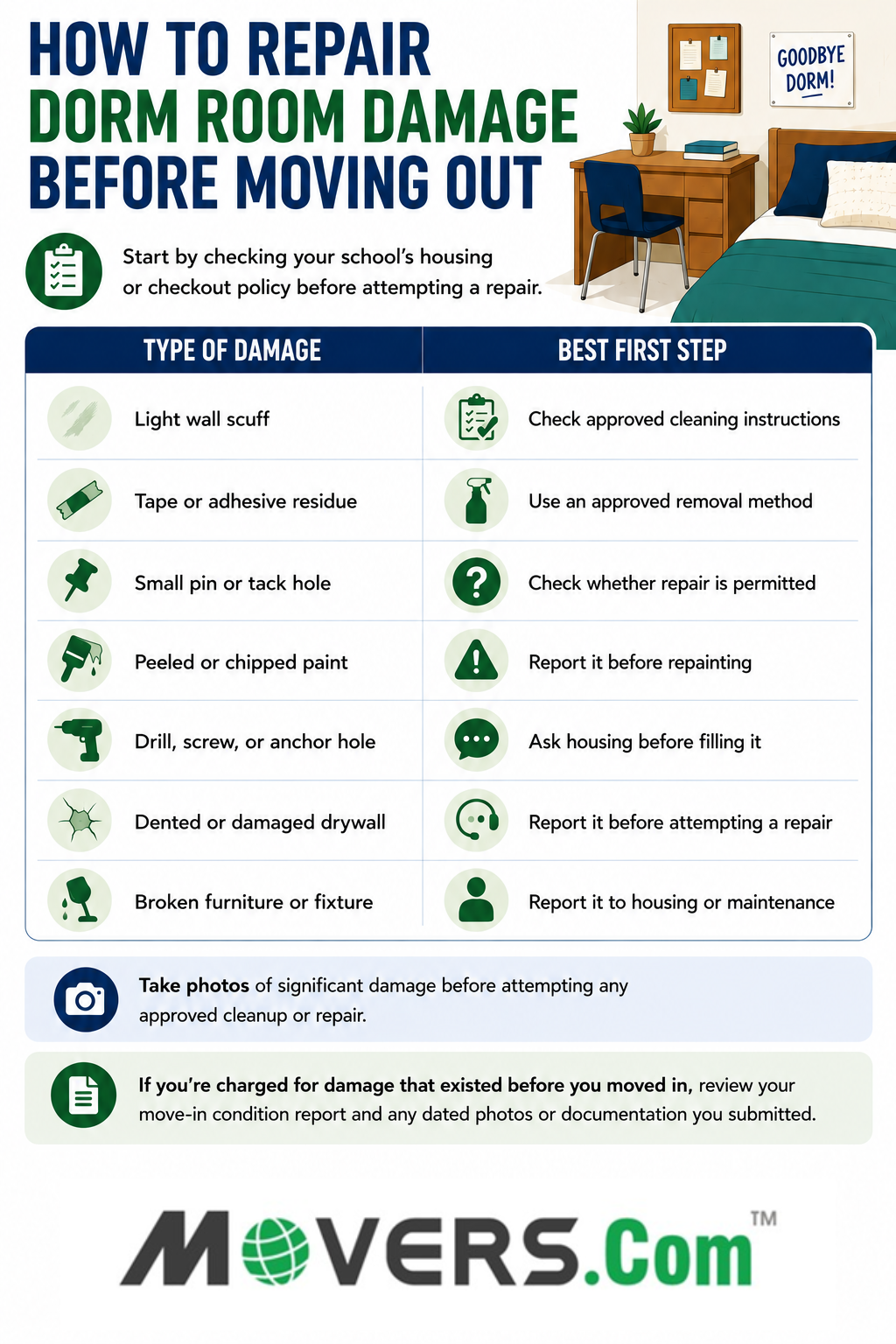
Start by checking your school's housing or checkout policy before attempting a repair.
| Type of Damage |
Best First Step |
| Light wall scuff |
Check approved cleaning instructions |
| Tape or adhesive residue |
Use an approved removal method |
| Small pin or tack hole |
Check whether repair is permitted |
| Peeled or chipped paint |
Report it before repainting |
| Drill, screw, or anchor hole |
Ask housing before filling it |
| Dented or damaged drywall |
Report it before attempting a repair |
| Broken furniture or fixture |
Report it to housing or maintenance |
Take photos of significant damage before attempting any approved cleanup or repair.
How to Fix Dorm Wall Paint Damage
If tape, hooks, adhesive strips, or decorations pull paint from a dorm wall, don't immediately repaint the damaged area.
Instead:
- Photograph the damage.
- Check your residence hall's repair policy.
- Ask housing or maintenance whether you're allowed to repair it.
- Follow the school's approved repair process.
Using the wrong paint color, sheen, primer, or application method can make a small damaged area more noticeable.
If your university requires maintenance staff to repair paint damage, leave the area as instructed rather than trying to cover or repaint it yourself.
What to Do About a Dent in a Dorm Wall
Don't cover a dorm-wall dent with a poster, furniture, or decoration to hide it before checkout.
Photograph the damage and check whether your housing department requires it to be reported or repaired by university maintenance.
If the drywall is dented, cracked, punctured, or crushed, don't apply spackle, joint compound, drywall patches, or paint unless your university specifically allows students to make those repairs.
A poorly completed repair may require additional work and could still result in a damage charge.
What to Do About Drill or Screw Holes in a Dorm Wall
Before filling a drill, screw, nail, or anchor hole, check whether your residence hall allows students to repair walls.
If repairs are permitted, use only the method approved by your university. Otherwise, report the hole and allow housing or maintenance to handle it.
Don't fill wall holes with toothpaste, soap, paper, or other improvised materials. These aren't proper wall-repair materials and may create additional cleanup or damage.
What Tape Is Safe for Dorm Walls?
There is no tape or adhesive that's universally safe or approved for every dorm room.
Rules can vary between universities and even between residence halls because wall materials and finishes may be different.
Some residence halls allow specific removable strips, hooks, putty, tape, or push pins, while others prohibit them.
Don't assume a product labeled "removable" or "damage-free" is automatically approved for your dorm walls. Check the decorating policy for your specific residence hall and wall type before hanging anything.
How to Remove Adhesive Strips Without Damaging Dorm Paint
First, confirm that the adhesive product is permitted in your residence hall and follow the manufacturer's removal instructions.
For Command Strips, 3M instructs users slowly stretch the adhesive tab straight down along the wall, keeping it close to the wall as it releases.
Don't pull the strip outward toward you, as this can increase the chance of damaging the wall surface.
If the removal tab breaks or the adhesive doesn't release normally, don't aggressively scrape or pry it from the wall. Follow the manufacturer's instructions or ask housing staff how they want it removed.
If paint begins peeling, stop and check with your housing department before attempting to repair the area.
How to Prevent Dorm Wall Damage
The easiest way to avoid dorm wall damage is to check your residence hall's decorating rules before hanging anything.
Before decorating:
- Use only tapes, hooks, adhesive strips, pins, or fasteners permitted by your school.
- Follow the product manufacturer's application and removal instructions.
- Don't assume products labeled "removable" or "damage-free" are approved.
- Don't drill, screw into, or paint walls unless specifically permitted.
- Never attach decorations to sprinklers, smoke detectors, or other safety equipment.
Wall materials and finishes can vary between buildings, so a hanging method permitted in one residence hall may not be allowed in another.
Document Existing Damage When You Move In
Inspect your dorm room when you first move in and document any existing damage according to your school's check-in procedure.
Photograph and report existing wall dents, holes, chipped paint, flooring damage, broken furniture, damaged doors, blinds, or fixtures within your school's required timeframe.
Keeping a record of pre-existing damage can help distinguish it from damage that occurs while you're living in the room.
Can You Be Charged for Dorm Room Damage?
Yes, colleges and universities may charge students for damage beyond normal wear and tear.
What qualifies as chargeable damage and the amount charged depend on the school's housing agreement and damage policy. Review your move-out guidelines for rules covering walls, paint, floors, furniture, fixtures, and other university property.
Don't assume every small hole, chipped area, or wall mark will automatically result in a charge. Policies vary by school.
What if You Didn't Cause the Damage?
If you're charged for damage that existed before you moved in, review your move-in condition report and any dated photos or documentation you submitted.
Follow your university's formal damage-charge or appeal process and provide supporting documentation within the required timeframe.
This is another reason it's important to document the condition of your dorm room when you first move in.
Bottom Line
Before repairing dorm room damage, check your university's housing policy. Minor scuffs or adhesive residue may be something you're allowed to clean yourself, while peeled paint, dents, drywall damage, and drill holes may need to be handled by maintenance.
Photograph the damage, don't try to hide it, and avoid spackling or repainting unless your school specifically permits you to make the repair.
Editor's Note
Our comparison reviewed by our Moving Industry Analyst team is based on publicly available pricing, customer reviews, and regular moving scenarios.
Dorm room repair, decorating, and damage policies vary by college, residence hall, and wall type. Always check your school's current housing policies before repairing, painting, drilling, or applying adhesive products to university property.
Get expert moving tips and compare movers for free at Movers.com.
You can get free moving quotes from licensed and insured movers, compare moving companies near you, and plan your move with confidence using our step-by-step moving guides and checklists.
Whether you're planning a local move, a long-distance relocation, or need help with packing and loading, Movers.com connects you with trusted moving professionals and practical tools to make moving easier and more affordable.
Questions? Talk to our moving specialists.