If you're wondering how much movers cost for a one-bedroom apartment, most local moves range from $400 to $1,600, while long-distance moves typically cost $700 to $3,000. Cross-country moves typically cost between $2,000 and $5,000 or more, depending on distance, the amount of belongings, and the services you choose.
This guide explains the costs of moving a one-bedroom apartment, what factors affect them, and some ways to save money.
Moving Cost Snapshot
Before going into detailed breakdowns, it helps to quickly understand the general cost range for moving a one-bedroom apartment. Moving costs vary based on distance, services used, and the complexity of the move. Basic valuation coverage is usually included, while full-value protection costs extra.
The cost of moving a studio apartment typically ranges from $300 to $1,200 for a local move. Although studios are usually less expensive to move than one-bedroom apartments, the price often depends more on the volume of your belongings than the apartment size itself. A fully furnished studio with large furniture may cost nearly as much as a lightly furnished one-bedroom apartment.
| Move Type |
Average Cost |
| Studio Apartment |
$300–$1,200 |
| One-Bedroom Local |
$400–$1,600 |
| One-Bedroom Long Distance |
$700–$3,000 |
| Cross Country |
$2,000–$5,000+ |
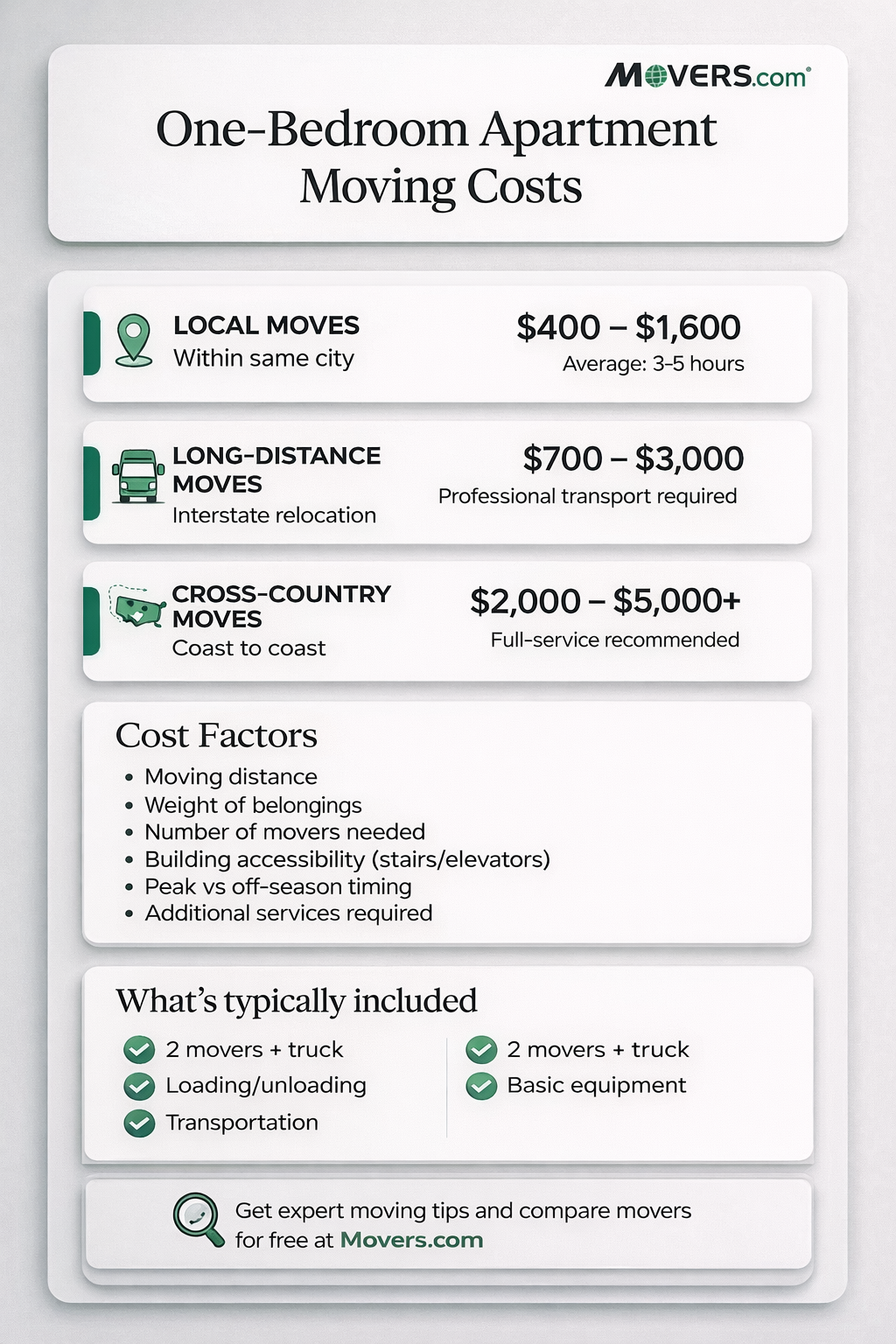
These estimates provide a quick overview of what you may expect to pay. However, the final cost will depend on several factors, including the number of belongings you have and the services you choose.
Average Cost to Move a One-Bedroom Apartment
Before planning your move, you should know the average moving costs for a one-bedroom apartment. In most cases, moving companies figure out how much to charge based on the size of the move, how long it will take, and how far apart the starting point and destination are.
For a one-bedroom apartment, a moving team of just two movers and a moving truck will be all you will need. The whole process will take you three to five hours for a local move. Long-distance moves generally cost more because of increased transportation, labor, fuel, and logistics costs.
Below is a general overview of the average moving costs.
| Type of Move |
Average Cost |
| Average One-Bedroom Local Move |
$400 to $1,600 |
| Average One-Bedroom Long-Distance Move |
$700 to $3,000 |
For reference, the average residential move across all home sizes costs about $1,850 nationwide. Since this includes studios through larger homes, it should not be used as the average cost of moving a one-bedroom apartment.
These numbers represent general industry estimates. Your final cost may vary depending on the size of your shipment and the services you choose.
To get the most accurate estimate, it is always best to request quotes from several moving companies.
Moving Cost by Distance Examples
Distance plays one of the biggest roles in determining moving costs. The farther your belongings must travel, the higher the transportation expenses will be.
Below are some examples that show how moving distance can influence pricing.
Examples of distance based moving costs include:
- Up to 50 miles (same city): $400 to $800
- 50-300 miles: $700 to $1,500
- 300 to 800 miles: $1,500 to $3,000
- 1,000+ miles (cross-country): $2,000 to $5,000+
These estimates show how transportation distance directly impacts pricing. Local moves tend to be less expensive because they require less fuel, travel time, and logistics.
What Movers Consider a One-Bedroom Apartment
Moving companies estimate the cost of your move based on the volume and weight of your belongings, not just the square footage of your apartment. This helps them determine how much truck space, labor, and time will be required to complete the move.
Most one-bedroom apartments include a similar set of furniture and household items. While every home is different, movers typically expect the following items in a one-bedroom relocation.
Common items in a one-bedroom apartment move include:
- Bed frame and mattress
- Sofa or loveseat
- Coffee table and side tables
- Dining table and chairs
- Dresser and nightstands
- Television and electronics
- Kitchen appliances and cookware
- Boxes of clothing and personal belongings
The quantity and size of these items determine how much space will be needed in the moving truck.
For example, someone with minimal furniture may complete the move quickly with only a few boxes. In contrast, a fully furnished apartment with multiple pieces of furniture will require more labor and transportation space.
Cost of a Local Move
A local move is generally considered a move within the same city or metropolitan area, often up to about 50 miles. Some moving companies may classify moves of up to 100 miles as local.
For a one-bedroom apartment, two movers and a truck will be sent by the moving company. The hourly fee will cover labor costs as well as transportation. Local moving costs generally include:
- Hourly rate for movers and truck
- Labor for loading and unloading belongings
- Transportation between the two locations
- Basic equipment such as dollies and furniture pads
Most local movers charge between $100 and $200 per hour for two movers and a truck, depending on location and demand.
Most one-bedroom apartment moves take three to five hours. At typical hourly rates of $100 to $200 for two movers and a truck, local moving costs generally range from about $400 to $1,000. Larger apartments, additional movers, packing services, stairs, or long carry fees can increase the total cost to around $1,600.
However, the total time required can increase if there are obstacles such as stairs, narrow hallways, long walking distances, or limited parking near the building.
Cost of a Long-Distance Move
Long-distance moves involve significantly more logistics than local moves. Instead of charging hourly rates, moving companies usually base their pricing on the distance traveled and the total weight of your belongings.
Long-distance moving companies generally price moves based on shipment weight (or volume), distance, fuel costs, and additional services rather than hourly labor.
Because the moving truck may travel hundreds or even thousands of miles, additional costs such as fuel, driver time, and transportation planning must be considered.
Long-distance moving costs often include:
- Transportation based on mileage
- Weight or volume of the shipment
- Fuel and travel expenses
- Labor for loading and unloading
- Delivery coordination and scheduling
For a one-bedroom apartment, long-distance moving costs typically range from $700 to $3,000. Cross-country relocations can exceed $5,000 depending on the distance and services requested.
Comparing quotes from multiple moving companies is especially important when planning a long-distance move.
How Much Does It Cost to Move a Studio Apartment?
A studio apartment generally costs slightly less to move than a one-bedroom apartment because it usually contains fewer belongings.
| Move Type |
Typical Cost |
| Local Studio |
$300–$1,200 |
| Local One Bedroom |
$400–$1,600 |
The exact cost depends more on how much you own than the apartment size.
How Much Does It Cost to Move a One-Bedroom Apartment Cross Country?
Moving a one-bedroom apartment across the country typically costs between $2,000 and $5,000 or more. The final price depends on the distance, total shipment weight, delivery schedule, and optional services such as packing or storage.
Example ranges:
| Distance |
Typical Cost |
| 1,000 miles |
$1,800–$3,000 |
| 2,000 miles |
$2,500–$4,000 |
| Coast to Coast |
$3,500–$5,500+ |
How to Estimate Your One-Bedroom Moving Cost
Estimate using:
- Moving distance
- Number of boxes
- Large furniture
- Packing services
- Stairs or elevators
- Storage needs
Request quotes from at least three licensed movers to compare pricing and services. When comparing quotes, ask whether the estimate is binding, non-binding, or binding not-to-exceed. Understanding the estimate type can help you avoid unexpected costs on moving day.
A simple way to estimate a local moving cost is:
Estimated Local Cost = Hourly Rate × Hours + Additional Fees
Keep in mind that additional fees may include packing services, stairs, long carries, or storage.
Key Factors That Affect Moving Costs
Since each move is different, the final cost will vary depending on various factors. The moving companies assess these factors to calculate the labor, equipment, and transportation required for the move.
Some of the most important factors that influence moving costs include:
- Distance between your current home and the new location
- Total weight or volume of your belongings
- Number of movers required for the job
- Accessibility of the apartment building
- Time of year and demand for moving services
- Additional services such as packing or storage
Each of these factors affects the overall complexity of the move.
For example, moving during peak summer months often costs more because demand for movers is higher. Similarly, buildings with multiple flights of stairs may require additional labor and time.
Additional Costs You Should Expect
Some people are worried about the base moving price, but it's important to remember that there are other costs that may come up during the move. In most cases, these extra costs depend on what you ask for.
You can make a realistic moving budget by knowing about these possible costs.
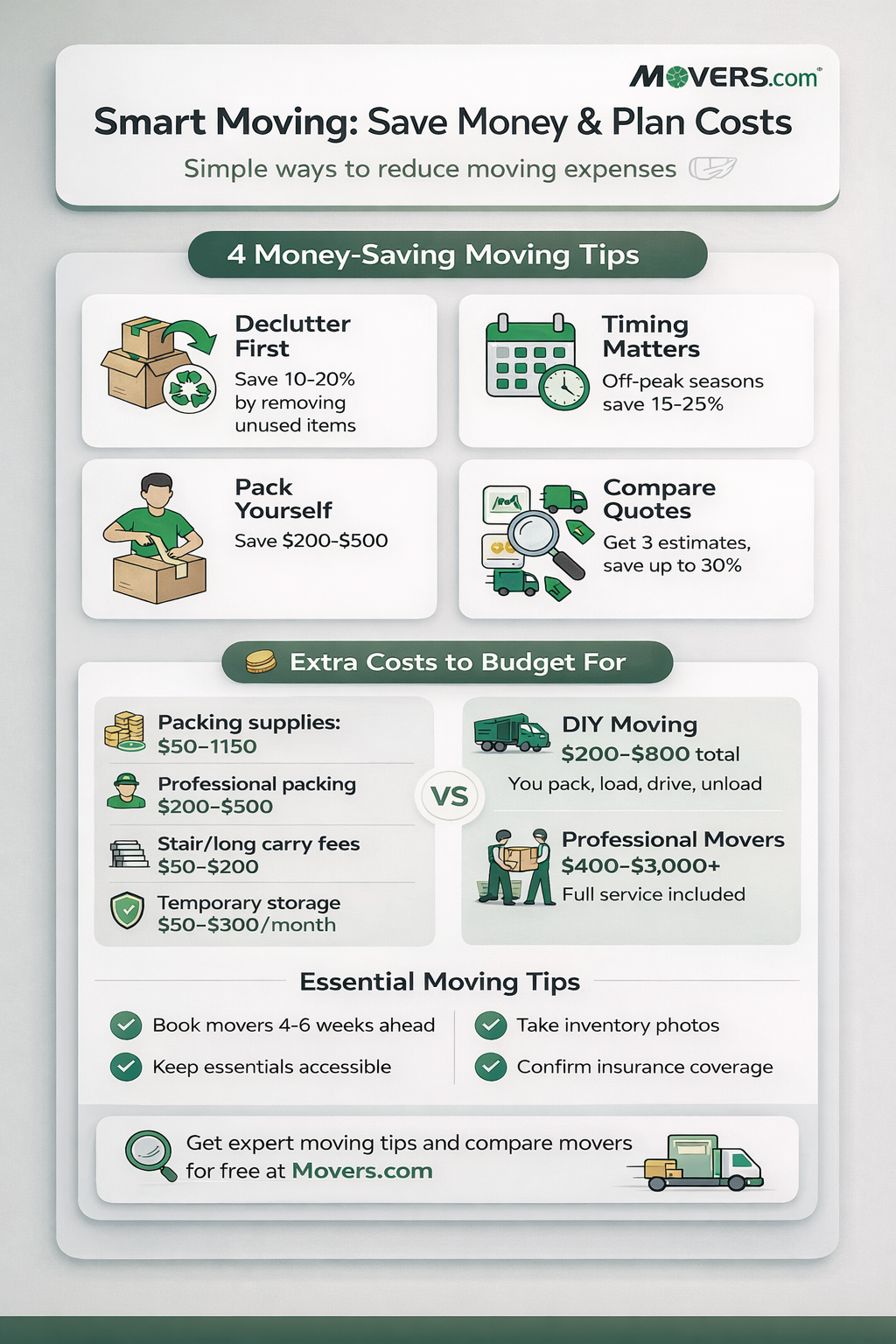
Some common additional moving costs include:
- Packing supplies such as boxes, tape, and bubble wrap
- Professional packing services
- Furniture disassembly and reassembly
- Stair fees for buildings without elevators
- Long carry fees when the truck cannot park nearby
- Temporary storage services
- Additional valuation coverage or moving insurance beyond the basic protection included by the mover
Most moving companies include basic valuation coverage at no extra charge, but you can purchase additional protection for higher-value belongings.
These additional services can increase the total cost of your move, but they can also make the moving process much easier.
Always review your estimate carefully so you understand which services are included.
DIY Moving vs Hiring Professional Movers
Many people consider moving on their own to save money. While this approach may reduce labor costs, it still involves several expenses and responsibilities.
A do-it-yourself (DIY) move requires renting equipment, transporting your belongings, and handling all the heavy lifting yourself.
| DIY Move |
Professional Movers |
| Lower upfront cost |
Higher convenience |
| More physical effort |
Less stress |
| Truck rental required |
Truck included |
| Best for short moves |
Best for long-distance moves |
Typical DIY moving costs include:
- Truck rental fees
- Fuel and mileage charges
- Packing supplies and moving boxes
- Equipment rentals such as dollies and straps
- Insurance coverage for the rental vehicle
Although moving yourself can reduce the cost of hiring movers, it requires a significant amount of time and effort.
Professional movers offer convenience and efficiency. They have the experience and equipment needed to move heavy furniture safely and complete the job more quickly.
Tips to Save Money When Moving:
Moving costs can add up quickly, but careful planning can help you reduce your overall expenses.
Consider these money-saving tips:
- Decluttering your belongings before packing
- Moving during weekdays instead of weekends
- Scheduling your move during the fall or winter
- Packing your belongings yourself
- Comparing quotes from multiple moving companies
Each of these steps can reduce the amount of labor or transportation required for your move.
By planning your move carefully, you can keep your costs manageable while still ensuring a smooth relocation.
Example Moving Cost Scenarios
Looking at realistic examples can help you understand how moving costs are calculated.
Example 1: Local Move
Imagine you are moving within the same city and your apartment contains basic furniture and about 20 boxes.
- Two movers and a truck
- Four hours of labor
- Hourly rate of $140
Estimated cost: $400 to $600
Example 2: Interstate Move
Now imagine you are moving to another state, about 500 miles away.
- One-bedroom apartment shipment
- Professional movers handling transportation
- Basic loading and unloading services
Estimated cost: $1,500 to $3,000
These examples demonstrate how distance and logistics can significantly impact moving costs.
Editor's Note
Moving a one-bedroom apartment within the same city may cost a few hundred dollars, while a long-distance move can cost several thousand dollars. Your final price will depend on the distance, the amount of belongings you have, and any additional services you choose.
Understanding how moving costs are calculated can help you plan a realistic budget and avoid unexpected expenses. Comparing quotes, decluttering before your move, and booking early are some of the most effective ways to keep costs under control.
Compare free quotes from licensed and insured movers, review moving companies near you, and use Movers.com's expert guides and checklists to plan with confidence. Whether you are moving locally or across the country, Movers.com can help you find trusted moving professionals and practical resources to make your move easier and more affordable.
Questions? Talk to our moving specialists.