Typical moving expenses include transportation, packing supplies, moving labor, travel costs, utility deposits, storage fees, cleaning services, moving insurance or valuation coverage, and unexpected moving-related expenses. The total cost of moving depends on the distance, the size of your home, and the services you choose, but planning for every expense can help you avoid unexpected costs.
This guide explains the most common moving expenses, average moving costs, hidden fees, and practical ways to create a realistic moving budget.
Typical Moving Expenses at a Glance
| Moving Expense |
What It Covers |
Typical Cost* |
| Professional movers |
Loading, transportation, unloading |
Moderate to High |
| Moving truck rental |
DIY transportation |
Low to Moderate |
| Packing supplies |
Boxes, tape, padding, labels |
Low |
| Moving labor |
Loading and unloading only |
Moderate |
| Storage |
Short- or long-term storage |
Moderate |
| Moving insurance or valuation |
Additional protection for belongings |
Low to Moderate |
| Utility deposits and connection fees |
Electricity, water, internet, gas |
Low to Moderate |
| Travel expenses |
Fuel, hotels, meals, flights |
Varies |
| Cleaning services |
Move-out or move-in cleaning |
Low to Moderate |
| Unexpected expenses |
Parking permits, stairs, long carries |
Varies |
*Actual costs vary depending on your location, move size, distance, timing, and service provider.
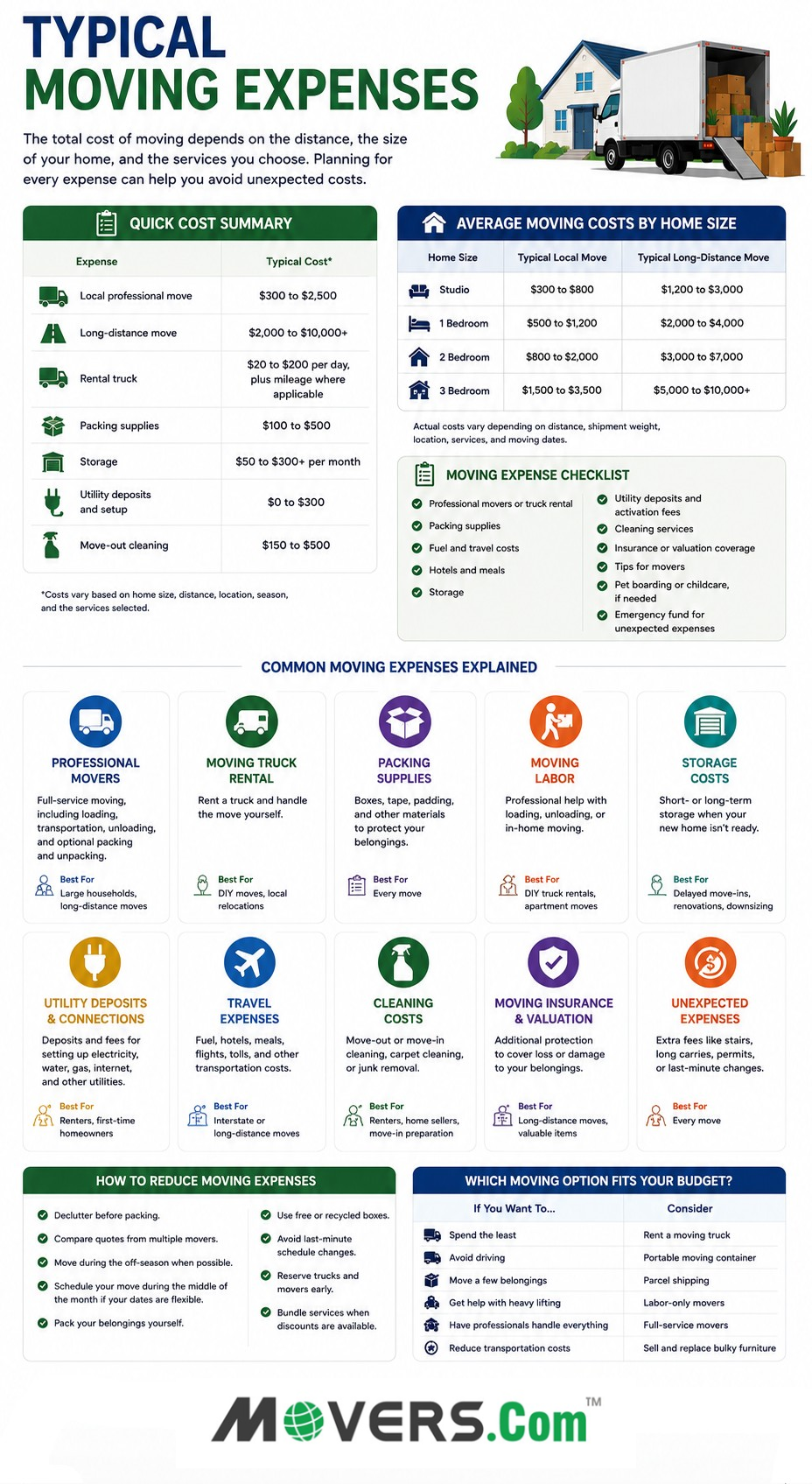
Quick Cost Summary
| Expense |
Typical Cost* |
| Local professional move |
$300 to $2,500 |
| Long-distance move |
$2,000 to $10,000+ |
| Rental truck |
$20 to $200 per day, plus mileage where applicable |
| Packing supplies |
$100 to $500 |
| Storage |
$50 to $300+ per month |
| Utility deposits and setup |
$0 to $300 |
| Move-out cleaning |
$150 to $500 |
*Costs vary based on home size, distance, location, season, and the services selected.
How Much Does It Cost to Move?
The cost of moving can range from a few hundred dollars for a local DIY move to several thousand dollars for a long-distance relocation with professional movers.
Your total moving expenses depend on several factors, including:
- Moving distance
- Size of your home
- Weight or volume of your belongings
- Type of moving service
- Packing and storage needs
- Time of year
- Accessibility at both locations
- Insurance or valuation coverage
Understanding every expense involved can help you create a more accurate moving budget and reduce financial surprises.
Average Moving Costs by Home Size
| Home Size |
Typical Local Move |
Typical Long-Distance Move |
| Studio |
$300 to $800 |
$1,200 to $3,000 |
| 1 Bedroom |
$500 to $1,200 |
$2,000 to $4,000 |
| 2 Bedroom |
$800 to $2,000 |
$3,000 to $7,000 |
| 3 Bedroom |
$1,500 to $3,500 |
$5,000 to $10,000+ |
Actual costs vary depending on distance, shipment weight, location, services, and moving dates.
What Expenses Should You Budget for When Moving?
Many people budget only for the moving company, but several additional expenses are easy to overlook.
A complete moving budget should include:
- Transportation
- Packing supplies
- Moving labor
- Storage
- Utility deposits
- Cleaning costs
- Travel expenses
- Insurance or valuation coverage
- Temporary lodging if needed
- Unexpected moving fees
Planning for these costs in advance can make your move much less stressful.
Moving Expense Checklist
Use this checklist when creating your moving budget:
- Professional movers or truck rental
- Packing supplies
- Fuel and travel costs
- Hotels and meals
- Storage
- Utility deposits and activation fees
- Cleaning services
- Insurance or valuation coverage
- Tips for movers
- Pet boarding or childcare, if needed
- Emergency fund for unexpected expenses
Professional Movers
Hiring professional movers is often the largest moving expense, but it can also save significant time and physical effort. Depending on the services you choose, movers can handle packing, loading, transportation, unloading, and even unpacking.
The final price usually depends on:
- Distance
- Shipment size or weight
- Home size
- Additional services
- Accessibility
- Moving date
Best For
- Large households
- Long-distance moves
- Busy families
- People who want full-service moving
Moving Truck Rental
Renting a moving truck is one of the most affordable options for people who are comfortable handling the move themselves.
Your rental cost may include:
- Daily truck rental
- Mileage charges (for many local rentals)
- Fuel
- Insurance
- Equipment rentals
- Taxes and fees
Best For
- DIY moves
- Local relocations
- Budget-conscious movers
Packing Supplies
Packing supplies are a relatively small expense compared to transportation, but the cost can add up quickly for larger homes.
Common packing supplies include:
- Moving boxes
- Packing tape
- Bubble wrap
- Packing paper
- Furniture pads
- Stretch wrap
- Labels and markers
Specialty boxes for televisions, mirrors, artwork, wardrobes, dishes, and other fragile items typically cost more than standard moving boxes. You may be able to reduce costs by using free boxes from local retailers or community groups.
Best For
- Every move
- Protecting fragile belongings
Moving Labor
If you prefer to drive the moving truck yourself but need help with the heavy lifting, hiring labor-only movers can be a cost-effective compromise.
Labor-only services typically help with:
- Loading
- Unloading
- Rearranging furniture
- In-home moving
- Heavy items
Best For
- DIY truck rentals
- Portable moving containers
- Apartment moves
Storage Costs
If your new home isn't ready when you move, storage may become an additional expense. Many moving companies offer short-term or long-term storage, and you can also rent a self-storage unit.
Storage costs vary depending on:
- Unit size
- Storage duration
- Climate-controlled storage
- Location
- Insurance coverage
Best For
- Delayed move-ins
- Temporary housing
- Downsizing
- Home renovations
Utility Deposits and Connection Fees
Moving often involves transferring or setting up utilities at your new home. Depending on the provider and your credit history, you may need to pay deposits or activation fees.
Common utility expenses include:
- Electricity
- Natural gas
- Water and sewer
- Internet
- Cable or streaming services
Some utility companies waive deposits for customers with an established payment history or qualifying credit.
Best For
- Renters
- First-time homeowners
- Interstate moves
Travel Expenses
If you're moving a long distance, transportation costs extend beyond the moving truck.
Typical travel expenses include:
- Fuel
- Hotels
- Meals
- Flights
- Tolls
- Parking
- Vehicle shipping
- Vehicle registration and driver's license updates after an interstate move
Travel expenses vary depending on the number of travelers, distance, and method of transportation.
Best For
- Interstate moves
- Cross-country relocations
Cleaning Costs
Whether you're moving out of a rental or preparing your new home, cleaning expenses can be part of your moving budget.
Typical cleaning costs include:
- Move-out cleaning
- Carpet cleaning
- Window cleaning
- Deep cleaning
- Junk removal
Some landlords require professional cleaning before returning a security deposit.
Best For
- Renters
- Home sellers
- Move-in preparation
Moving Insurance and Valuation Coverage
Professional movers typically include Released Value Protection at no additional cost, but this offers only limited reimbursement if your belongings are lost or damaged.
Many movers also offer Full Value Protection for an additional charge, which generally provides more comprehensive coverage.
If you're transporting valuable belongings, compare the available valuation options before moving day.
Best For
- Long-distance moves
- Valuable furniture
- Electronics
- Antiques
- High-value household goods
Unexpected Moving Expenses
Unexpected costs are common during a move and can significantly affect your budget if you haven't planned for them.
Examples include:
- Long carry fees
- Stair fees
- Elevator reservation fees
- Shuttle service charges
- HOA move-in or move-out fees
- Security deposits
- Parking permits
- Appliance servicing
- Last-minute schedule changes
- Bulky or specialty-item fees
Setting aside an emergency moving fund can help cover these unexpected expenses.
What Expenses Are Tax Deductible?
For most people, moving expenses are not tax deductible under current federal tax law.
However, certain active-duty members of the U.S. Armed Forces who move because of a military order may qualify for a federal moving expense deduction if they meet IRS requirements.
If you believe you qualify, consult the IRS or a qualified tax professional for current eligibility rules.
How to Reduce Moving Expenses
No matter how you're moving, these tips can help lower your total costs:
- Declutter before packing.
- Compare quotes from multiple movers.
- Move during the off-season when possible.
- Schedule your move during the middle of the month if your dates are flexible.
- Pack your belongings yourself.
- Use free or recycled moving boxes.
- Avoid last-minute schedule changes.
- Reserve trucks and movers early.
- Bundle services when discounts are available.
Which Moving Option Fits Your Budget?
| If You Want To... |
Consider |
| Spend the least |
Rent a moving truck |
| Avoid driving |
Portable moving container |
| Move a few belongings |
Parcel shipping |
| Get help with heavy lifting |
Labor-only movers |
| Have professionals handle everything |
Full-service movers |
| Reduce transportation costs |
Sell and replace bulky furniture
|
 Bottom Line
Typical moving expenses include far more than just hiring movers or renting a truck. Transportation, packing supplies, storage, travel, cleaning, utility deposits, insurance or valuation coverage, and unexpected fees can all affect your total moving budget.
Planning ahead, comparing multiple quotes, and budgeting for every stage of the move can help you avoid surprise expenses and make your relocation more affordable. Whether you're moving locally or across the country, understanding your expected costs is one of the best ways to stay on budget and reduce moving stress.
Editor's Note
This guide was reviewed by the Movers.com Moving Industry Analyst team using publicly available moving cost resources, relocation industry practices, and common residential moving scenarios.
Actual moving expenses vary based on factors such as home size, moving distance, service level, season, location, and individual circumstances. This guide is intended to help you identify and budget for the most common costs associated with moving.
Get expert moving tips and compare movers for free at Movers.com.
You can compare licensed and insured movers, request free moving quotes, and plan your move with confidence using our step-by-step moving guides, checklists, and practical budgeting resources.
Whether you're planning a local move, a long-distance relocation, or a DIY move, Movers.com connects you with trusted moving professionals and useful tools to make moving easier and more affordable.
Questions? Talk to our moving specialists.