The best way to organize important documents is to gather them in one place, sort them by category, remove paperwork you no longer need, and create a simple filing system for everything you're keeping.
Before a move, important records such as identification, financial documents, insurance policies, medical information, property records, and moving paperwork should be kept secure and accessible. Avoid packing irreplaceable originals or documents you may need immediately in the moving truck.
This guide explains how to organize physical documents, mortgage and property records, digital copies, and other important paperwork before moving.
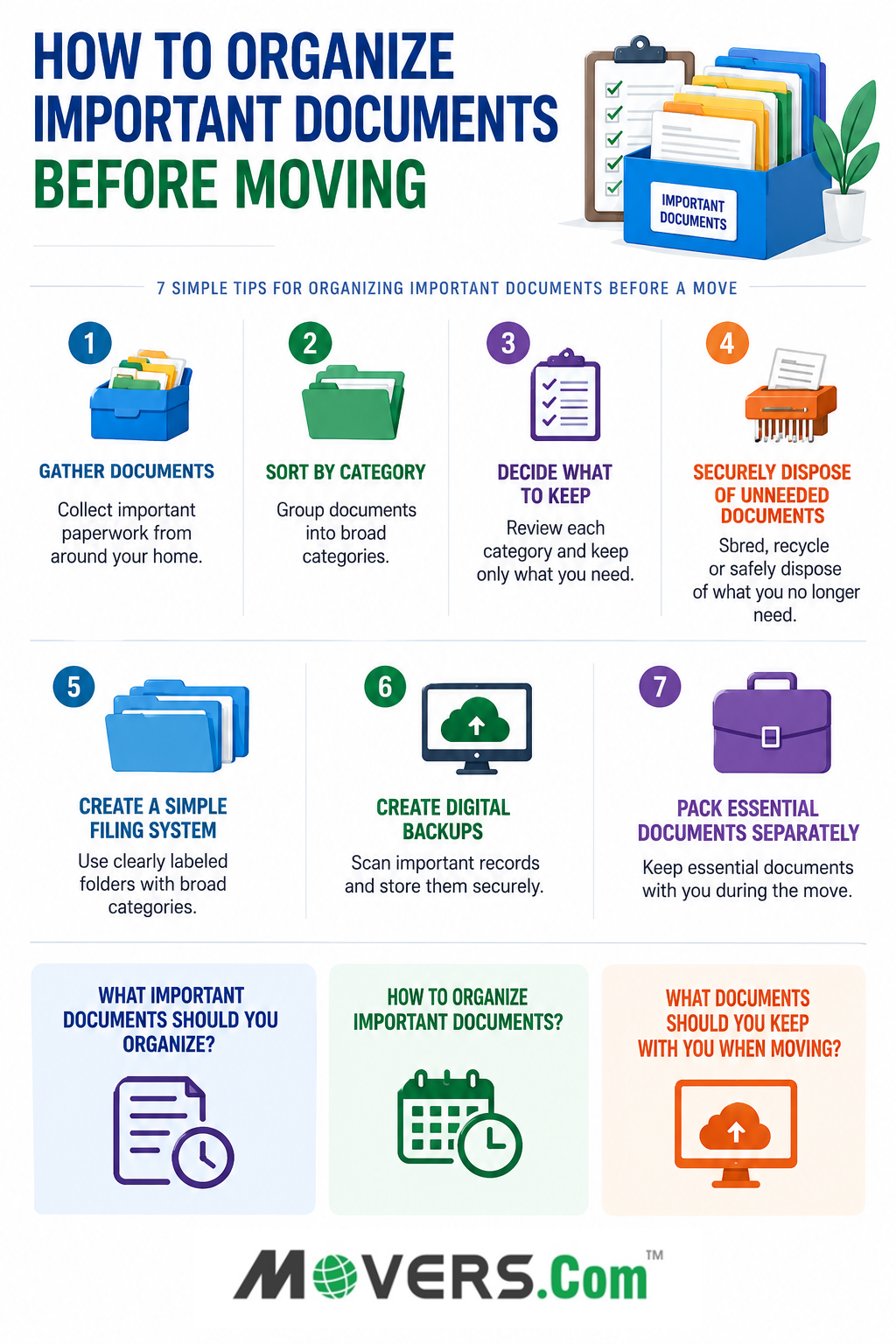
7 Tips for Organizing Important Documents Before a Move
Moving is a good opportunity to sort through accumulated paperwork and create a filing system you can continue using in your new home.
Gather Your Documents in One Place
Start by collecting important paperwork from around your home.
Check places such as:
- Filing cabinets
- Desk drawers
- Safes or lockboxes
- Closets and storage boxes
- Home offices
- Kitchen drawers
- Personal bags or briefcases
Gathering everything first makes it easier to identify duplicates, missing records, and documents that belong together.
Sort Documents by Category
Separate your paperwork into broad categories rather than creating a different folder for every individual document.
Useful categories include:
- Identification
- Financial
- Tax
- Housing and property
- Insurance
- Medical
- Legal
- Employment
- Education
- Moving
Using consistent categories makes documents easier to find both during and after your move.
Decide What You Need to Keep
Review each category and separate records you need from paperwork that no longer serves a purpose.
Be cautious before discarding tax, property, legal, financial, retirement, insurance, or other potentially important records. How long you should keep a document depends on the type of record and your circumstances.
If you're unsure whether a document can be discarded, confirm the applicable retention requirements first.
Securely Dispose of Unneeded Sensitive Documents
Paperwork containing personal, financial, medical, or account information shouldn't simply be placed in the trash.
Securely shred sensitive documents you've confirmed you no longer need, such as unnecessary duplicates, outdated statements, or expired records with no continuing value.
Create a Simple Filing System
Place the documents you're keeping into clearly labeled folders. Use broad categories such as identification, financial, tax, home, insurance, medical, legal, employment, education, and moving.
Create Digital Backups Where Useful
Scan important records that would be difficult or inconvenient to replace and organize the digital copies using the same categories as your physical files. Store sensitive files securely and maintain an appropriate backup.
Pack Essential Documents Separately
Before moving day, separate documents you'll need during or immediately after your move.
Place them in a secure folder, document case, or portable organizer and keep them with you.
Don't put irreplaceable originals or essential records in a box that will be loaded onto the moving truck.
What Important Documents Should You Organize?
The exact records you need depend on your household, finances, property, and personal circumstances.
Use these categories as a starting point:
| Category |
Examples |
| Identification |
Passports, birth certificates, Social Security cards |
| Financial |
Important bank, investment, loan, and retirement records |
| Tax |
Tax returns and supporting records |
| Housing |
Mortgage, lease, deed, closing, and property records |
| Insurance |
Homeowners, renters, auto, life, and health insurance information |
| Medical |
Important medical information, prescriptions, and vaccination records |
| Legal |
Wills, powers of attorney, and other important legal documents |
| Employment |
Contracts, benefits information, and important employment records |
| Education |
Diplomas, transcripts, and school records |
| Moving |
Estimates, bill of lading, inventory, receipts, and mover information |
You don't necessarily need to carry every document with you on moving day. Separate records that require secure long-term storage from those you may need during the relocation.
How to Organize Physical Documents
The best way to organize physical documents is to use broad, clearly labeled categories and add subfolders only when necessary.
For example:
HOME
- Mortgage
- Property documents
- Insurance
- Improvements and warranties
FINANCIAL
- Banking
- Investments
- Loans
- Retirement
MEDICAL
Keep frequently needed documents easy to access and sensitive originals securely stored.
When packing physical files for your move, use a sturdy, securely closed container that protects paperwork from bending, moisture, and spilling out during transportation.
How to Organize Mortgage and Property Documents
Keep records related to your home together rather than spreading them across several general folders.
Depending on your circumstances, these may include:
- Mortgage documents
- Deed or title-related records
- Purchase and closing documents
- Property tax records
- Homeowners insurance information
- Home improvement records
- Important warranties
- Lease documents, if applicable
A simple approach is to create one HOME category with separate folders for mortgage, insurance, closing documents, taxes, and improvements.
If you're selling one home and purchasing another, keep the records for each property separate to avoid mixing paperwork.
What Documents Should You Keep With You When Moving?
Certain documents should remain accessible throughout your move rather than being packed with your household belongings.
Depending on your situation, keep these with you:
- Driver's licenses and passports
- Birth certificates
- Social Security cards
- Moving estimate and bill of lading
- Important insurance information
- Essential medical and prescription information
- Lease, closing, or property documents you may need
- Important financial information needed during the move
- Necessary school records
- Other irreplaceable original documents
Store these records in a secure portable organizer and keep them under your control during transportation.
Avoid leaving sensitive documents unattended in an unlocked vehicle, hotel room, or other unsecured location. If you're flying, keep essential documents in your personal item or carry-on rather than checked luggage whenever practical.
How to Digitize Important Documents Before Moving
Creating digital backups can help protect important information if physical documents are lost or damaged during a move.
You don't need to scan every piece of paperwork. Prioritize documents that would be difficult or inconvenient to replace.
When creating digital copies:
- Scan documents clearly and completely.
- Use descriptive filenames.
- Organize files into clearly labeled folders.
- Store sensitive files securely.
- Maintain a backup of important records.
- Delete unnecessary duplicate files.
Try to use the same categories for your physical and digital records. A consistent system makes information easier to find.
Keep in mind that a digital copy may not replace an original or certified copy when an organization specifically requires one.
How to Store Important Documents After Moving
Once you're settled into your new home, establish a permanent location for your important documents instead of leaving them in moving boxes.
Choose a storage location that is:
- Secure
- Dry
- Easy to access when needed
- Protected from avoidable heat and moisture
- Away from areas prone to flooding or pests
A filing cabinet or document organizer can work well for everyday paperwork. Particularly important or difficult-to-replace originals may require more secure storage appropriate to the document.
Continue using the same filing categories you established before moving so you don't have to reorganize everything again.
What Documents Can You Get Rid of Before Moving?
Reducing unnecessary paperwork means fewer documents to organize, pack, and store.
You may be able to remove:
- Unneeded duplicate copies
- Expired warranties with no continuing value
- Outdated nonessential paperwork
- Old promotional or informational mail
- Records you've confirmed are no longer required
- Unnecessary copies securely available elsewhere
Be cautious with tax, legal, property, retirement, financial, insurance, and other potentially important records. Retention requirements vary, so confirm that you no longer need a document before destroying it.
Sensitive paperwork containing personal, financial, medical, or account information should be securely shredded rather than placed intact in the trash or recycling.
 Bottom Line
The best way to organize important documents is to keep the system simple. Gather your paperwork, sort it into clear categories, remove documents you no longer need, and create secure physical and digital filing systems.
When moving, keep essential and irreplaceable documents with you rather than loading them onto the moving truck. Once you arrive, establish a secure location for your files and continue using the same organization system.
Editor's Note
This guide provides general information about organizing documents before a move. Document retention requirements vary depending on the type of record and individual circumstances.
Before destroying tax, legal, property, financial, or other potentially important records, confirm whether they should be retained and for how long.
Get expert moving tips and compare movers for free at Movers.com.
You can get free moving quotes from licensed and insured movers, compare moving companies near you, and plan your move with confidence using our step-by-step moving guides and checklists.
Whether you're planning a local move, a long-distance relocation, or need help with packing and loading, Movers.com connects you with trusted moving professionals and practical tools to make moving easier and more affordable.
Questions? Talk to our moving specialists.