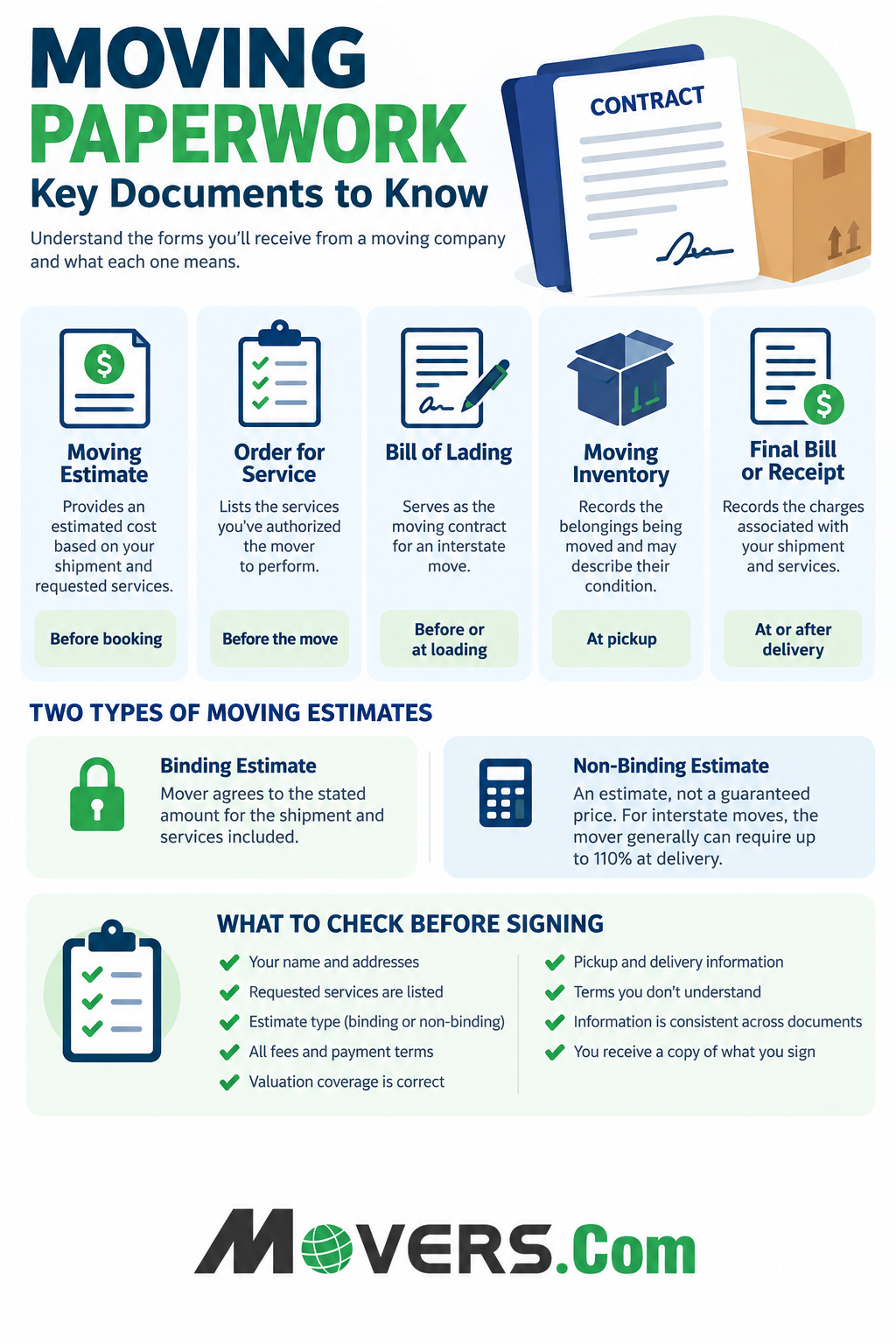
When you hire a moving company, you'll receive documents that explain the cost, services, terms, and details of your move. Common moving paperwork includes a written estimate, order for service, bill of lading, inventory, and final bill or receipt.
For interstate moves, the bill of lading is especially important because it serves as the contract between you and the mover. Review your paperwork carefully before signing and keep copies in case you need to verify charges, services, or shipment details later.
Federal requirements discussed below generally apply to interstate household goods moves. Local and intrastate moves may be subject to different state requirements.
What Paperwork Do You Get From a Moving Company?
The exact paperwork you receive depends on your move and the services you purchase, but these are some of the most common moving documents:
| Document |
What it does |
When you may receive it |
| Moving estimate |
Provides an estimated cost based on your shipment and requested services |
Before booking |
| Order for service |
Lists the services you've authorized the mover to perform |
Before the move |
| Bill of lading |
Serves as the transportation contract for an interstate move |
Before or at loading |
| Moving inventory |
Records the belongings being moved and their condition |
At pickup |
| Final bill or receipt |
Records charges associated with your shipment and services |
At or after delivery |
Keep these documents together throughout your move so you can compare the services and charges you agreed to with what was actually provided.
Moving Estimate
Your written moving estimate explains the expected cost of your move based on the belongings and services included.
For interstate moves, estimates generally must be based on a physical survey or qualifying virtual survey of your household goods, unless an applicable exception applies.
Before accepting an estimate, check that it accurately reflects what you're moving and any services you've requested, such as packing, storage, or special handling. Adding belongings or services later can affect your final cost.
Binding vs. Non-Binding Moving Estimates
A binding estimate generally means the mover agrees to charge the stated amount for the shipment and services included in the estimate. However, additional items or services can result in additional charges or a revised estimate.
A non-binding estimate is an estimate rather than a guaranteed final price. The actual cost may vary based on factors such as the shipment's actual weight and services provided.
For interstate moves with a non-binding estimate, federal regulations generally limit the amount a mover can require at delivery to 110% of the original non-binding estimate. Certain additional charges may be billed later.
Make sure the estimate clearly states whether it is binding or non-binding before you agree to the move.
Order for Service
For an interstate move, the order for service lists the services you've authorized the moving company to perform.
Review details such as your pickup and delivery information, requested services, and applicable dates. If you've requested packing, storage, or other additional services, make sure they're accurately reflected in the document.
The information should also be consistent with the other paperwork you receive for your move.
Bill of Lading: Your Moving Contract
For an interstate household goods move, the bill of lading is the contract between you and the moving company.
Your mover must prepare a bill of lading for the shipment and provide you with a copy. Its information should be consistent with the order for service.
Before signing, review important details such as:
- Pickup and delivery information
- Services being provided
- Charges and payment terms
- Shipment information
- Valuation or liability coverage
- Other terms of the move
Don't sign a bill of lading containing information you know is incorrect. Ask the mover to explain any unfamiliar charges or terms before signing.
Moving Inventory
The moving inventory records the belongings being transported and may describe their condition at pickup.
For interstate moves, movers are required to prepare an inventory of the shipment. Items may be numbered or otherwise identified so they can be matched to descriptions on the inventory form.
Review the inventory before your belongings leave your home. If you disagree with a description of an item's condition, bring it to the mover's attention before signing.
Use the inventory again at delivery to help confirm that your belongings arrived and identify missing or damaged items.
Moving Company Receipt or Final Bill
Your final bill or receipt provides a record of the charges associated with your move.
For interstate shipments, movers are required to issue an accurate freight or expense bill containing applicable information about the shipment and charges.
Compare your final charges with your estimate, bill of lading, and any written changes made during the move. Ask about charges you don't recognize and keep your final bill and proof of payment with your other moving records.
Important Paperwork for Interstate Moves
Interstate household goods movers are subject to federal consumer protection requirements. In addition to documents specific to your shipment, your mover may be required to provide or give you access to consumer information such as FMCSA's Ready to Move? brochure and Your Rights and Responsibilities When You Move booklet.
These materials explain important federal protections and responsibilities, including information about estimates, liability, claims, and dispute resolution.
Requirements for moves that remain within one state can differ, so check with the appropriate state agency if you're planning an intrastate move.
What Should You Check Before Signing Moving Paperwork?
Before signing a moving contract or form, make sure:
- Your name and contact information are correct.
- Pickup and delivery information is accurate.
- Requested services are listed.
- You know whether your estimate is binding or non-binding.
- Additional services and agreed-upon fees are documented.
- You understand the payment requirements.
- Your valuation or liability coverage selection is correct.
- You understand the terms that could affect your final cost.
- You receive a copy of what you sign.
If information is incorrect or a charge doesn't make sense, ask the mover to correct or explain it before you sign.
Editor's Note
Our comparison reviewed by our Moving Industry Analyst team is based on publicly available pricing, customer reviews, and regular moving scenarios.
Get expert moving tips and compare movers for free at Movers.com.
You can get free moving quotes from licensed and insured movers, compare moving companies near you, and plan your move with confidence using our step-by-step moving guides and checklists.
Whether you're planning a local move, a long-distance relocation, or need help with packing and loading, Movers.com connects you with trusted moving professionals and practical tools to make moving easier and more affordable.
Questions? Talk to our moving specialists.