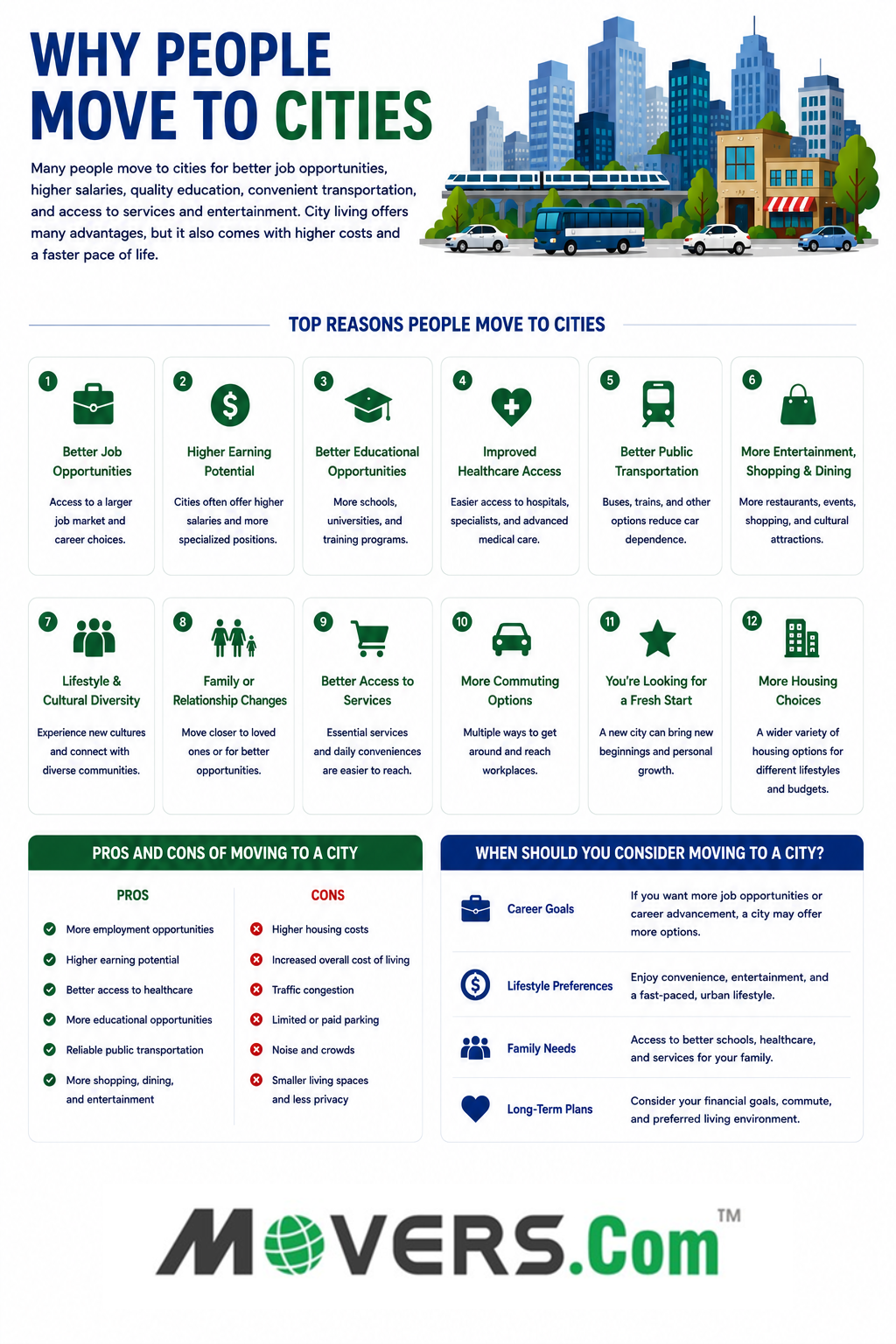
Many people consider moving from the country to the city for better job opportunities, higher salaries, improved healthcare, quality education, convenient public transportation, and greater access to shopping, entertainment, and everyday services. While city living offers many advantages, it also comes with higher housing costs, increased traffic, and a faster-paced lifestyle.
This guide explains the most common reasons people move to cities, the benefits and challenges of urban living, and how to decide whether moving to a city is the right choice for you.
City Living at a Glance
| Benefits |
Challenges |
| More job opportunities |
Higher housing costs |
| Better public transportation |
Heavy traffic |
| Greater access to healthcare |
Higher cost of living |
| More shopping and dining |
Smaller living spaces |
| Entertainment and nightlife |
Noise and crowds |
| More educational opportunities |
Limited parking in some areas |
Why Do People Move to Cities?
People relocate to cities for many different reasons, but most moves are driven by career opportunities, education, convenience, or lifestyle preferences. While every situation is unique, understanding the advantages and trade-offs of city living can help you decide whether relocating is the right choice.
Better Job Opportunities
One of the biggest reasons people move to cities is to access a larger job market. Cities are home to major employers, corporate headquarters, government agencies, hospitals, universities, and rapidly growing industries.
With more employers in one location, job seekers often have access to:
- More career opportunities
- Higher-paying positions
- Greater industry diversity
- Better networking opportunities
Before accepting a new position, compare the expected salary with the local cost of living to determine whether relocating makes financial sense.
Benefits
- Larger job market
- More career growth
- Better networking opportunities
- Greater employment stability
Higher Earning Potential
Cities often offer higher average salaries than rural areas because many industries and larger employers are concentrated in metropolitan regions.
However, higher wages don't always mean you'll have more disposable income. Housing, transportation, childcare, utilities, and everyday living expenses are often significantly higher in urban areas.
Before relocating, compare:
- Average salaries
- Housing costs
- Taxes
- Transportation expenses
- Overall cost of living
Balancing income against expenses helps determine whether a move will improve your financial situation.
Benefits
- Higher income potential
- Greater career advancement
- More specialized positions
- Better long-term earning opportunities
Better Educational Opportunities
Cities typically provide greater access to colleges, universities, trade schools, and professional training programs. Families may also relocate to areas with stronger public schools, private schools, or specialized educational programs.
Students and professionals often move to cities to pursue higher education, certifications, or continuing education opportunities that aren't available closer to home.
Benefits
- More schools and universities
- Specialized training programs
- Greater educational resources
- More extracurricular opportunities
Improved Healthcare Access
Many people relocate to cities because they offer easier access to hospitals, specialists, urgent care centers, and advanced medical facilities.
This can be particularly important for:
- Older adults
- Families with young children
- People managing chronic health conditions
- Individuals requiring specialized treatment
Living closer to healthcare providers may reduce travel time and improve access to ongoing medical care.
Benefits
- More hospitals and specialists
- Faster access to medical services
- Greater healthcare options
- Specialized treatment centers
Better Public Transportation
Reliable public transportation is one of the biggest advantages of city living. Many urban areas offer buses, subways, commuter rail systems, light rail, bike-sharing programs, and rideshare services that reduce the need for personal vehicles.
Using public transportation may also lower transportation costs by reducing fuel, parking, maintenance, and vehicle ownership expenses.
Benefits
- Less dependence on a personal vehicle
- Lower transportation costs for many residents
- Easier commuting
- More travel options
More Entertainment, Shopping, and Dining
Cities provide easy access to restaurants, shopping centers, museums, theaters, sporting events, concerts, and cultural attractions.
Whether you enjoy trying new restaurants, attending live performances, or exploring local events, urban areas often offer activities throughout the year.
Many cities also feature:
- Farmers markets
- Festivals
- Art galleries
- Professional sports
- Community events
- Diverse dining options
Benefits
- More entertainment choices
- Greater cultural diversity
- Wide variety of restaurants
- Convenient shopping
Lifestyle and Cultural Diversity
Cities bring together people from different backgrounds, cultures, and experiences, creating diverse communities and vibrant neighborhoods. Many people move to cities to experience new cultures, meet people with similar interests, and enjoy a wider variety of activities and events.
Living in a city often provides opportunities to explore:
- Cultural festivals
- Museums and art galleries
- Live music and theater
- International cuisine
- Community events
- Professional networking groups
For many people, the variety and energy of city life are major reasons for relocating.
Benefits
- Diverse communities
- Rich cultural experiences
- More social opportunities
- Broader networking possibilities
Family or Relationship Changes
Major life events often influence where people choose to live. Marriage, divorce, having children, or moving closer to loved ones are all common reasons for relocating to a city.
Cities may also offer better employment opportunities for multiple household members, making them attractive for families or couples pursuing new careers.
Before relocating, consider:
- Housing costs
- School districts
- Commute times
- Access to healthcare
- Family support networks
Benefits
- Better opportunities for families
- Access to quality schools and childcare
- Closer to relatives or partners
- More employment and service options for household members
Better Access to Services and Amenities
Cities typically provide easier access to services that support daily life, making routine tasks more convenient and reducing travel time.
These services may include:
- Government offices
- Banks
- Grocery stores
- Shopping centers
- Airports
- Public libraries
- Fitness centers
- Professional services
Having more essential services nearby can improve convenience and simplify everyday living.
Benefits
- Greater convenience
- More shopping options
- Better access to essential services
- Improved daily efficiency
More Commuting Options
Many people move to cities because they have more transportation choices. Instead of relying solely on a personal vehicle, city residents may have access to buses, commuter rail, subways, bike-sharing programs, rideshare services, and walkable neighborhoods.
Depending on where you live and work, these options can make commuting more flexible and may reduce transportation costs.
Benefits
- More transportation choices
- Less reliance on a personal vehicle
- Easier access to workplaces
- Greater commuting flexibility
You're Looking for a Fresh Start
Relocating to a city can represent a new beginning after a major life event or personal milestone. Whether you're starting a new job, graduating from college, or simply looking for a different environment, moving can provide opportunities for personal and professional growth.
While changing locations won't solve every challenge, it can offer a fresh perspective, new experiences, and opportunities to build new routines.
Benefits
- Personal growth
- New opportunities
- Expanded social network
- Greater independence
More Housing Choices
Although housing in cities is often more expensive than in rural areas, urban communities typically offer a wider variety of housing options to suit different lifestyles and budgets.
Depending on your needs, you may find:
- Apartments
- Condominiums
- Townhomes
- Lofts
- High-rise buildings
- Mixed-use developments
These housing options may be located closer to workplaces, public transportation, shopping, and entertainment, making them appealing for many city residents.
Benefits
- More housing options
- Greater flexibility
- Walkable neighborhoods
- Reduced home maintenance for some households
Pros and Cons of Moving to a City
Moving to a city can create new personal and professional opportunities, but it may also require adjusting to higher costs, smaller living spaces, and a faster pace of life.
Pros
- More employment opportunities
- Higher earning potential
- Better access to healthcare
- More educational opportunities
- Reliable public transportation
- More shopping, dining, and entertainment
Cons
- Higher housing costs
- Increased overall cost of living
- Traffic congestion
- Limited or paid parking
- Noise and crowds
- Smaller living spaces and less privacy
The advantages and disadvantages you experience will depend on the city, neighborhood, income, commute, housing needs, and lifestyle preferences.
Country Living vs. City Living
| Priority |
Often Better Suited To |
| More space and land |
Country living |
| Lower housing costs |
Country living in many regions |
| Peace and quiet |
Country living |
| Easy access to nature |
Country living |
| Larger job market |
City living |
| Public transportation |
City living |
| Dining and entertainment |
City living |
| Specialized healthcare |
City living |
| Cultural activities |
City living |
| More commuting options |
City living |
Neither option is inherently better. The right choice depends on your career, budget, family needs, and preferred lifestyle.
Bottom Line
People move to cities for many reasons, including better job opportunities, higher earning potential, improved healthcare, quality education, convenient transportation, and greater access to shopping, dining, and entertainment. At the same time, city living often comes with higher housing costs, increased traffic, and a faster-paced lifestyle.
Before relocating, compare housing costs, employment opportunities, commuting options, neighborhood amenities, and your long-term financial goals. Understanding both the benefits and challenges of urban living can help you decide whether moving to a city is the right choice for your next chapter.
Editor's Note
This guide was reviewed by the Movers.com Moving Industry Analyst team using publicly available demographic data, urban development resources, relocation trends, and common residential moving scenarios.
Every city offers a different combination of career opportunities, housing options, transportation systems, and lifestyle benefits. Before relocating, compare housing costs, employment opportunities, healthcare access, schools, and commuting options to determine whether city living is the right fit for your needs.
Get expert moving tips and compare movers for free at Movers.com.
You can compare licensed and insured movers, request free moving quotes, and plan your move with confidence using our step-by-step moving guides and checklists.
Whether you're moving to a nearby city or relocating across the country, Movers.com connects you with trusted moving professionals and practical tools to make moving easier and more affordable.
Questions? Talk to our moving specialists.