The best way to protect wood furniture during a move is to clean and dry it, remove detachable parts when practical, cover the wood with moving blankets or furniture pads, and secure the padding so it stays in place.
Avoid placing stretch wrap or bubble wrap directly against finished wood for extended periods. Instead, use moving blankets or furniture pads as the protective layer between the wood and plastic.
Pay extra attention to corners, legs, glass, carved details, and other vulnerable areas. Antique, heirloom, or particularly valuable furniture may require specialty packing or professional handling.
How to Wrap Wood Furniture for Moving
Proper wrapping helps protect wood surfaces from scratches, dents, dirt, and contact with other belongings during loading and transportation.
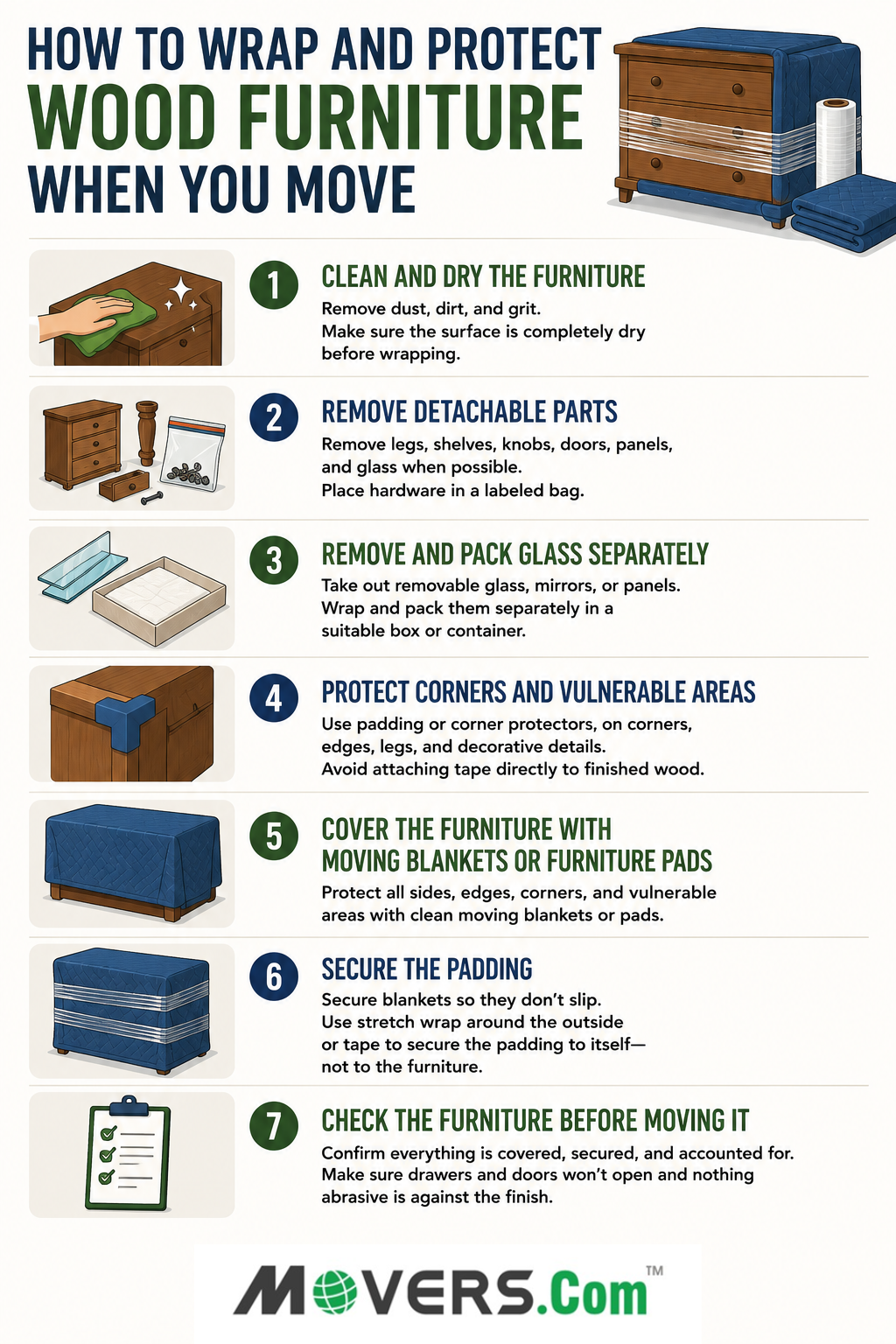
Follow these steps:
Clean and Dry the Furniture
Remove dust, dirt, and grit before wrapping. Small particles trapped between the furniture and protective padding can scratch some finishes.
Use a cleaning method appropriate for the furniture and make sure the surface is completely dry before covering it.
Remove Detachable Parts
When the furniture is designed to be disassembled, remove parts such as:
- Legs.
- Shelves.
- Knobs or handles when appropriate.
- Removable doors or panels.
- Glass shelves and inserts.
Only disassemble components designed to be removed. Don't force apart glued joints, permanent components, or delicate antique joinery.
Place screws, bolts, and other hardware in a labeled resealable bag. Keep the hardware with the furniture or in another secure location where it won't get lost.
Remove and Pack Glass Separately
If the furniture contains removable glass shelves, mirrors, or glass panels, take them out before wrapping the main piece when practical.
Wrap glass separately with appropriate protective materials and place it in a suitable box or container. Don't leave loose glass inside a dresser, cabinet, or table during transportation.
Protect Corners and Vulnerable Areas
Corners, edges, legs, decorative trim, and carved details can be particularly vulnerable during a move.
Use suitable padding or corner protectors to provide additional cushioning before covering the entire piece.
Avoid attaching tape directly to finished wood.
Cover the Furniture With Moving Blankets or Furniture Pads
Cover wooden surfaces with clean moving blankets or furniture pads.
Make sure the top, sides, edges, corners, and other vulnerable areas are adequately protected. Moving blankets should provide the primary protective layer between the wood and anything used to secure the furniture.
Secure the Padding
Once the furniture is covered, secure the blankets so they don't slip during handling.
Stretch wrap can be wrapped around the outside of the moving blankets when appropriate. Packing tape may also be used to secure protective materials to themselves, but don't apply adhesive tape directly to the furniture's finish.
A simple layering method is:
Wood furniture → Moving blanket or furniture pad → Stretch wrap
Check the Furniture Before Moving It
Before lifting the furniture, make sure:
- Vulnerable surfaces are completely covered.
- Blankets won't slip during handling.
- Loose parts have been removed or secured.
- Hardware is accounted for.
- Doors and drawers won't unexpectedly open.
- Nothing abrasive is trapped against the finish.
To help prevent scratches, make sure both the furniture and padding are clean, keep loose hardware away from finished surfaces, and prevent wooden pieces from rubbing against each other during transportation.
What Packing Supplies Do You Need for Wood Furniture?
You don't need many specialized materials to wrap wooden furniture, but everything that touches the furniture should be clean and appropriate for its surface.
Useful supplies include:
- Moving blankets or furniture pads.
- Stretch wrap.
- Cardboard or corner protectors.
- Packing tape.
- Bubble wrap for appropriate detached or fragile components.
- Resealable bags for screws and hardware.
- Labels or markers.
Inspect moving blankets before using them. Dirt, grit, staples, or other debris trapped against the furniture can scratch the finish.
Don't attach packing tape directly to wooden surfaces. Adhesive can leave residue or potentially affect some finishes.
Can You Wrap Wood Furniture in Plastic?
Yes, but avoid placing plastic wrap directly against finished wood for extended periods. Cover the wood with moving blankets or furniture pads first, then use stretch wrap around the outside to secure the padding.
Plastic can trap moisture against the furniture if moisture is already present or condensation develops, particularly during storage or changing temperature and humidity conditions.
A safer approach is:
- Make sure the furniture is clean and completely dry.
- Cover the wood with moving blankets or furniture pads.
- Wrap stretch wrap around the outside of the padding to hold it in place.
If the furniture will go into storage, consider the storage environment, including moisture, humidity, ventilation, and temperature changes.
Bubble wrap can provide extra cushioning for detached or fragile components, but moving blankets or furniture pads are generally better as the primary protective layer over finished wooden surfaces.
For antiques, specialty finishes, or particularly valuable pieces, use materials appropriate for the specific furniture rather than assuming ordinary plastic packing materials are safe.
How to Wrap a Wooden Table for Moving
Wooden tables are particularly vulnerable at the tabletop, corners, edges, and legs.
To protect a wooden table:
- Remove detachable parts. If the table is designed for disassembly, remove the legs, leaves, or other detachable components.
- Bag and label the hardware. Place screws, bolts, and other hardware in a labeled resealable bag.
- Protect the tabletop. Cover the entire surface with clean moving blankets or furniture pads.
- Protect corners and legs. Add extra padding or corner protectors around exposed edges and wrap removed legs separately so they don't rub against each other.
- Secure the padding. Use stretch wrap around the outside of the blankets when appropriate, and keep tape or other adhesives off the wood finish.
Don't force a table apart if its legs or other components aren't designed to be removed. This is especially important for antique, handmade, or delicate furniture.
How to Pack Dressers, Cabinets, and Other Wood Furniture
Dressers, cabinets, bookcases, and similar wooden furniture often have drawers, doors, shelves, or glass components that need extra attention before moving.
Before wrapping:
- Remove loose shelves.
- Remove and separately protect glass shelves, mirrors, or panels.
- Empty heavy, fragile, valuable, or loose items from drawers and cabinets.
- Remove or protect protruding knobs and handles when appropriate.
- Secure doors and drawers so they don't open during handling.
- Bag and label any removed hardware.
- Cover the furniture with clean moving blankets or furniture pads.
- Secure the padding without applying adhesive directly to the wood.
Whether lightweight clothing can remain in dresser drawers depends on the furniture's construction and your moving company's policy. Remove heavy contents because the added weight can make the furniture harder to handle and place additional stress on the piece.
Ask your mover how it handles dresser drawers before moving day.
How to Protect Antique and Heirloom Wood Furniture
Antique, heirloom, and irreplaceable furniture deserves additional protection. Delicate finishes, fragile joints, carved details, or unusual construction can make these pieces more susceptible to damage.
Before moving valuable wood furniture:
- Photograph the furniture from several angles.
- Document existing scratches, cracks, chips, or other damage.
- Tell your moving company about valuable or fragile pieces before moving day.
- Avoid experimenting with unfamiliar cleaners, adhesives, or wrapping materials.
- Protect carvings, corners, legs, and other delicate areas with additional padding.
- Remove fragile components only when it is safe to do so.
- Ask whether specialty packing or custom crating is appropriate.
- Review the mover's valuation coverage and liability terms before transportation.
Sentimental value doesn't necessarily determine the compensation available if an heirloom is damaged or lost. Review the protection provided under your moving agreement and discuss particularly valuable pieces with the mover beforehand.
For especially valuable antiques, consider hiring professionals experienced in packing and transporting that type of furniture.
How to Move Wood Furniture Without Damaging It
Proper wrapping is only part of protecting wooden furniture. Damage can also occur while furniture is being carried, loaded, or transported.
When moving wood furniture:
- Measure doorways, hallways, stairways, and elevators before moving large pieces.
- Plan the moving route before lifting the furniture.
- Use furniture dollies or sliders appropriate for the item and flooring.
- Lift furniture instead of dragging it.
- Protect floors, walls, and doorways where necessary.
- Secure furniture inside the moving truck so it can't shift significantly during transportation.
- Avoid placing heavy boxes or other furniture on delicate wooden pieces.
Never lift heavy furniture by a removable leg, handle, decorative trim, or another component that isn't designed to support the item's weight.
If a piece is too heavy, awkward, fragile, or valuable to move safely, professional handling may be the better option.
Common Mistakes to Avoid When Wrapping Wood Furniture
Even good packing materials can cause problems when they're used incorrectly.
Avoid these common mistakes:
- Wrapping dirty or damp furniture: Dirt can scratch the finish, while trapped moisture may damage some wood or finishes.
- Applying tape directly to wood: Adhesive may leave residue or affect the finish.
- Using plastic as the only protective layer: Plastic doesn't provide the same cushioning as moving blankets or furniture pads against scratches and impacts.
- Leaving corners or delicate details exposed: Legs, corners, carvings, and edges are particularly vulnerable during handling.
- Dragging furniture or forcing components apart: Improper handling can damage joints, legs, flooring, or the furniture itself.
Before loading, check that all padding remains secure and vulnerable areas are properly protected.
 Bottom Line
The best way to wrap wood furniture for moving is to start with clean, dry furniture, remove detachable components when appropriate, and cover wooden surfaces with clean moving blankets or furniture pads.
Use stretch wrap around the outside of the padding when necessary to keep it secure. Protect corners, edges, legs, glass, and decorative details separately when they need additional cushioning.
Editor's Note
Wood furniture varies in construction, age, finish, and care requirements. Packing materials suitable for one piece may not be appropriate for another, particularly with antiques or specialty finishes.
Follow the furniture manufacturer's care instructions when available. For valuable antiques or unfamiliar finishes, consider professional guidance before applying cleaners, adhesives, plastic films, or other materials.
Get expert moving tips and compare movers for free at Movers.com.
You can get free moving quotes from licensed and insured movers, compare moving companies near you, and plan your move with confidence using our step-by-step moving guides and checklists.
Whether you're planning a local move, a long-distance relocation, or need help with packing and loading, Movers.com connects you with trusted moving professionals and practical tools to make moving easier and more affordable.
Questions? Talk to our moving specialists.