Moving heavy furniture is challenging, and carrying it upstairs can make the task even more difficult. Whether you are moving a couch to the second floor or shifting furniture into an apartment without a service elevator, proper planning is essential.
If anything goes wrong, you may damage the staircase, scratch the furniture, or injure yourself. That is why you need the right technique, proper tools, and at least one reliable helping hand.
Important: If your furniture is extremely heavy, oversized, fragile, valuable, or difficult to grip, do not try to move it upstairs on your own. Hire professional movers or get enough experienced help to avoid injuries, wall damage, stair damage, or furniture damage.
Make a Plan Before Moving
Before lifting anything, take time to plan how you will move the furniture upstairs. Heavy furniture is often bulky, oddly shaped, or difficult to turn around tight staircases.
| Planning Step |
Why It Matters |
| Measure the furniture |
Helps you understand whether the item will fit through the staircase and turns. |
| Measure the staircase |
Prevents the furniture from getting stuck midway. |
| Check ceiling height |
Helps decide whether the furniture should be moved vertically or horizontally. |
| Clear the pathway |
Reduces the risk of tripping, scratching walls, or damaging décor. |
Remove wall art, low-hanging lights, loose rugs, and any other objects that may block the way. This will give you enough room to move safely.
Consider the Shape of the Staircase
The type of staircase plays an important role in how difficult the move will be.
| Staircase Type |
Difficulty Level |
What to Watch For |
| Straight staircase |
Easy to Moderate |
Usually easier to carry furniture with fewer turns. |
| Spiral staircase |
Difficult |
Narrow turns and limited space can make lifting risky. |
| Helical staircase |
Difficult |
Requires careful positioning and strong coordination. |
| Wooden or marble stairs |
Needs Extra Care |
Can scratch, chip, or become slippery during the move. |
Tip: If the furniture is long, like a sofa or wardrobe, moving it horizontally may help prevent it from hitting the ceiling.
Prepare the Furniture and Staircase
Once you have a plan, prepare both the furniture and the staircase. This helps reduce weight, prevent damage, and make the move easier.
Protect the Stairs and Banister
- Wrap banisters and railings with moving blankets or old cloth.
- Secure the wrapping with packing tape.
- Use stair edge guards to protect step corners.
- Cover wooden or marble stairs with rugs or blankets.
- Use painter’s tape to hold protective coverings in place.
- For carpeted stairs, use self-adhesive plastic film.
Warning: Do not leave loose blankets or rugs on the stairs. They can slip and cause serious injury.
Disassemble the Furniture
Make the furniture as light and manageable as possible before moving it upstairs.
Benefit
- Reduces weight and makes sofas easier to grip.
- Makes dressers lighter and prevents drawers from sliding out.
- Reduces bulk and prevents internal damage.
- Makes the item easier to turn around corners.
- Prevents items from falling out during the move.
What to Remove
- Cushions
- Drawers
- Shelves
- Detachable legs or parts
- Stored contents
After disassembling, wrap the furniture with stretch wrap, bubble wrap, and a moving blanket. Pay special attention to edges and corners.
Gather the Right Moving Tools
The right equipment can make a major difference when carrying heavy furniture upstairs.
| Tool |
Best For |
Why It Helps |
| Hand truck or dolly |
Heavy boxes, cabinets, appliances, and compact furniture |
Allows you to roll heavy items one stair at a time. |
| Moving straps |
Sofas, dressers, wardrobes, and large furniture |
Helps distribute weight across the body and improves control. |
| Work gloves |
All heavy lifting tasks |
Improves grip and protects your hands. |
| Close-toed shoes |
All moving tasks |
Protects your feet and reduces slipping. |
Helpful Tip: Moving straps work best when two people are lifting together and communicating clearly.
Get Help Before You Lift
Even if you plan to move furniture yourself, you should have at least one reliable person helping you. Heavy furniture can shift suddenly, and having another person improves balance and safety.
If you are alone, ask a friend, neighbor, or family member to assist you. For very heavy or awkward furniture, hiring professional movers is the safest option.
Important Safety Note: If the furniture feels too heavy, unstable, or difficult to control, stop immediately and get professional help.
How to Carry Furniture Upstairs
Once everything is ready, follow these steps to move the furniture upstairs safely.
- Assign one person to guide the move and watch for obstacles.
- Stand firmly with your feet shoulder-width apart.
- Bend your knees and keep your back straight.
- Lift using your legs, not your back.
- Keep a firm grip on the furniture before moving.
- The stronger person should stay on the lower side of the stairs.
- Move slowly and communicate before each step.
- Pause between flights of stairs to avoid muscle strain.
- Be extra careful when turning corners.
1
Person on lower steps
Carries more weight and provides lifting strength.
2
Person on higher steps
Guides the furniture and helps maintain balance.
3
Spotter
Watches for walls, railings, corners, and other obstacles.
Using Moving Straps
Moving straps can help reduce pressure on your arms and back when lifting heavy furniture.
- Wear the harness around your shoulders.
- Ask your helper to wear the other harness.
- Slide the strap under the furniture.
- Attach both ends of the strap to the harnesses.
- Keep your back straight and bend your knees.
- Lift slowly using your shoulders and leg muscles.
- Move one step at a time.
Important: The stronger person should stay on the lower stairs because that person carries more of the weight.
Using a Hand Truck or Dolly
A hand truck or dolly can make it easier to move heavy furniture upstairs, especially if the item is compact and can be secured properly.
- Place the furniture on the dolly with the longest side against the upright support.
- Keep the item centered on the dolly base.
- Secure it with bungee cords or flat hook straps.
- Tilt the dolly toward yourself to balance the weight.
- Pull the dolly up one stair at a time.
- Ask your helper to support and guide the furniture.
Warning: Do not use a dolly without securing the furniture first. If the item shifts, it can fall and cause injury or damage.
Is It Practical to Carry Heavy Furniture Upstairs Yourself?
Yes, it can be practical if the furniture is manageable, the staircase is not too complex, and you have the right tools and help. However, moving heavy furniture alone is risky.
If the furniture is too large, too heavy, or difficult to control, hiring professional movers is the better choice. Professionals have the experience and equipment to move heavy items safely and efficiently.
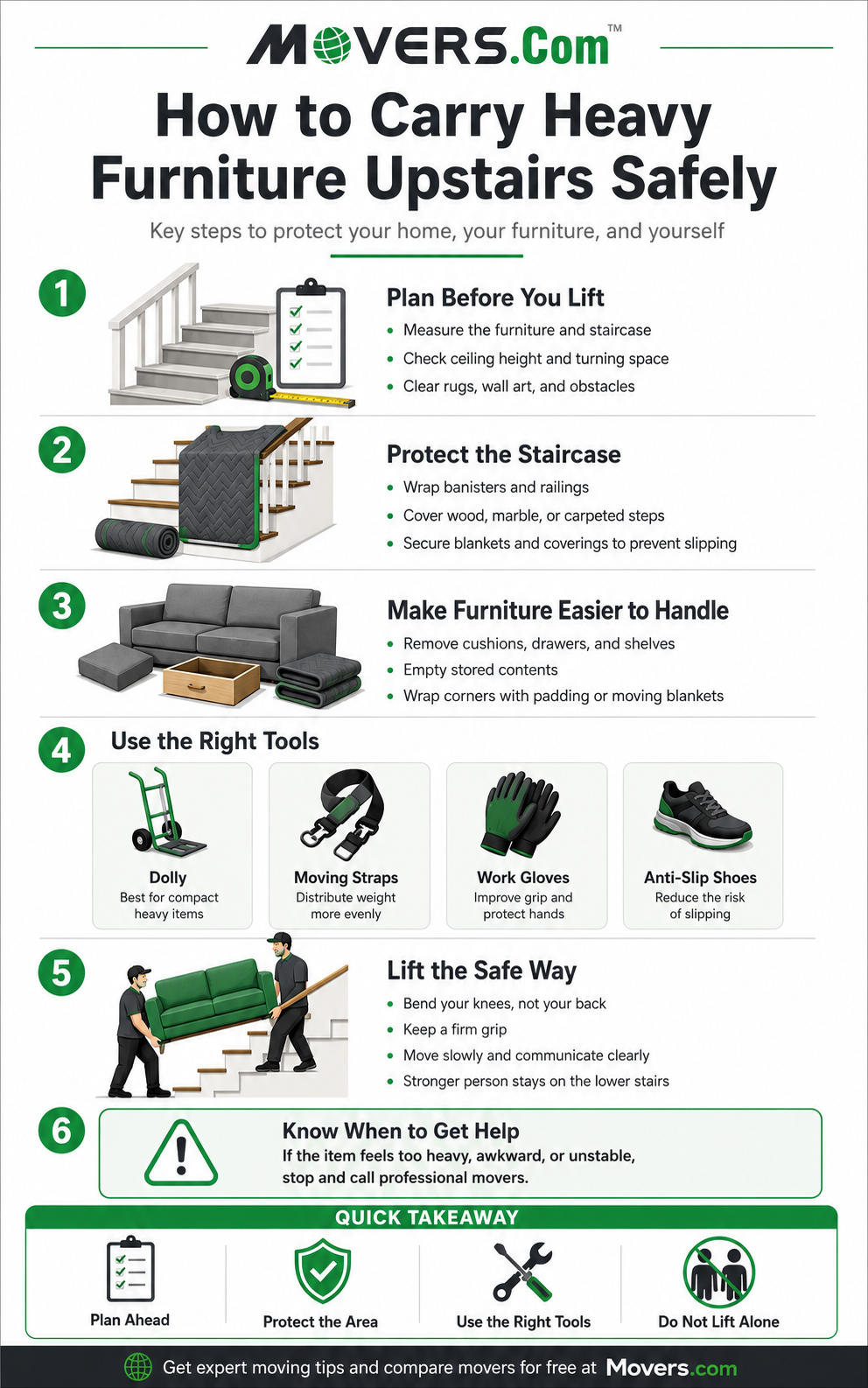
Quick Takeaway
Plan ahead
Measure the furniture, staircase, ceiling height, and turning space.
Protect the area
Cover stairs, railings, walls, and furniture edges.
Reduce weight
Remove cushions, drawers, shelves, and stored items.
Use tools
Dollies, moving straps, gloves, and proper shoes improve safety.
Get help
Never move heavy furniture upstairs without support if the item feels unsafe.
Editor's Note
Carrying heavy furniture upstairs can be done safely with proper planning, preparation, and the right equipment. Protect your stairs, use correct lifting techniques, move slowly, and work with a reliable helper.
Our comparison reviewed by our Moving Industry Analyst team is based on publicly available pricing, customer reviews, and regular moving scenarios.
Get expert moving tips and compare movers for free at Movers.com.
You can get free moving quotes from licensed and insured movers, compare moving companies near you, and plan your move with confidence using our step-by-step moving guides and checklists.
Whether you're planning a local move, a long-distance relocation, or need help with packing and loading, Movers.com connects you with trusted moving professionals and practical tools to make moving easier and more affordable.
Questions? Talk to our moving specialists.