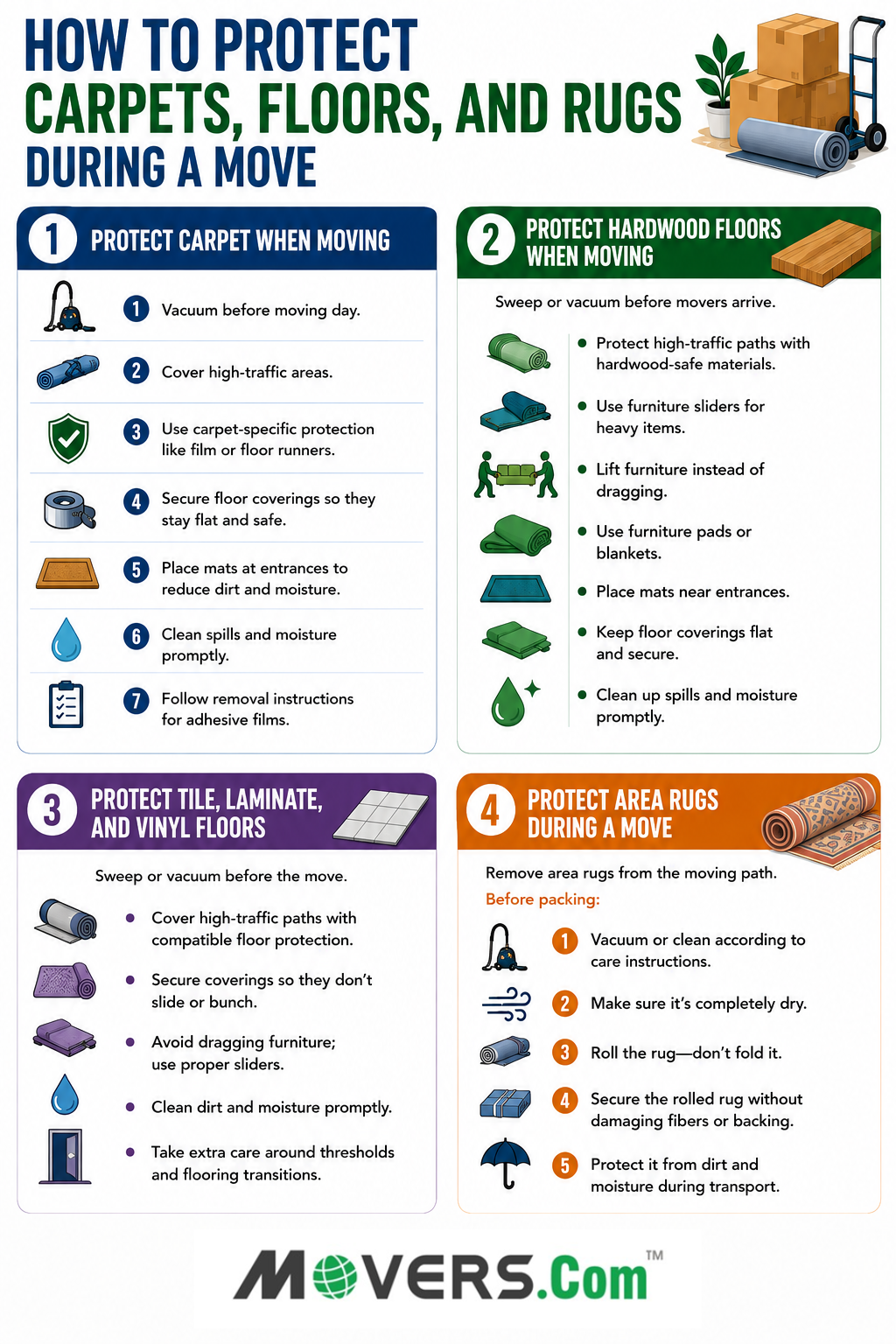
The best way to protect carpets and floors during a move is to cover high-traffic areas, control dirt and moisture, and use protection designed for each flooring surface.
For carpet, use carpet-specific protection film or securely placed floor runners. For hardwood, tile, laminate, and vinyl, use surface-compatible floor protection and appropriate furniture sliders. Area rugs should generally be rolled and removed from moving paths before movers begin carrying heavy furniture and boxes.
Avoid loose coverings that can slide or bunch and adhesive products that aren't designed for the flooring underneath.
How to Protect Carpet When Moving
Carpet can collect dirt, mud, moisture, and debris as movers repeatedly walk between your home and the moving truck.
You don't need to cover every inch of carpet. Focus on high-traffic areas, including entrances, hallways, stairs, landings, doorways, and the main paths between rooms and exits.
To protect carpet during a move:
- Vacuum before moving day. Removing dirt and grit helps prevent debris from being ground deeper into the carpet.
- Cover high-traffic areas. Use temporary protection along the routes movers will use most frequently.
- Use carpet-specific protection. Carpet protection film or securely positioned floor runners can help protect high-traffic areas.
- Secure floor coverings. Make sure runners and coverings stay flat and don't bunch or create a tripping hazard.
- Place mats near entrances. Entry mats can reduce the amount of dirt and moisture tracked inside.
- Clean spills and moisture promptly. Don't allow rainwater, mud, or other moisture to remain on the carpet.
- Follow removal instructions. If you're using adhesive carpet film, follow the manufacturer's instructions for application and removal.
Avoid loose plastic sheeting. It can move underfoot and create a safety hazard, particularly when people are carrying furniture or heavy boxes.
During rain or snow, check entrances and carpet protection regularly and replace or adjust wet coverings when necessary.
What Is the Best Carpet Protection for Moving?
The best carpet protection depends on how much foot traffic the area will receive and the type of carpet you're protecting.
| Carpet Protection |
Best Use |
| Carpet protection film |
Temporary protection for high-traffic carpet |
| Floor runners |
Creating protected walking paths |
| Entry mats |
Reducing dirt and moisture near exterior doors |
When using adhesive film, choose a product specifically designed for carpet and follow its instructions for surface compatibility, application, maximum use time, and removal.
Don't assume a product designed for carpet is also safe for hardwood, laminate, vinyl, or other flooring.
How to Protect Hardwood Floors When Moving
Hardwood floors can be scratched by dirt, furniture legs, dollies, dropped objects, and unsuitable floor coverings.
Before movers arrive, sweep or vacuum the floor to remove dirt and grit that could scratch the finish.
Then:
- Protect high-traffic walking paths with materials suitable for hardwood.
- Use furniture sliders designed for hard floors when moving heavy furniture.
- Lift furniture instead of dragging it whenever practical.
- Use furniture pads or blankets where appropriate.
- Place mats near entrances to reduce dirt and moisture.
- Make sure temporary floor coverings remain flat and secure.
- Clean up water and other spills promptly.
Be careful with tape, adhesive film, and other products applied directly to finished wood. Use only products designed for the specific flooring surface and follow the manufacturer's instructions.
How to Protect Tile, Laminate, and Vinyl Floors
Tile, laminate, and vinyl can also be damaged by grit, moisture, heavy furniture, and repeated moving traffic.
Before the move, sweep or vacuum the floors so dirt doesn't become trapped beneath boxes, furniture, or temporary coverings.
During the move:
- Cover high-traffic paths with surface-compatible floor protection.
- Secure coverings so they don't slide or bunch.
- Avoid dragging furniture directly across the floor.
- Use furniture sliders appropriate for the flooring.
- Clean dirt and moisture promptly.
- Take extra care around thresholds and flooring transitions.
Avoid applying tape or adhesive products directly to flooring unless they're specifically designed for that surface.
Because flooring materials and finishes vary, follow the flooring manufacturer's care instructions if you're unsure whether a particular temporary covering or adhesive is safe.
How to Protect Area Rugs During a Move
If an area rug is moving with you, it's generally better to remove it from the moving path instead of using it as floor protection.
Before packing the rug:
- Vacuum or clean it according to its care instructions.
- Make sure it's completely dry.
- Roll it when appropriate rather than folding it.
- Secure the rolled rug without damaging its fibers or backing.
- Protect it from dirt and moisture during transportation.
Avoid placing heavy furniture, boxes, or moving equipment on valuable rugs simply because they already cover the floor.
For antique, handmade, delicate, or particularly valuable rugs, follow the appropriate care instructions or consider professional cleaning, packing, or handling.
Do Movers Wear Shoe Covers?
Some movers wear shoe covers, but you shouldn't assume every moving company provides or requires them.
Shoe covers can help reduce dirt tracked indoors, but they aren't appropriate in every situation. Movers need secure footing while carrying heavy furniture and boxes, especially on stairs or wet surfaces.
Instead of shoe covers, movers may use:
- Floor runners.
- Carpet protection.
- Entry mats.
- Surface-specific floor coverings.
Before moving day, ask the company how it protects carpets and floors. If you have new, delicate, or easily damaged flooring, let the mover know in advance so appropriate protection can be planned.
How to Protect Floors From Heavy Furniture
Heavy furniture can scratch, dent, or gouge flooring if it is dragged instead of lifted or moved with the right equipment.
To reduce the risk of damage:
- Use furniture sliders designed for your flooring type.
- Lift furniture whenever practical instead of dragging it.
- Use a furniture dolly for heavy or bulky pieces when appropriate.
- Use moving blankets or furniture pads to cushion furniture and reduce damage if it contacts walls, doorways, or other surfaces.
- Remove furniture legs or other detachable parts when doing so makes the item safer to move.
- Make sure dollies and hand trucks have clean wheels before bringing them inside.
Don't push heavy furniture across unprotected floors. Even small pieces of dirt trapped underneath furniture legs or sliders can scratch some surfaces.
What Should You Avoid Using to Protect Floors?
Some improvised materials can create new problems instead of protecting your floors.
Avoid:
- Loose plastic sheeting: It can slide, bunch, and create a tripping hazard.
- Wet towels or blankets: Moisture can reach the flooring underneath.
- Unsecured cardboard: It can shift underfoot, especially on smooth floors.
- Tape not designed for the flooring: Adhesive can leave residue or damage some flooring finishes.
- Incorrect adhesive film: Carpet film and hard-floor protection aren't necessarily interchangeable.
- Dirty moving blankets: Trapped grit can scratch hard flooring.
Whatever material you use should be appropriate for the flooring, securely positioned, and safe to walk on while carrying heavy items.
How to Prepare Your Floors Before Movers Arrive
A little preparation before moving day can reduce both floor damage and moving-day delays.
Before the movers arrive:
- Sweep or vacuum floors and carpets.
- Remove area rugs from moving paths.
- Identify the main routes between rooms and exits.
- Protect high-traffic areas with suitable coverings.
- Place mats near exterior doors.
- Make sure coverings are flat and securely positioned.
- Tell movers about delicate, newly installed, or easily damaged flooring.
If you're hiring professional movers, ask in advance what floor protection they provide and whether additional materials cost extra. This helps prevent confusion on moving day.
 Bottom Line
Protecting carpets and floors during a move starts with keeping dirt and moisture under control and covering the areas that receive the most traffic.
Use carpet-specific protection for carpet, surface-compatible coverings for hard floors, and appropriate furniture sliders for heavy items. Remove area rugs from moving paths when possible, and avoid loose or unsuitable materials that could damage the flooring or create a safety hazard.
If you're hiring movers, ask how they protect floors before moving day, especially if your home has hardwood, delicate flooring, or recently installed carpet.
Editor's Note
Flooring materials, finishes, and temporary protection products vary. Always check the flooring manufacturer's care recommendations and the instructions for any adhesive film, tape, runner, or other protective product before use.
Professional movers may provide floor protection as part of their service, but what's included varies by company and estimate. Confirm the details before moving day.
Get expert moving tips and compare movers for free at Movers.com.
You can get free moving quotes from licensed and insured movers, compare moving companies near you, and plan your move with confidence using our step-by-step moving guides and checklists.
Whether you're planning a local move, a long-distance relocation, or need help with packing and loading, Movers.com connects you with trusted moving professionals and practical tools to make moving easier and more affordable.
Questions? Talk to our moving specialists.