Hey, hope you’re well today :)
You’re moving fine art and antiques.
But want to understand how you move them safely.
We are in the moving industry for the past 25 years.
And we understand the challenges our customers have before they move.
To address that, we provide our customers with detailed guidance and tips on every aspect of moving.
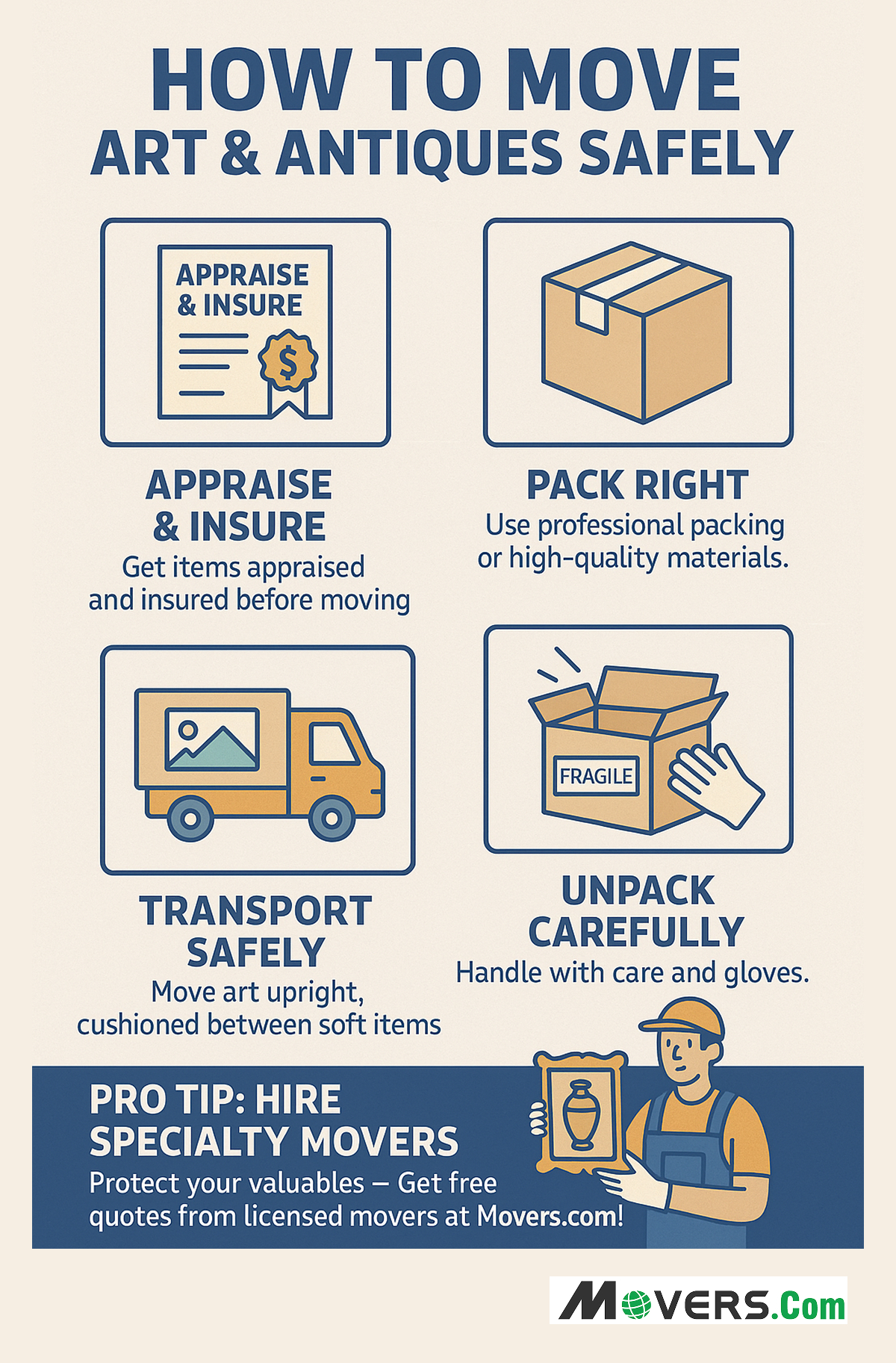
This guide will walk you through the process that our movers have followed for years to move fine art and antiques.
A Careful Start to Move Fine Art and Antiques
Moving fine art and antiques needs a little patience, understanding of their value, and a methodical approach.
Because fine art and antiques aren’t just objects.
They’re assets.
They carry personal stories, cultural value, and a strong emotional connection.
Each step you take to move this fragile artwork should be well thought and correct.
Each topic and sub-topics presented in this guide will replace any uncertainty you may have with clarity.
Keep reading.
Get Into the Right Mindset
Before you begin, set your mind to the right approach to move art and antiques safely.
Understand Why Fine Art and Antiques Need Special Handling
Art and antiques respond to pressure, moisture, vibration, and sudden temperature changes.
A minor mistake can cause stress on delicate surface or joints.
When you understand this sensitive nature, protecting them becomes intuitive.
Follow a Slow, Guided Approach
Rushing to move fine art and antiques may cause you to miss checking their weight, and weak points.
They may also face uneven pressure when moving.
A calm, guided steps shown in this guide will help you plan whole move in control.
For that, you’ll need professional fine art movers. They take their time and execute your move with absolute precision.
Know the Goal Before You Move
Your goal is simple.
- Shield the surface
- Cushion the item
- Stabilize it
- Transport it without movement
This structure is the backbone of every fine art and antique move.
Tips to Protect Art & Antiques for Moving
Follow these tips for safe moving.
Look at Each Item Closely
Find Fragile Elements
Look for:
- Fine carvings
- Gilded frames
- Glass covers or mirrors
- Paint layers that are easy to scratch
- Joints that aren't tight in antique furniture
Check Weight Distribution
Fine art and antiques generally don't have the same weight.
This affects how you lift and hold them.
Understand Material Behavior
- Humidity makes wood swell
- Heat makes oil paint softer
- Vibration makes glass break
- Pressure makes lacquer chip
This information will help you choose the correct packing.
Create a Safe Packing Environment
Set Up a Clean, Dry Workspace
Avoid rough surfaces
Use blankets or foam boards to create a padded area
Organize Packing Materials Before Touching Anything
This helps you avoid last-minute searching while your items sit unprotected.
Wear the Right Gloves
Use cotton or nitrile gloves.
They help prevent fingerprints, moisture, and friction.
Handle Artwork and Antiques the Right Way
Support From Below, Never From One Side
Framed artwork, sculptures, and antique pieces must be held from the base.
Lift Slowly and Predictably
Art responds better to steady motions than quick adjustments.
Never Drag or Tilt Antiques
Dragging stresses legs and joints in furniture.
Use Packing Material & Keep Protection in Layers
Layer 1 - Surface Protection
Glassine for Paintings
Glassine protects against moisture and friction.
It is the standard in fine art moving.
Acid Free Tissue for Gilded or Delicate Surfaces
Frames, sculptures, and antiques with decorative finishes need this.
Soft Cloths for Polished Surfaces
Bronze, lacquer, and glass respond well to soft microfiber cloths.
Layer 2 - Cushioning for Stability
Bubble Wrap With Air Pockets Facing Outward
This prevents texture transfer onto surfaces.
Foam Sheets for Sculptures
Foam conforms to shapes without creating pressure points.
Corner Protectors for Artwork
These protect the most vulnerable parts of framed art.
Layer 3 - Giving structural Support
Double Walled Artwork Boxes
Strong, protective, and ideal for framed paintings.
Mirror and Picture Boxes
Perfect for fine art packing and framed art moving.
Custom Sized Cartons
Best for irregular pieces or small antiques.
Layer 4 - Crating for High Value Items
Why You Need Crates?
Crates stop vibration, shock, and shifting.
Crates are essential when moving fine art and antiques overseas.
Types of Crates
- Museum crates
- Soft foam lined crates
- Custom measured wooden crates
These crates are used by fine art moving companies worldwide.
How to Pack Fine Art for Moving?
Wrap in Glassine
This protects paint from sticking to packing material.
Add Foam or Bubble Wrap Lightly
Do not compress the surface.
Slide Into a Fitted Box
A snug fit prevents movement.
How to Pack Framed Artwork for Moving?
Create Safety X on the Glass
This reduces loose shards in rare cases of breakage.
Use Corner Protectors
Frames often crack at joints.
Keep Upright Always
Never lay framed art flat.
How to Pack Large Artwork for Moving?
Measure Before Choosing Material
Oversized pieces require exact fit.
Use Telescoping Boxes or Crates
This adds strength.
Reinforce With Extra Padding
Large artwork flexes during movement if not supported.
Get Insurance for Art and Antiques
Understand Why Standard Insurance Is Not Enough
Most moving insurance is weight based.
Fine art and antiques need value based coverage.
Types of Fine Art Moving Insurance
Full Value Protection
This covers the appraised value of each piece.
Third Party Fine Art Insurance
Ideal for expensive collections or rare antiques.
Insurance Through Fine Art Moving Services
Many fine art moving companies offer specialized policies.
Document Every Art & Antique Piece
Photographs
Capture all sides.
Appraisals
Provide proof of value.
Condition Reports
List any existing wear.
These documents protect you and guide movers.
Hire Professional Movers: When Expertise Matters
Specialty movers understand:
- How to crate paintings
- How to pack artwork for moving
- How to transport antiques without pressure
- How to move heavy sculptures safely
Their training covers techniques that most people never learn.
What to Expect From a Moving Company for Fine Art Relocation?
In Depth Survey
They examine your collection and note sensitivities.
Custom Packing and Crating
Each piece gets a unique plan.
Climate Controlled Trucks
Art stays stable during transport.
Professional Handling Tools
Straps, braces, dollies, cushioning, and humidity control.
When You Should Hire a Fine Art Moving Company?
Oversized or Heavy Pieces
Large artwork or sculptures need trained crews.
High Value Art Collections
Insurance and expertise align better with professionals.
Moving Fine Art and Antiques Overseas
International transport needs moisture control and crating.
Antiques With Fragile Joints
Special handling keeps them secure.
Takeaway
- Every piece of fine art or antique deserves a unique plan
- Think in layers: surface, cushion, structure, and crate
- Insurance adds certainty and peace of mind
- Professional art movers are essential for large or fragile items
- Guided steps lead to a calm and predictable moving experience
Note
Moving fine art and antiques can feel delicate, but the right steps make the process calm and simple.
Use this guide as a steady path forward, and reach out anytime you want expert help.
Bottom Line
For any moving assistance – you can speak to our moving specialists. We address your questions, doubts, or any concerns you may for planning your move.
We also help you connect with moving companies in Your Location and provide you free moving quote.
For more information and tips about moving – check out our detailed moving guides.