Moving with just a car can be challenging, especially if you have limited space.
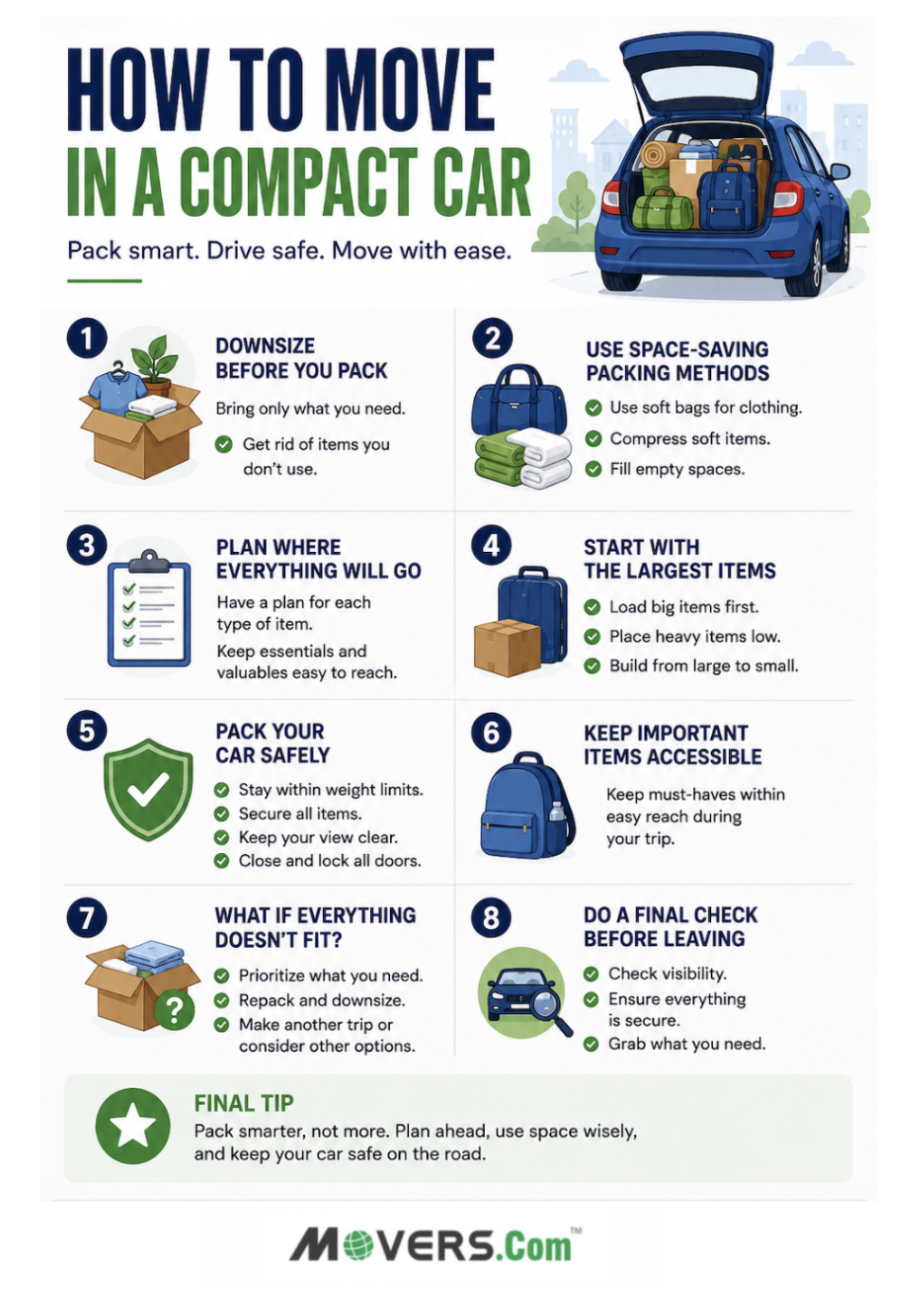
The key is to bring only what you need, use flexible packing materials and organize your belongings carefully. Start by downsizing, then pack larger items first and use smaller or softer belongings to fill available gaps.
1. Downsize Before You Pack
The easiest way to create more space in a compact car is to move fewer belongings.
Consider getting rid of:
- Old clothes
- Duplicate household items
- Unused kitchenware
- Bulky furniture
- Easily replaceable items
If you're moving a long distance, compare the cost and convenience of transporting bulky belongings with replacing them after you arrive. The less you have to pack, the easier it will be to organize your car.
2. Use Space-Saving Packing Methods
Once you've decided what you're taking, pack items in ways that make the most of your available space.
Use Soft Bags for Clothing
Instead of putting clothing in rigid boxes, use duffel bags, or soft-sided luggage. These can fit into spaces that boxes cannot.
Rolling clothing can also make it easier to arrange garments in tight spaces.
Compress Soft Items
Bedding, towels, blankets and other flexible items can take up significant room. Compress them into bags when practical, or use them to fill gaps between larger belongings.
Soft items can also provide cushioning around appropriate belongings, but don't use them as a substitute for proper protection of fragile items.
Fill Empty Spaces
After placing larger belongings in the vehicle, look for unused spaces around them. Small, appropriately packed items can fit into some of these gaps.
Avoid stuffing belongings into spaces where they could interfere with pedals, controls, doors or the driver's visibility.
3. Plan Where Everything Will Go
Don't wait until moving day to figure out how everything will fit. Make a rough loading plan before putting belongings into the car.
| Type of item |
Packing approach |
| Large, heavy items |
Place lower and arrange them tightly |
| Clothing |
Use flexible bags that can fit around larger items |
| Bedding and towels |
Use to fill suitable gaps or protect belongings |
| Fragile items |
Protect and position them on top, where they won't be crushed |
| Frequently needed items |
Keep them easy to reach |
| Important documents and valuables |
Keep them secure and accessible |
Your vehicle's available cargo area will depend on its design, so don't assume that every space is safe or suitable for storage.
4. Start With the Largest Items
When you're ready to load the car, begin with the largest belongings that need to go inside.
Place heavier items low when possible and arrange them so they are stable rather than leaving them loose.
Work from the largest items to the smallest:
- Larger belongings go in the main cargo area.
- Position heavier items low to create a stable foundation.
- Medium-sized belongings go around them.
- Soft items fill remaining spaces.
- Keep trip essentials accessible.
- Check the arrangement before closing the vehicle.
5. Pack Your Car Safely
Maximizing cargo space should not mean overloading your vehicle.
Check your vehicle's load limits and make sure the weight of passengers and belongings stays within the limits.
Before driving:
- Secure belongings.
- Keep the driver's view clear through the windows and mirrors.
- Avoid placing items where they could slide.
- Close and secure the trunk, hatch or other cargo areas.
6. Keep Important Items Accessible
Not everything should be packed away at the bottom of the car.
Keep items such as these easy to reach:
- Moving documents and important paperwork
- Phone chargers
- Medications
- Toiletries
- A change of clothes
- Snacks and water
- Basic cleaning supplies
- Items you'll need when you first arrive
Packing these separately can prevent you from having to unpack the entire car.
7. What If Everything Doesn't Fit?
If the car is full and you have more belongings, go through them again and prioritize what you actually need.
Try these options:
- Remove items you don't frequently use.
- Repack bulky packaging with flexible bags.
- Combine smaller belongings.
- Make another trip if it is practical.
- Consider another transportation option.
The goal is not to fit every possession into the vehicle. It's to transport what you need without exceeding the vehicle's capacity or compromising safe driving.
8. Do a Final Check Before Leaving
Once the car is packed, walk around the vehicle and check the load before starting your trip.
Make sure:
- Nothing is blocking your visibility.
- All doors, trunks and hatches close securely.
- Cargo is stable and properly secured.
- Important belongings are where you can reach them.
If the vehicle feels unusually difficult to control after loading, stop and reassess the load rather than continuing to drive.
Bottom Line
Moving with just a car requires careful planning, especially when space is limited.
Downsize before packing, use flexible bags and compressible items to make better use of available space, and load heavier belongings low and securely. Keep important documents, medications, valuables, and other trip essentials accessible.
Most importantly, don't overload the vehicle or block the driver's visibility just to fit more belongings. If everything doesn't fit safely, reduce what you're taking or consider another transportation option.
Editor's Note
This guide provides general information about organizing documents before a move. Document retention requirements vary depending on the type of record and individual circumstances.
Check your vehicle's cargo and payload limits before loading, and keep belongings securely packed without blocking visibility.
Get expert moving tips and compare movers for free at Movers.com.
You can get free moving quotes from licensed and insured movers, compare moving companies near you, and plan your move with confidence using our step-by-step moving guides and checklists.
Whether you're planning a local move, a long-distance relocation, or need help with packing and loading, Movers.com connects you with trusted moving professionals and practical tools to make moving easier and more affordable.
Questions? Talk to our moving specialists.