If a former roommate moves out and leaves belongings behind, don't immediately throw away, sell, donate, or keep their property. There is no universal number of days after which a roommate's belongings automatically become abandoned.
Document what's left, contact your landlord or property manager, and, if appropriate, notify your former roommate in writing. The correct procedure depends on state law, the lease, the person's tenancy status, and how they moved out.
If the former roommate was also a tenant, your landlord may need to handle the abandoned-property process.
What Should You Do if a Roommate Moves Out and Leaves Their Stuff?
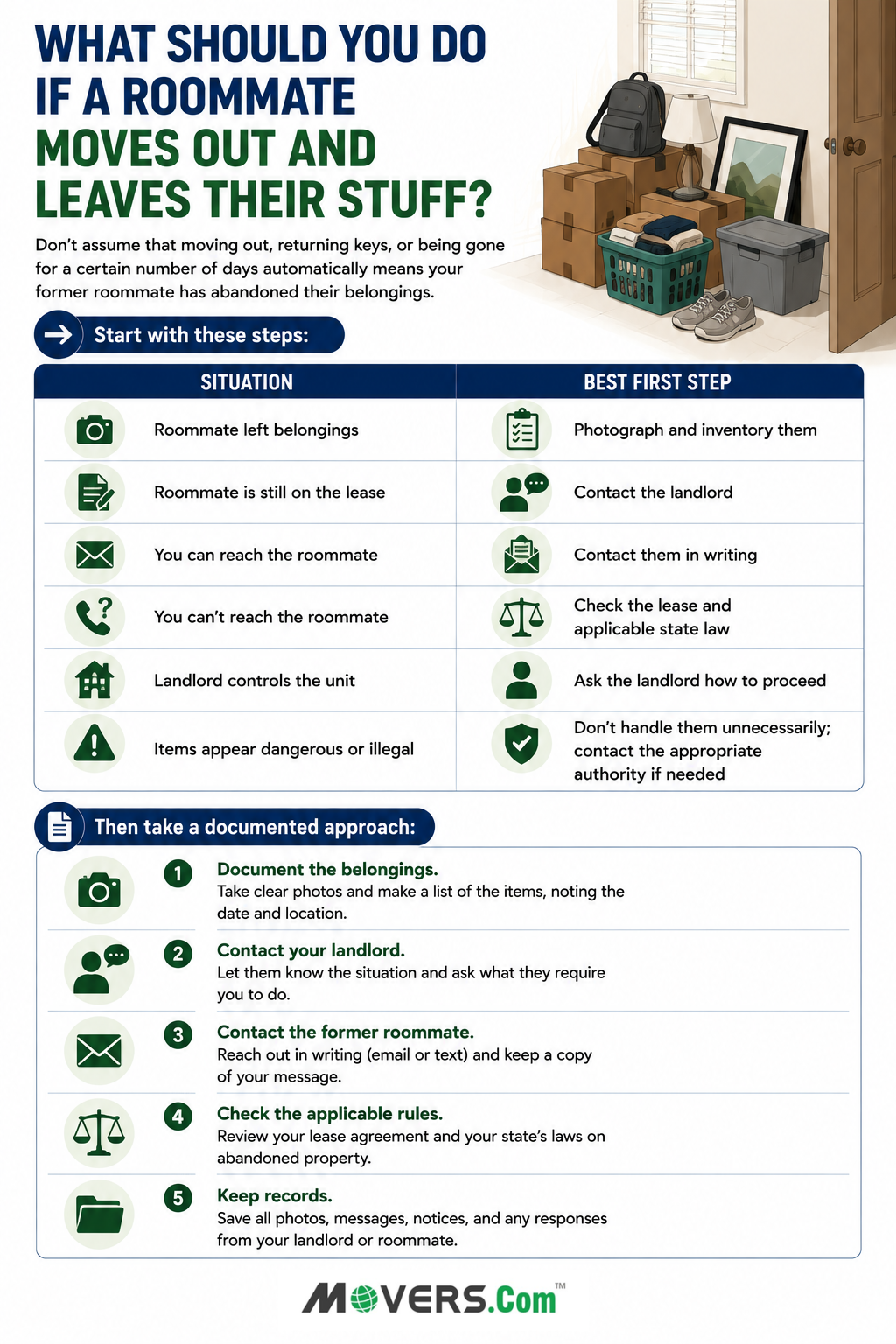
Don't assume that moving out, returning keys, or being gone for a certain number of days automatically means your former roommate has abandoned their belongings.
Start with these steps:
| Situation |
Best First Step |
| Roommate left belongings |
Photograph and inventory them |
| Roommate is still on the lease |
Contact the landlord |
| You can reach the roommate |
Contact them in writing |
| You can't reach the roommate |
Check the lease and applicable state law |
| Landlord controls the unit |
Ask the landlord how to proceed |
| Items appear dangerous or illegal |
Don't handle them unnecessarily; contact the appropriate authority if needed |
Then take a documented approach:
- Document the belongings. Take photos and make a basic inventory of significant items.
- Contact your landlord. Confirm whether the former roommate's tenancy has ended and who is responsible for the property.
- Contact the former roommate. When appropriate, notify them in writing and discuss how they can retrieve their belongings.
- Check the applicable rules. Review your lease and state requirements before moving, storing, selling, donating, or discarding anything.
- Keep records. Save photographs, messages, written notices, and communications with your landlord.
Avoid using, intentionally damaging, selling, donating, or discarding the belongings until you've determined what procedure applies.
How Long Does a Roommate Have to Be Gone Before Their Property Is Abandoned?
There is no nationwide rule that makes a former roommate's belongings abandoned after a specific number of days.
The applicable timeline can depend on:
- The state where the rental is located.
- Whether the person was a tenant, subtenant, roommate, guest, or another type of occupant.
- Whether they're still named on the lease.
- How the tenancy or occupancy ended.
- Whether the landlord has regained possession.
- Whether notice or storage is required.
Some states establish specific notice, storage, and disposal procedures for property left behind by former tenants.
For that reason, don't rely on a general rule such as "the property is abandoned after 30 days." Check applicable state law, your lease, and your landlord's instructions before disposing of anything.
Is Your Former Roommate's Property Automatically Yours?
No. A former roommate's property doesn't automatically become yours because they moved out or haven't returned for it.
Don't assume you can keep, use, sell, donate, or throw away the belongings simply because the person is no longer living with you.
If the former roommate was a tenant, involve your landlord or property manager before taking action. This is especially important if they're still on the lease or there's a dispute about whether the belongings were actually abandoned.
How Should You Notify Your Former Roommate?
If you're responsible for contacting the former roommate, use written communication and keep a copy.
Your message can identify:
- The belongings that remain.
- Where they're located.
- How the person can arrange pickup.
- How they can contact you or the landlord.
Don't create an arbitrary "legal" deadline. State law or the landlord's abandoned-property procedure may establish how notice must be delivered and how long the property must be held.
If the former roommate was a tenant, ask your landlord whether the landlord should issue any required formal notice.
If your former roommate doesn't respond, keep records of your attempts to contact them. A failure to answer a text, email, or phone call doesn't by itself establish that the property is legally abandoned.
Can You Move a Former Roommate's Belongings to Storage?
Possibly, but don't automatically move their property to a storage unit or another location.
First determine who is responsible for the belongings and whether applicable law or your lease establishes requirements for:
- Storage.
- Notice.
- Access to the property.
- Storage costs.
- How long the belongings must be kept.
- When and how unclaimed property may be disposed of
If the former roommate was a tenant, your landlord may be responsible for handling the storage and notification process.
Can You Throw Away a Former Roommate's Stuff?
Not simply because they moved out or stopped responding.
Before disposing of their belongings:
- Confirm the status of their tenancy or occupancy.
- Contact your landlord or property manager when appropriate.
- Document the belongings.
- Provide any notice required by applicable law.
- Follow applicable storage and waiting-period requirements.
Be particularly careful with valuable property, identification documents, financial records, medications, electronics, photographs, and other important personal items.
If you're unsure whether disposal is permitted, check applicable state and local requirements or seek local legal guidance.
What if Your Ex Leaves Belongings Behind?
The same basic caution applies if an ex-boyfriend, ex-girlfriend, or former partner moves out and leaves belongings behind.
Their property doesn't automatically become yours because the relationship ended or they moved out.
The applicable procedure can depend on whether the person was a tenant, subtenant, guest, or another type of occupant.
Document the belongings, communicate about pickup in writing when appropriate, and check the lease and applicable state law before disposing of anything.
If your former partner was also named on the lease, involve the landlord or property manager.
What if Both Roommates Are on the Lease?
If both roommates signed the lease, moving out doesn't necessarily mean the former roommate's tenancy has legally ended.
Contact the landlord or property manager and confirm:
- Whether the former roommate is still on the lease.
- Whether the landlord considers their tenancy ended and whether any additional steps are required.
- Who is responsible for belongings left in the rental.
Don't dispose of their property simply because they've moved elsewhere or returned their keys.
What if the Former Roommate Wasn't on the Lease?
Don't assume that someone who wasn't named on the lease has no rights regarding property they left behind.
A subtenant, guest, partner, or other occupant and their property may be treated differently depending on state and local law and the circumstances of their occupancy.
Document the belongings and check the applicable rules before disposing of them. If valuable property is involved or the person's legal status is unclear, consider contacting a local landlord-tenant resource or attorney.
What if Their Belongings Are Blocking Your Move?
If you're preparing to move out and a former roommate's belongings remain in the apartment, don't automatically put them at the curb, leave them outside, or throw them in a dumpster.
Photograph what's left and notify your landlord or property manager as soon as possible.
Ask who is responsible for removing or storing the belongings and what you need to do before surrendering the rental.
Keep copies of your communications so you have a record of how the situation was handled.
Bottom Line
If a roommate moves out and leaves belongings behind, don't assume the property is abandoned or yours to dispose of.
Document what's left, determine the person's tenancy status, involve your landlord when appropriate, and communicate with the former roommate in writing. Before selling, donating, storing, or throwing anything away, check the applicable state and local requirements.
There is no universal U.S. waiting period for property left behind by a former roommate.
Editor's Note
Our comparison reviewed by our Moving Industry Analyst team is based on publicly available pricing, customer reviews, and regular moving scenarios.
Abandoned-property and landlord-tenant laws vary by state and locality, and the correct procedure can depend on the former roommate's legal status and how the tenancy ended.
This guide provides general information and isn't legal advice. Check your lease, applicable state and local law, and your landlord's procedures before disposing of property left behind. If the situation involves valuable property, a dispute, or unclear tenancy rights, consider seeking advice from a qualified local attorney or tenant-landlord resource.
Get expert moving tips and compare movers for free at Movers.com.
You can get free moving quotes from licensed and insured movers, compare moving companies near you, and plan your move with confidence using our step-by-step moving guides and checklists.
Whether you're planning a local move, a long-distance relocation, or need help with packing and loading, Movers.com connects you with trusted moving professionals and practical tools to make moving easier and more affordable.
Questions? Talk to our moving specialists.