Tell your roommate you're moving out as soon as your plans are reasonably certain. Be direct, respectful, and clear about your expected move-out date.
You don't need to give a long explanation for your decision, but giving your roommate reasonable notice can make it easier to work through rent, utilities, shared belongings, and other responsibilities.
If you share a lease, review it before finalizing your move. Moving out of the apartment doesn't necessarily end your responsibilities under the lease.
When Should You Tell Your Roommate You're Moving Out?
Tell your roommate as early as reasonably possible once you're confident that you're moving.
Giving advance notice is especially helpful if your roommate will need to find a replacement roommate or adjust their housing budget.
However, telling your roommate isn't necessarily the same as providing formal notice under your lease. Check your rental agreement for any notice requirements that may apply to you.
How to Tell Your Roommate You're Moving Out
Keep the conversation straightforward and focus on your decision, expected move-out date, and the practical details you need to handle together.
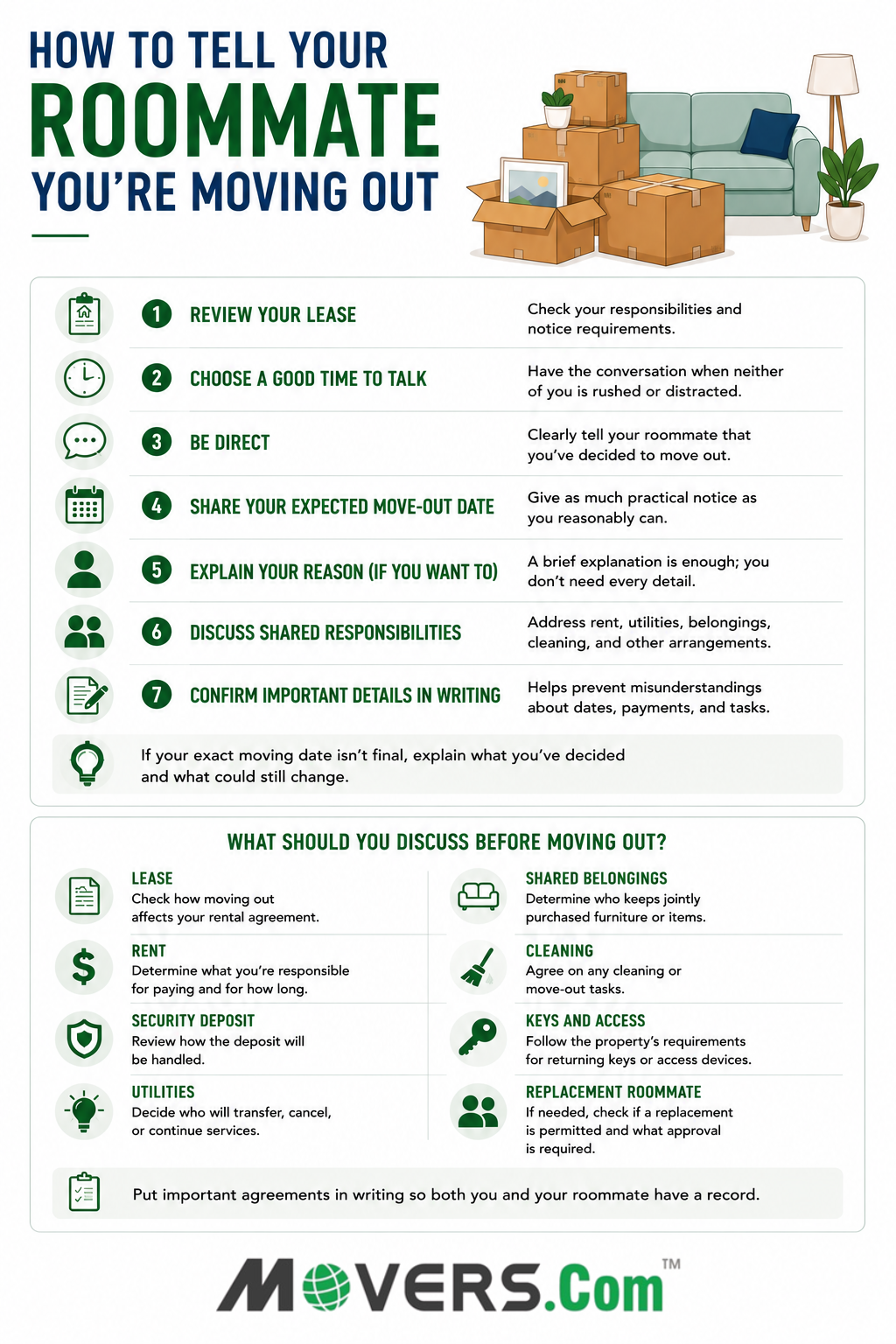
Follow these steps:
- Review your lease. Check your responsibilities and any notice requirements before making commitments.
- Choose a good time to talk. Have the conversation when neither of you is rushed or distracted.
- Be direct. Clearly tell your roommate that you've decided to move out.
- Share your expected move-out date. Give as much practical notice as you reasonably can.
- Explain your reason if you want to. A brief explanation is enough; you don't need to share every personal detail.
- Discuss shared responsibilities. Address rent, utilities, belongings, cleaning, and other arrangements affected by your move.
- Confirm important details in writing. This can help prevent misunderstandings about dates, payments, and responsibilities.
If your exact moving date isn't final, explain what you've decided and what could still change.
How to Tell Your Roommate You're Moving Out Nicely
Be respectful, but don't make your decision unclear just to avoid an uncomfortable conversation.
Your roommate may need time to adjust financially or find someone else to share the apartment, so tell them as early as you reasonably can.
When you talk:
- Clearly say that you've decided to move out.
- Share your expected moving date.
- Give a brief reason if you're comfortable doing so.
- Acknowledge any shared responsibilities affected by your move.
- Give your roommate an opportunity to ask questions.
- Keep the conversation focused on the move rather than complaints about living together.
Being considerate doesn't mean you have to justify your decision in detail. The goal is to communicate your plans clearly while making the transition easier for both of you.
What Should You Say to Your Roommate?
You don't need a complicated explanation. A simple conversation may sound like this:
"I wanted to let you know that I've decided to move out. I'm planning to move around [date], and I wanted to tell you as early as possible so we have time to work through the lease, bills, and anything else we share."
If your roommate asks why, you can give a short explanation such as:
- "I want to live somewhere else."
- "I'd like to live on my own."
- "I'm moving for work."
- "I'm moving in with my partner."
- "I need a different location."
- "I'm looking for a place that better fits my budget."
You can be honest without turning the conversation into a detailed explanation of everything you dislike about the current living arrangement.
What Should You Discuss Before Moving Out?
After telling your roommate, work through the practical responsibilities affected by your move.
- Lease: Check how moving out affects your rental agreement.
- Rent: Determine what you're responsible for paying and for how long.
- Security deposit: Review how the deposit will be handled under your lease or property requirements.
- Utilities: Decide who will transfer, cancel, or continue shared services.
- Shared belongings: Determine who will keep jointly purchased furniture or household items.
- Cleaning: Agree on any cleaning or move-out responsibilities.
- Keys and access: Follow the property's requirements for returning keys or access devices.
- Replacement roommate: If needed, check whether a replacement is permitted and what approval is required.
Put important agreements in writing so both you and your roommate have a record of what was decided.
What if You're Both on the Lease?
Moving out doesn't automatically remove you from a lease you signed.
If both you and your roommate are named on the lease, review the agreement before assuming your responsibilities end when you leave. You may also need to contact the landlord or property manager.
Depending on your lease, rental arrangement, and applicable requirements, your options may include:
- Remain responsible for the lease until it ends.
- Get approval for a replacement roommate.
- Request a lease amendment.
- Follow the required process for ending or changing the tenancy.
Don't assume you can simply transfer your portion of the lease to another person. Get any required approval and keep important changes in writing.
What if Your Roommate Reacts Badly?
Your roommate may be surprised, disappointed, or frustrated when you tell them you're moving out.
If the conversation becomes difficult:
- Stay calm and avoid escalating the disagreement.
- Keep the conversation focused on your decision to move.
- Be clear about your expected move-out date.
- Avoid arguing about unrelated roommate problems.
- Don't make promises about rent, the lease, or the security deposit until you've checked your responsibilities.
- Put important agreements in writing.
You don't need to resolve every detail during the first conversation. Once your roommate knows you're moving, you can work through the remaining arrangements separately.
What Should You Do After Telling Your Roommate You're Moving Out?
Once you've had the conversation, focus on completing the practical steps required for your move.
Depending on your situation, you may need to:
- Notify your landlord or property manager as required.
- Confirm your move-out date.
- Determine your remaining rent responsibilities.
- Arrange utility transfers or cancellations.
- Separate your belongings from shared items.
- Coordinate cleaning responsibilities.
- Discuss a replacement roommate if one is needed and permitted.
- Return keys or access devices as required.
- Document the condition of your room and shared areas when appropriate.
- Update your mailing address.
Keep copies of important communications, payments, and any changes to your lease or rental arrangements.
Bottom Line
Tell your roommate you're moving out as early as reasonably possible and be clear about your expected move-out date. Keep the conversation respectful and work through practical issues such as the lease, rent, utilities, shared belongings, and cleaning.
If you're named on the lease, don't assume that moving out automatically ends your responsibilities. Review your rental agreement and contact the landlord or property manager when necessary.
Editor's Note
Our comparison reviewed by our Moving Industry Analyst team is based on publicly available pricing, customer reviews, and regular moving scenarios.
Lease requirements and roommate arrangements vary. Review your rental agreement and check with your landlord or property manager before making decisions that affect your tenancy.
Get expert moving tips and compare movers for free at Movers.com.
You can get free moving quotes from licensed and insured movers, compare moving companies near you, and plan your move with confidence using our step-by-step moving guides and checklists.
Whether you're planning a local move, a long-distance relocation, or need help with packing and loading, Movers.com connects you with trusted moving professionals and practical tools to make moving easier and more affordable.
Questions? Talk to our moving specialists.