To move a lawn mower, prepare it according to the owner's manual, use a vehicle and loading method appropriate for its size and weight, and secure it so it can't roll, tip, or shift during transport.
Push mowers can often be transported in a suitable moving vehicle, while riding mowers typically require more planning because of their size and weight.
If you're using professional movers, check their requirements for gasoline, batteries, and lawn equipment before moving day.
How to Prepare a Lawn Mower for Moving
Before loading your lawn mower, check the owner's manual for model-specific preparation and transportation instructions.
Start by:
- Allowing the mower to cool completely.
- Removing grass, dirt, and loose debris.
- Removing or securing detachable accessories.
- Folding the handle on a push mower if it is designed to fold.
- Checking for fuel, oil, or other fluid leaks.
- Following manufacturer instructions for fuel, batteries, and other removable components.
For a riding mower, also check its dimensions and weight before choosing a trailer, ramps, or other transportation equipment.
Don't remove mechanical components unless they're designed to be detached or the manufacturer's instructions recommend doing so.
Should You Drain Gas and Oil From a Lawn Mower Before Moving?
Check the mower manufacturer's instructions and your transportation provider's requirements before draining gas or oil.
Gasoline is flammable, and professional moving companies may restrict or prohibit transporting lawn equipment that contains fuel. If you're hiring movers, ask whether the mower's fuel tank must be emptied before pickup.
Don't automatically drain the engine oil. Oil preparation can vary by mower and transportation method, so follow the manufacturer's instructions and any applicable carrier requirements.
If fuel or oil needs to be removed:
- Let the engine cool completely.
- Work away from flames, sparks, and other ignition sources.
- Use an appropriate container for the material being removed.
- Follow the manufacturer's instructions for removing fluids.
- Clean up spills appropriately.
- Follow local requirements for reuse, recycling, or disposal.
Never pour gasoline or used motor oil onto the ground, into a storm drain, or into a household drain.
If you need to dispose of unwanted gasoline or used oil, check with your local household hazardous-waste, recycling, or waste-management program for appropriate disposal options.
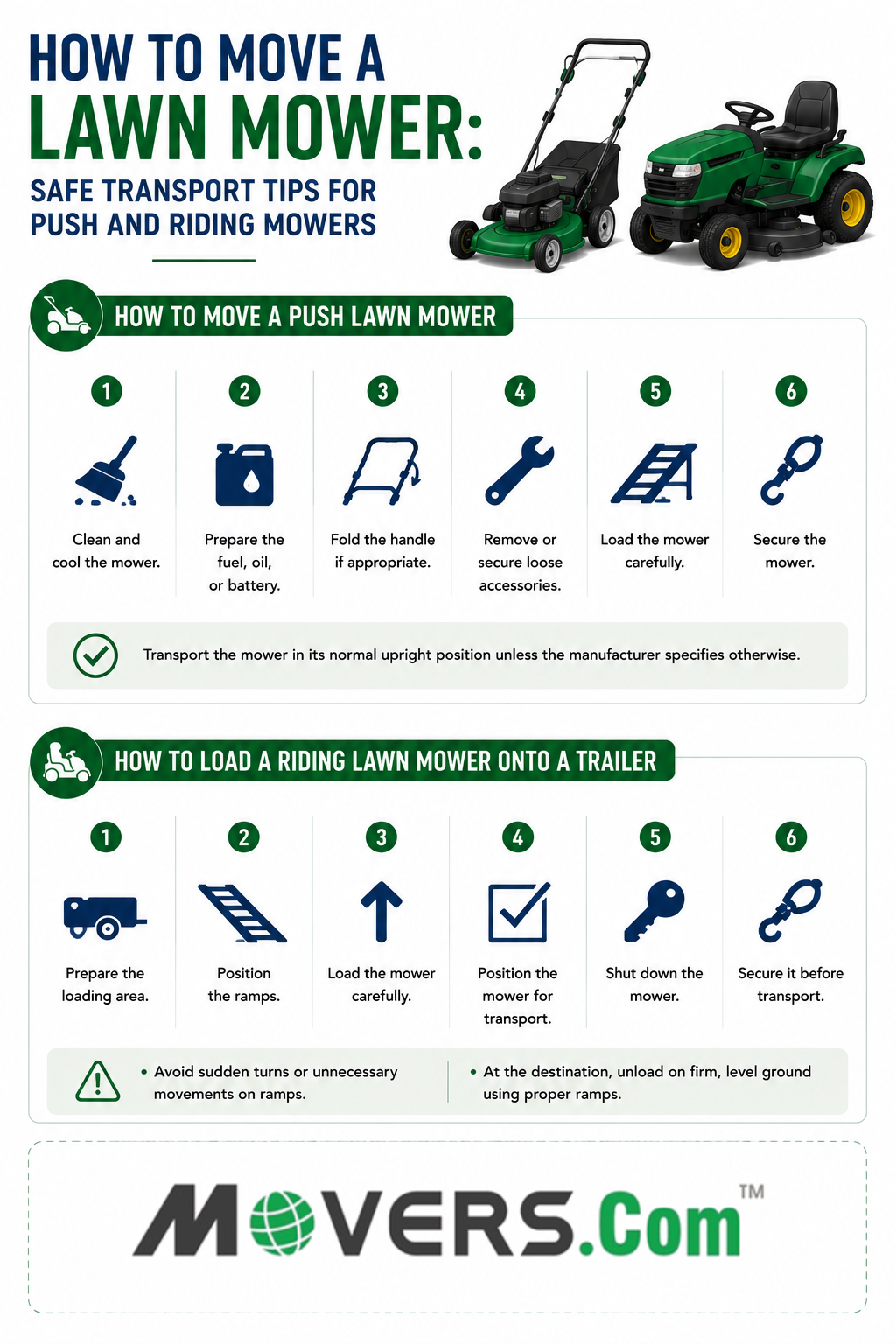
How to Move a Push Lawn Mower
Push lawn mowers are generally smaller and lighter than riding mowers, but they still need to be prepared and secured properly.
- Clean and cool the mower. Remove grass, dirt, and debris, and allow a gas-powered mower to cool completely.
- Prepare the fuel, oil, or battery. Follow the owner's manual and transportation provider's requirements.
- Fold the handle if appropriate. Only fold or adjust a handle if it is designed to do so.
- Remove or secure loose accessories. Keep detachable parts and hardware organized.
- Load the mower carefully. Use a loading method appropriate for its size and weight, and avoid unnecessary tipping.
- Secure the mower. Restrain it so it can't roll, tip, or shift during transportation.
Unless the manufacturer specifies otherwise, transport the mower in its normal upright position.
How to Move a Riding Lawn Mower
A riding lawn mower is usually best transported on a suitable trailer or other vehicle that can safely accommodate its size and weight.
Riding mowers can be substantially larger and heavier than push mowers, so loading and securing them requires additional planning.
Before transporting a riding mower:
- Check its dimensions and weight.
- Confirm that the trailer or transport vehicle can safely accommodate it.
- Check the capacity and condition of the loading ramps.
- Remove or secure detachable accessories.
- Follow manufacturer and carrier requirements for fuel and batteries.
- Check for leaks and loose components.
Don't use a trailer, ramp, or other loading equipment unless it is suitable for the mower's size and weight and intended for that purpose.
How to Load a Riding Lawn Mower Onto a Trailer
Before loading, make sure the trailer, ramps, and tie-down equipment are appropriate for the riding mower's size and weight.
- Prepare the loading area. Park the tow vehicle and trailer on firm, level ground when possible and secure the trailer according to its instructions.
- Position the ramps. Use loading ramps designed to support the mower and compatible with the trailer. Secure them according to their instructions.
- Load the mower carefully. Follow the mower manufacturer's instructions for operating and loading it on ramps. Move slowly and maintain control.
- Position the mower for transport. Place it where it can be properly secured without interfering with other cargo.
- Shut down the mower. Turn off the engine, remove the key, and apply the parking brake when appropriate according to the manufacturer's instructions.
- Secure it before transport. Don't move the trailer until the mower is properly restrained against movement.
Avoid sudden turns or unnecessary movements while the mower is on the ramps.
At the destination, unload the mower on firm, level ground when possible using appropriate ramps and following the manufacturer's instructions.
How to Secure a Lawn Mower for Transport
Secure the lawn mower so it can't roll, tip, or shift forward, backward, or sideways during transportation.
For a riding mower:
- Use appropriate tie-down points.
- Use restraints suitable for the mower's weight.
- Secure the mower against movement in all directions.
- Keep straps away from sharp edges and vulnerable components.
- Don't attach restraints to parts that aren't designed to support the load.
- Check the restraints again before driving.
For a push mower, make sure it is stable and properly secured rather than relying on boxes or other belongings to hold it in place.
If you're unsure where restraints should be attached, check the mower manufacturer's transportation instructions.
Can You Transport a Lawn Mower in a Moving Truck?
Potentially, but check with the moving company before moving day. Professional movers may restrict gasoline and other hazardous materials and may require fuel-powered lawn equipment to be prepared in a particular way.
If the mover accepts the lawn mower:
- Follow the mover's preparation requirements.
- Follow manufacturer guidance for fuel, oil, and batteries.
- Keep the mower upright unless the manufacturer specifies otherwise.
- Protect nearby belongings from dirt or possible leaks.
- Secure the mower against rolling, tipping, or shifting.
Don't pack prohibited fuel or other hazardous materials with your household belongings.
Tell your mover that you plan to transport a lawn mower rather than assuming it can be loaded with the rest of your shipment.
How to Move an Electric or Battery-Powered Lawn Mower
Electric lawn mowers don't require gasoline preparation, but they still need to be cleaned, protected, and secured during transportation.
For a corded electric mower, unplug the mower, secure the power cord, remove or secure detachable components, and fold the handle if it is designed to fold.
For a battery-powered mower, turn it off and follow the manufacturer's instructions for removing or securing the battery. If the battery is removed, protect it and its terminals from damage or short circuits.
Battery transportation requirements can vary by battery type and transportation method, so follow the manufacturer's and carrier's requirements.
Secure the mower itself against rolling, tipping, or shifting during transportation.
 Bottom Line
The best way to transport a lawn mower depends on its size, weight, power source, and the vehicle you're using.
Prepare the mower according to its owner's manual, follow applicable fuel and battery requirements, use suitable loading equipment, and secure the mower against rolling, tipping, or shifting.
For a riding mower, make sure the trailer, ramps, and restraints can safely accommodate the mower's size and weight.
Editor's Note
Our comparison reviewed by our Moving Industry Analyst team is based on publicly available pricing, customer reviews, and regular moving scenarios.
Check your mower's owner's manual and transportation provider's requirements before preparing or loading it.
Get expert moving tips and compare movers for free at Movers.com.
You can get free moving quotes from licensed and insured movers, compare moving companies near you, and plan your move with confidence using our step-by-step moving guides and checklists.
Whether you're planning a local move, a long-distance relocation, or need help with packing and loading, Movers.com connects you with trusted moving professionals and practical tools to make moving easier and more affordable.
Questions? Talk to our moving specialists.