The best moving vehicle depends on the size of your move, how far you're traveling, what you're transporting, and whether you're moving yourself or hiring professionals. Cargo vans are ideal for small moves, box trucks are the most common choice for household moves, while trailers and specialized carriers transport vehicles, boats, and oversized items.
This guide explains the different types of moving vehicles, what they're used for, their advantages and limitations, and how to choose the right vehicle for your move.
Types of Moving Vehicles at a Glance
| Moving Vehicle |
Best For |
Typical Move |
| Cargo Van |
Studio apartments, dorm rooms, small loads |
Local |
| Pickup Truck |
Furniture and a few large items |
Local |
| Box Truck |
Apartments and houses |
Local & Long-Distance |
| Moving Trailer |
DIY moves with your own vehicle |
Local & Long-Distance |
| Portable Moving Container |
Flexible self-pack moves |
Local & Long-Distance |
| Car Carrier |
Shipping vehicles |
Interstate & Cross-Country |
| Boat Transport Trailer |
Boat transportation |
Specialty |
| Mobile Home Transport Truck |
Manufactured homes |
Specialty |
The best option depends on the size of your move, distance, budget, and the type of items being transported.
What Is a Moving Vehicle?
A moving vehicle is any vehicle designed to transport household belongings, furniture, personal property, or specialty items during a move. Some moving vehicles are available for consumer rental, while others are designed exclusively for professional moving and transportation companies.
The right vehicle depends on several factors, including:
- Size of your move
- Moving distance
- Weight of your belongings
- Budget
- Whether you're driving yourself or hiring movers
1. Cargo Van
A cargo van is one of the smallest moving vehicles available and works well for studio apartments, college dorm rooms, or moving a few pieces of furniture.
Because cargo vans are easier to drive and park than large moving trucks, they're a popular choice for local DIY moves.
Best For
- Studio apartments
- College students
- Small office moves
- A few pieces of furniture
Pros
- Easy to drive and park
- Lower fuel costs
- Often less expensive to rent
- Suitable for city driving
Cons
- Limited cargo space
- Not suitable for larger household moves
Bottom Line: A cargo van is an excellent choice if you're moving only a few belongings and want an affordable alternative to a larger truck.
2. Pickup Truck
A pickup truck is ideal for transporting large furniture, appliances, landscaping equipment, or home improvement materials over short distances.
Many people already own a pickup truck or can rent one for local moves.
Best For
Pros
- Easy to drive
- Lower rental cost
- Good for oversized items
- Suitable for short-distance moves
- Open loads can be secured with tie-down straps and protected with tarps when necessary.
Cons
- Open cargo bed offers limited weather protection
- Limited storage capacity
- Not practical for full household moves
Bottom Line: Pickup trucks work best when moving a few large items rather than an entire household.
3. Box Truck
A box truck (also called a moving truck or straight truck) is the most common vehicle used for household moves. Rental companies offer several truck sizes to accommodate apartments, condos, and single-family homes.
Typical truck sizes include:
- 10–12-foot trucks for studio and one-bedroom apartments
- 15–16-foot trucks for many two-bedroom apartment moves
- 20-foot trucks for three-bedroom homes
- 26-foot trucks for four-bedroom or larger homes
Actual truck sizes vary by rental company.
Best For
- Apartments
- Houses
- Local moves
- Cross-country DIY moves
Pros
- Multiple sizes available
- Fully enclosed cargo area
- Protects belongings from weather
- Widely available from rental companies
Cons
- Larger trucks require more driving experience
- Fuel costs can add up
- Parking may be difficult in some areas
Bottom Line: For most household moves, a box truck offers the best balance of capacity, protection, and affordability.
4. Moving Trailer
A moving trailer attaches to your personal vehicle and allows you to transport belongings without renting a moving truck. Depending on your vehicle's towing capacity, you may choose a cargo trailer, utility trailer, tow dolly, or car carrier.
Moving trailers are popular with people who already own a capable SUV or pickup truck.
Common Types
- Cargo trailer
- Utility trailer
- Tow dolly
- Car carrier
Best For
- Small DIY moves
- Towing with your own vehicle
- Additional storage space
- Local or interstate moves
Pros
- Lower rental costs
- No need to rent a moving truck
- Available in several sizes
Cons
- Requires a properly equipped tow vehicle
- Backing up and maneuvering can be challenging
- Towing capacity limits apply
Bottom Line: Moving trailers can be a cost-effective option if your vehicle is capable of safely towing the load.
5. Portable Moving Container
Portable moving containers provide an alternative to traditional moving trucks. Instead of driving a rental truck, the container company delivers the container to your home, retrieves it after you've finished loading, and transports it to your destination.
Popular providers include PODS, U-Pack, U-Haul, U-Box, and 1-800-PACK-RAT.
Best For
- Long-distance moves
- Flexible schedules
- Temporary storage
- DIY movers who don't want to drive a truck
Pros
- No truck driving required
- Load and unload at your own pace
- Storage options available
- Suitable for local and interstate moves
Cons
- Generally costs more than renting a truck
- Parking restrictions may apply
- Availability varies by location
Bottom Line: Portable moving containers offer a convenient balance between affordability and professional transportation, especially for long-distance moves.
6. Car Carrier (Auto Transport Trailer)
A car carrier is a specialized trailer used to transport cars, SUVs, motorcycles, and other vehicles over short or long distances. Most vehicles are transported on multi-vehicle carriers for interstate and cross-country moves.
Open carriers are the most common and cost-effective option, while enclosed carriers provide additional protection for luxury, classic, antique, or exotic vehicles.
Types of Car Carriers
Open Carrier
- Most common option
- Lower shipping cost
- Suitable for everyday vehicles
- Vehicles are exposed to weather and road debris
Enclosed Carrier
- Fully enclosed trailer
- Added protection from weather and debris
- Recommended for luxury, classic, antique, or exotic vehicles
- Higher transportation cost
Best For
- Long-distance vehicle transport
- Relocating without driving your vehicle
- Military and corporate relocations
- Seasonal vehicle transportation
Pros
- Prevents unnecessary wear and tear on your vehicle
- Saves time on long-distance moves
- Professional vehicle handling
- Available nationwide
Cons
- Additional transportation cost
- Pickup and delivery windows may vary
- Enclosed transport costs more
Bottom Line: A car carrier is one of the safest and most convenient ways to transport a vehicle over long distances, especially if you're driving a moving truck or flying to your destination.
7. Boat Transport Trailer
A boat transport trailer is designed to move boats safely between marinas, storage facilities, dealerships, and private properties. Larger boats are typically transported by professional boat transport companies using specialized trailers and heavy-duty trucks. Oversized boats may also require wide-load permits and route planning.
The type of trailer used depends on the boat's size, weight, and dimensions.
Best For
- Fishing boats
- Sailboats
- Pontoon boats
- Personal watercraft
- Yacht transportation
Pros
- Designed specifically for boats
- Secure transportation
- Professional handling for oversized boats
- Available for local and interstate moves
Cons
- Larger boats may require permits or escort vehicles
- Transportation costs increase with size and distance
- Scheduling may require advance planning
Bottom Line: For anything larger than a small recreational boat, professional boat transport is usually the safest and most practical option.
8. Mobile Home Transport Truck
A mobile home transport truck is a heavy-duty vehicle specifically designed to move manufactured and mobile homes. These specialized trucks are operated by licensed transport specialists and are equipped to handle oversized loads safely.
Moving a mobile home often requires permits, route planning, escort vehicles, and utility coordination, making it a highly specialized service.
Best For
- Manufactured homes
- Mobile homes
- Modular home relocation
Pros
- Designed for oversized structures
- Professional transportation
- Handles permit and routing requirements
- Specialized equipment improves safety
Cons
- More expensive than a standard household move
- Requires permits and inspections
- Not available as a DIY rental
Bottom Line: Mobile homes should always be transported by experienced professionals using specialized equipment designed for oversized structures.
DIY vs. Professional Moving Vehicles
The right moving vehicle depends on whether you're planning a DIY move or hiring professional movers.
| DIY Moving Vehicles |
Professional Moving Vehicles |
| Cargo van |
Straight truck |
| Pickup truck |
Tractor-trailer |
| Box truck |
Auto transport carrier |
| Moving trailer |
Flatbed trailer |
| Portable moving container |
Mobile home transport truck |
DIY vehicles are ideal for smaller moves where you're comfortable packing, loading, driving, and unloading. Professional movers typically use commercial straight trucks or tractor-trailers that are not available for consumer rental and are better suited for transporting larger households, specialty items, and oversized shipments.
How to Choose the Right Moving Vehicle
Before selecting a moving vehicle, consider these factors:
Size of Your Move
Larger households generally require larger trucks or multiple containers, while smaller moves may only need a cargo van or pickup truck.
Moving Distance
A rental truck may be practical for local moves, while portable moving containers or professional transportation may be more convenient for long-distance relocations.
Budget
DIY options usually cost less but require more time and physical effort. Professional transportation offers greater convenience at a higher price.
Driving Experience
Large moving trucks can be challenging to drive, especially in busy cities, narrow streets, or mountainous areas. Choose a vehicle you're comfortable operating.
Specialty Items
If you're transporting a vehicle, boat, piano, or manufactured home, consider using specialized transportation equipment instead of a standard moving truck.
Which Moving Vehicle Do You Need?
These recommendations are general planning guidelines. Always choose a vehicle based on the size, weight, and type of items you're moving, and confirm sizing with the rental company or transportation provider.
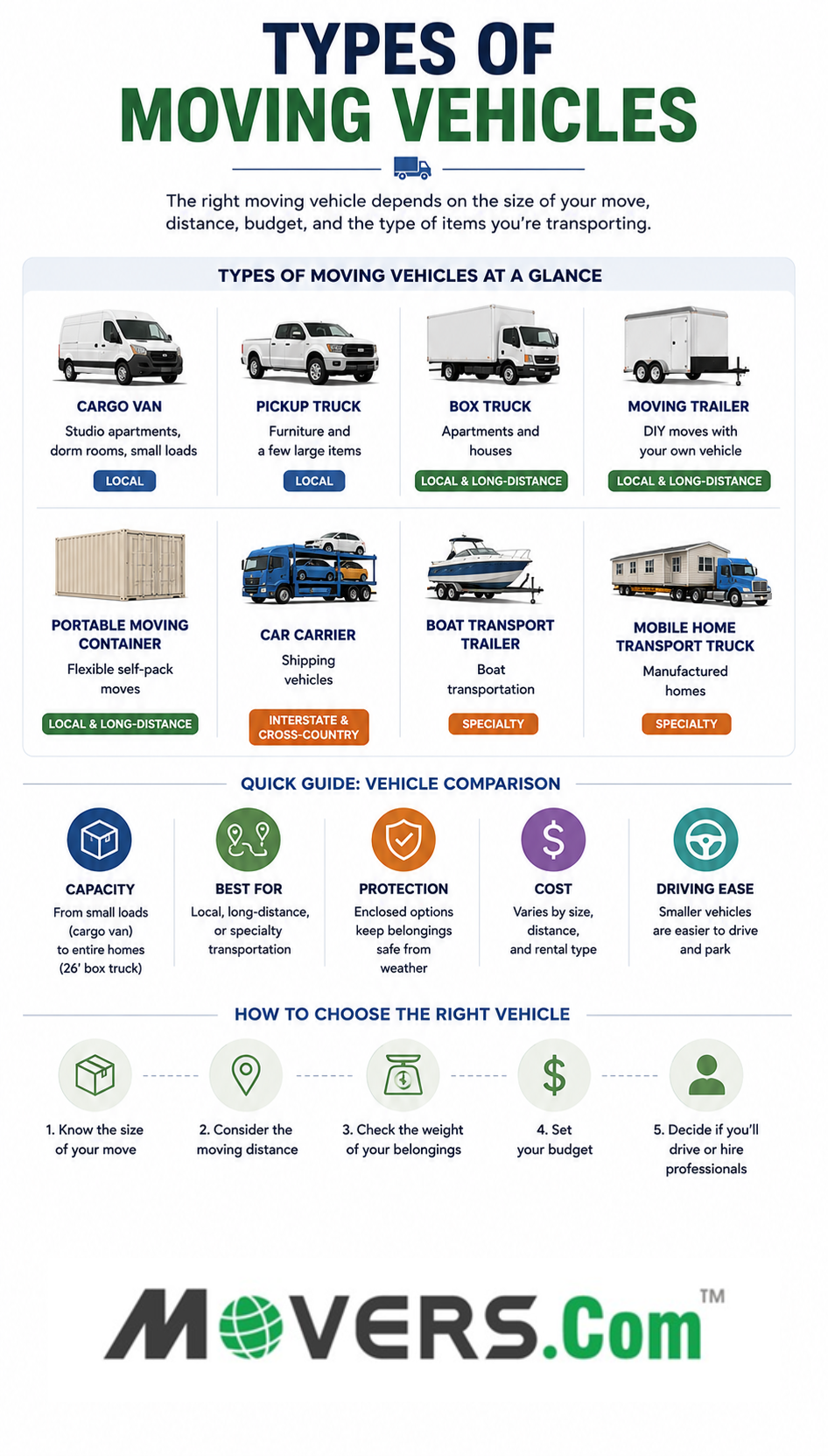
Bottom Line
Cargo vans and pickup trucks are well suited for small local moves, while box trucks remain the most popular choice for transporting household belongings. Moving trailers and portable moving containers offer flexible alternatives for DIY movers, and specialized carriers provide safe transportation for vehicles, boats, and manufactured homes.
If you're unsure which moving vehicle to choose, create a complete inventory before requesting recommendations from a rental company or moving professional. Before booking, consider the size of your move, travel distance, budget, driving experience, and any specialty items you need to transport. Choosing the right moving vehicle can help reduce costs, protect your belongings, and make moving day much smoother.
Editor's Note
This guide was reviewed by the Movers.com Moving Industry Analyst team using publicly available vehicle specifications, transportation resources, rental company information, and common residential moving scenarios.
Vehicle availability, rental policies, dimensions, towing requirements, and transportation services vary by company and location. Always confirm vehicle specifications, weight limits, towing capacity, and rental terms before booking.
Get expert moving tips and compare movers for free at Movers.com.
You can compare licensed and insured movers, request free moving quotes, and explore moving truck reviews, transportation guides, checklists, and planning resources to choose the right moving solution for your relocation.
Whether you're planning a local DIY move, a long-distance relocation, or transporting specialty items, Movers.com connects you with trusted moving professionals and practical tools to make moving easier and more affordable.
Questions? Talk to our moving specialists.