Renting a moving truck can be a smart way to save money and stay in control of your move. But if you are not careful, a simple truck rental can quickly turn into a stressful moving-day problem.
The truck may not be available when you arrive. The final bill may be higher than expected. The vehicle may be harder to drive than you thought, or you may realize too late that the truck is too small for your belongings.
The good news is that most moving truck rental problems can be avoided with a little planning. Before you book, it helps to know what can go wrong, what questions to ask, and what to check before driving away.
Here are the most common moving truck rental problems and how to avoid them.
Quick Answer
What are the most common moving truck rental problems?
The most common moving truck rental problems include limited truck availability, choosing the wrong truck size, hidden fees, mileage charges, poor vehicle condition, confusing insurance options, fuel penalties, age restrictions, and difficulty driving a large truck.
| Common truck rental problem |
How to avoid it |
| Truck not available |
Book early and confirm your reservation before pickup |
| Wrong truck size |
Use a size guide and choose slightly more space than you think you need |
| Hidden fees |
Ask for a full cost estimate before booking |
| Poor truck condition |
Inspect the truck and take photos before driving away |
| Insurance confusion |
Check your auto policy and understand rental protection options |
| Driving difficulty |
Plan your route and avoid low bridges, tight roads, and parking garages |
Waiting too long to reserve a truck
One of the most common truck rental problems is waiting until the last minute to book. Moving trucks can get reserved quickly, especially during summer, weekends, holidays, and the end of the month.
If you wait too long, you may have fewer truck sizes to choose from. You may also have to pick up the truck from a farther location, pay a higher price, or change your moving schedule.
How to avoid it
Reserve your truck as soon as your moving date is confirmed. If you are moving during a busy season, try to book several weeks in advance.
Before confirming your reservation, ask:
- Is this reservation guaranteed?
- What happens if the truck is not available?
- Can the pickup location change?
- Will I be notified if there is a change?
- Is there a cancellation or change fee?
Call the rental location 24 to 48 hours before pickup to confirm the truck size, pickup time, and location. This small step can prevent a lot of moving-day stress.
Choosing the wrong truck size
Choosing the wrong truck size can cause major problems. If the truck is too small, you may need to make extra trips, leave items behind, or rent another vehicle. If the truck is too large, you may pay more than necessary and have a harder time driving or parking.
Truck size charts are helpful, but they are not perfect. The amount of furniture, boxes, appliances, outdoor items, and storage items you own can make a big difference.
| Move size |
Possible truck size |
| Studio or small apartment |
Cargo van or 10-foot truck |
| 1-bedroom home |
10 to 12-foot truck |
| 2-bedroom home |
15 to 17-foot truck |
| 3-bedroom home |
20 to 22-foot truck |
| 4-bedroom home or larger |
26-foot truck |
Truck sizes and capacity can vary by rental company, so always confirm with the provider before booking.
How to avoid it
Make a quick inventory of large items before choosing a truck. Include beds, sofas, dining tables, dressers, appliances, patio furniture, garage items, and anything stored in closets, basements, or storage units.
If you are unsure between two sizes, it is usually safer to choose slightly more space. A little extra room can make loading easier and help reduce the risk of damage.
Getting surprised by hidden fees
A moving truck may look affordable when you first see the daily rental rate. But the final bill can be much higher once extra charges are added.
Common extra costs include mileage fees, fuel charges, insurance, taxes, equipment rentals, late return fees, and one-way rental charges.
Common truck rental fees to check
| Fee type |
Why it matters |
| Mileage fee |
Local rentals may charge for every mile driven |
| Fuel charge |
You may pay extra if the truck is returned with less fuel |
| Equipment fee |
Dollies, straps, and furniture pads may cost extra |
| Late return fee |
Returning the truck late can add more charges |
| One-way fee |
Dropping off the truck in another city may cost more |
| Cleaning fee |
You may be charged if the truck is returned dirty |
How to avoid it
Do not only ask for the daily rental rate. Ask for the estimated total cost.
Before booking, ask:
- How many miles are included?
- What is the per-mile charge?
- What fuel level is required at return?
- Are taxes and fees included in the quote?
- Is insurance optional or required?
- Are dollies, pads, and straps included?
- What happens if I return the truck late?
A helpful question to ask is:
“What could make my final bill higher than this quote?”
That one question can help you spot extra charges before they surprise you.
Skipping the truck inspection
Moving day can feel rushed, but do not skip the truck inspection. If the truck already has dents, scratches, tire damage, broken lights, or a damaged ramp, you need those issues documented before you leave.
Otherwise, you could be blamed for damage you did not cause.
What to check before driving away
Use this quick checklist:
- Check the truck for dents, scratches, and cracks
- Take photos of all existing damage
- Check the fuel level and odometer
- Inspect the tires
- Test the headlights, brake lights, and turn signals
- Adjust and check the mirrors
- Test the horn and windshield wipers
- Look for dashboard warning lights
- Check the loading ramp
- Make sure rented equipment is included
- Confirm the roadside assistance number
How to avoid it
Walk around the truck slowly before signing off. Take clear photos and videos from multiple angles. Make sure any damage is noted in writing by the rental company.
If the truck feels unsafe, ask for another vehicle.
Renting a poorly maintained truck
A moving truck breakdown can delay your entire move. It can also be stressful if your belongings are already loaded inside the vehicle.
Poor truck condition can include worn tires, brake issues, steering problems, engine warning lights, broken ramps, or weak air conditioning. These problems are especially risky for long-distance moves.
How to avoid it
Ask the rental company what to do if the truck breaks down. Before leaving the lot, confirm:
- Is roadside assistance included?
- What number should I call in an emergency?
- Will I get a replacement truck if needed?
- Am I responsible for mechanical failure?
- What should I do if the truck becomes unsafe to drive?
Do not ignore warning lights, strange noises, or tire problems. It is better to ask for help before leaving than to deal with a breakdown on the road.
Underestimating how hard it is to drive a moving truck
Driving a moving truck is different from driving a car. Trucks are wider, taller, heavier, and slower to stop. They also have larger blind spots and need more space for turns.
This can make city streets, narrow roads, bridges, parking lots, and apartment complexes difficult to navigate.
How to avoid it
Before driving, adjust the seat and mirrors. Check the truck height and plan your route carefully.
When driving:
- Leave extra space between vehicles
- Brake earlier than usual
- Take wider turns
- Avoid sudden lane changes
- Watch for low bridges
- Avoid parking garages and drive-thrus
- Use a spotter when backing up
- Drive slower than you normally would
Plan your route before moving day. Choose wider roads when possible and avoid areas with low clearance, tight turns, or limited parking.
Not understanding insurance and driver rules
Truck rental insurance can be confusing. Your regular auto insurance or credit card may not fully cover a moving truck, especially if it is a larger rental vehicle.
There may also be rules about who can drive. Some rental companies have minimum age requirements, additional driver rules, and restrictions on coverage if an unlisted person drives the truck.
How to avoid it
Before declining rental insurance, contact your auto insurance provider and credit card company. Ask whether they cover rental moving trucks, cargo damage, liability, roadside assistance, and towing.
Also ask the truck rental company:
- What is the minimum driver age?
- Can I add another driver?
- Does the additional driver need to be present?
- Is the extra driver covered by insurance?
- What does the rental protection plan include?
- Are tires, roof damage, or cargo damage excluded?
Do not assume you are covered. Confirm everything before signing the rental agreement.
Forgetting about fuel and return rules
Fuel and return rules are easy to overlook, but they can add extra charges. Many truck rental companies require you to return the truck with the same fuel level it had at pickup.
If you return it late, dirty, at the wrong location, or with less fuel than required, you may pay additional fees.
How to avoid it
Take a photo of the fuel gauge and mileage before leaving the rental lot. Ask the rental agent to explain the return requirements clearly.
Before returning the truck:
- Refill the fuel to the required level
- Remove trash and personal items
- Return rented equipment
- Park in the correct return area
- Keep your fuel receipt
- Take final photos of the truck
If you are returning the truck after hours, ask how the key drop-off and final inspection will work.
Not comparing truck rental with other moving options
Renting a truck can be a good option, but it is not always the best choice for every move.
When you add fuel, mileage, insurance, equipment, tolls, your time, and the physical work of loading and unloading, the cost may be closer to hiring movers than you expected.
Compare your options
| Moving option |
Best for |
| Renting a truck |
Local moves, flexible schedules, and people with loading help |
| Hiring movers |
Long-distance moves, heavy furniture, and tight timelines |
| Moving labor only |
People who can drive but need help loading and unloading |
| Portable container |
People who want more time to pack and load |
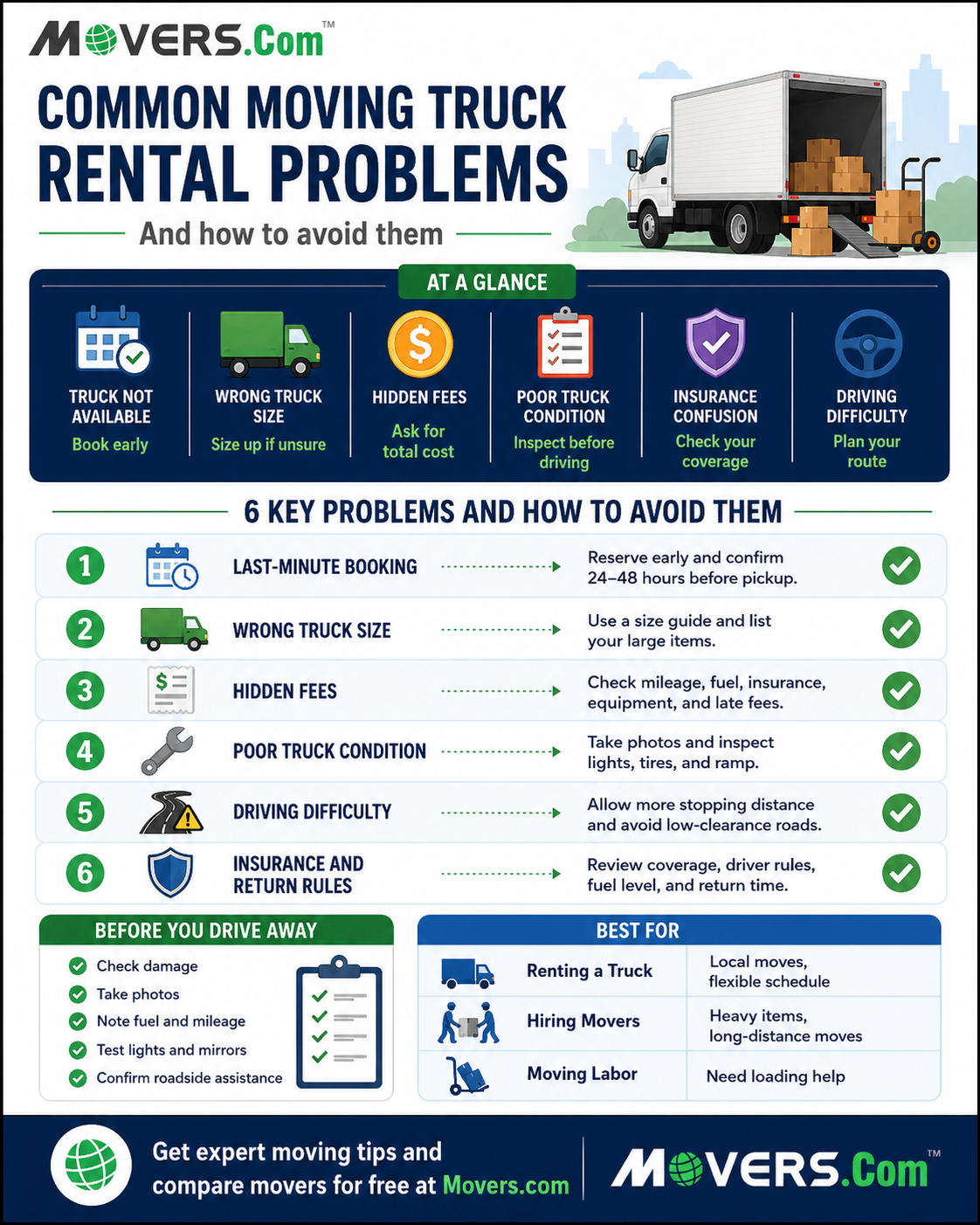
How to choose
A truck rental may make sense if you are moving locally, have help, and feel comfortable driving a large vehicle. Professional movers may be better if you have heavy furniture, a long-distance move, stairs, limited time, or safety concerns.
Before deciding, compare the full cost of each option, not just the truck’s daily rate.
Editor's Note
This guide was created to help consumers understand common truck rental issues based on typical moving scenarios, publicly available rental policies, and common customer concerns.
Renting a moving truck can save money, but it works best when you know what to expect. The biggest problems usually come from last-minute booking, unclear pricing, wrong truck size, poor inspection, and not understanding the rental agreement.
Take time to compare your options, ask questions, inspect the truck, and understand the full cost before moving day.
If renting a truck starts to feel more stressful or expensive than expected, compare other moving options too. Movers.com can help you explore moving guides, truck rental tips, and professional moving services so you can choose what works best for your budget, schedule, and comfort level.
Not sure whether renting a truck is he right choice? Get expert moving tips and compare movers for free at Movers.com
Questions? Talk to our moving specialists.