People move for many reasons, including better housing, lower living costs, a new job, family needs, education, lifestyle changes, retirement, and business opportunities.
Some moves are necessary, while others are about improving quality of life or pursuing new opportunities. Before relocating, consider whether the benefits are likely to outweigh the financial and practical costs of moving.
What Are the Most Common Reasons People Move?
There isn't one reason that applies to everyone. People relocate as their housing needs, employment, finances, family circumstances, and personal priorities change.
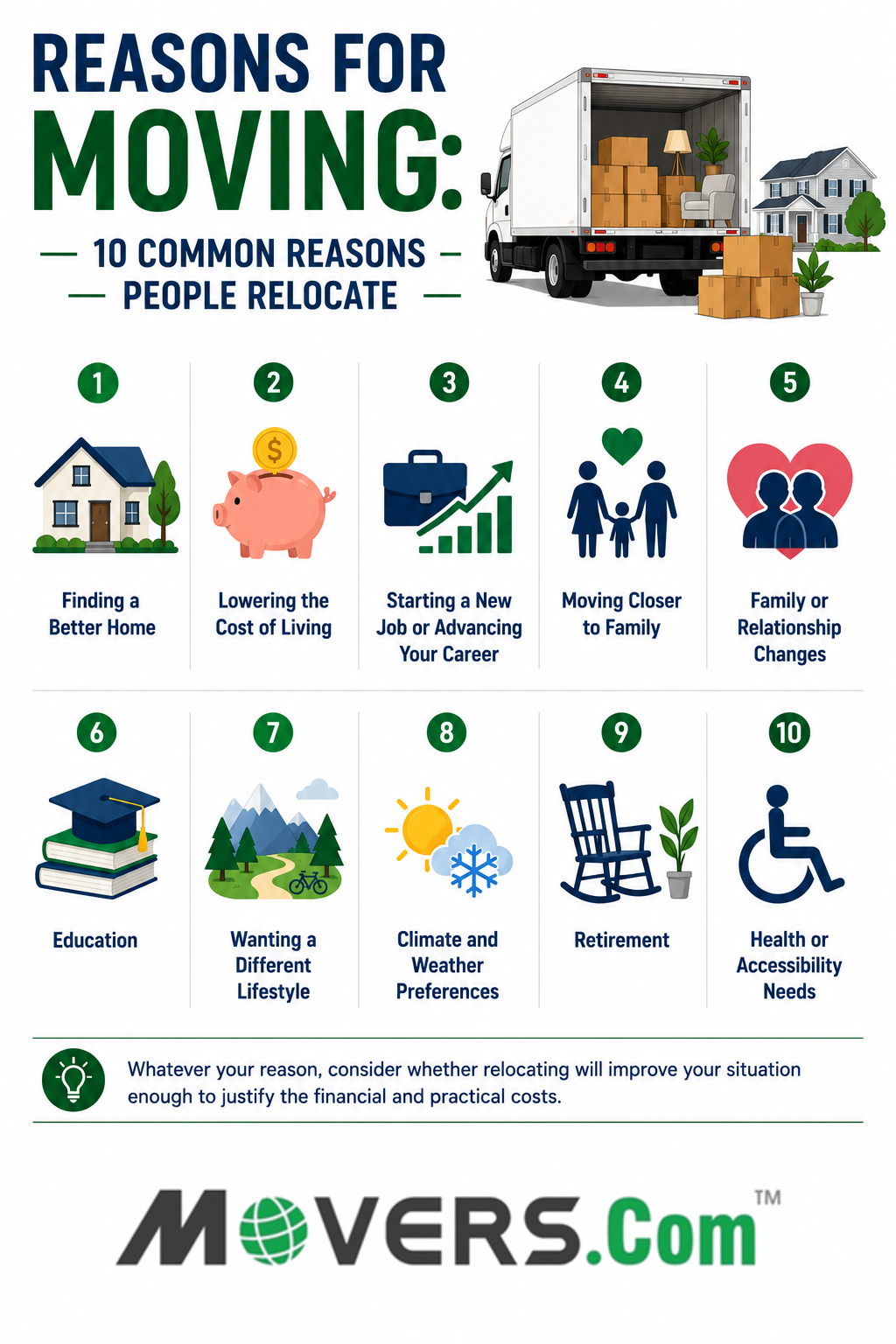
Here are 10 common reasons people decide to move.
1. Finding a Better Home
A home that once worked well may no longer fit your needs.
You might move because you:
- Need more space.
- Want to downsize.
- Plan to buy instead of rent.
- Need more affordable housing.
- Want different features or amenities.
- Need a home that better fits changing family or accessibility needs.
Before relocating primarily for housing, compare housing costs, moving expenses, and the overall cost of living in the new location.
2. Lowering the Cost of Living
Affordability can be a major reason to relocate. Moving somewhere less expensive may help reduce costs such as housing, transportation, utilities, taxes, childcare, and other everyday expenses.
However, cheaper housing doesn't necessarily mean a lower overall cost of living. Compare the expenses that matter most to your household before deciding whether relocating will actually save money.
3. Starting a New Job or Advancing Your Career
People often relocate for employment or career opportunities.
You might move to:
- Accept a new job.
- Transfer to another office.
- Pursue better career opportunities.
- Move closer to work.
- Reduce a long commute.
- Live in an area with more opportunities in your field.
For a job-related move, compare your new income with housing, transportation, taxes, and other living expenses rather than looking at salary alone.
4. Moving Closer to Family
Being closer to relatives can provide companionship, caregiving help, or a stronger support network.
People may relocate to live closer to parents or children, help care for a family member, receive support from relatives, spend more time with grandchildren, or join a spouse or partner in another location.
Consider how the move will affect your employment, housing, finances, and existing social network as well as your proximity to family.
5. Family or Relationship Changes
Changes in your household can create different housing needs.
Marriage, separation, divorce, having children, combining households, or becoming an empty nester may all lead to a move.
For example, a growing family may need more space, while someone whose children have moved out may prefer a smaller home that's easier to maintain.
6. Education
Education can be another reason for relocation.
Someone might move to attend college or graduate school, complete specialized training, live closer to campus, or pursue educational opportunities in another area.
Before moving, consider housing costs, transportation, commute time, and how long you expect to remain in the area.
7. Wanting a Different Lifestyle
Sometimes people move simply because they want a different day-to-day environment.
You may prefer:
- More or less urban living.
- A quieter community.
- Better access to outdoor recreation.
- More entertainment or amenities.
- Better walkability or transportation.
- A different pace of life.
Lifestyle preferences are personal, so a location that's ideal for one person may not be right for another.
8. Climate and Weather Preferences
Some people relocate because they prefer a different climate, such as warmer temperatures, cooler weather, less severe winters, or a different amount of seasonal variation.
Consider climate alongside practical factors such as housing, employment, insurance, transportation, and exposure to local weather or natural hazards.
9. Retirement
Retirement often changes what someone needs from a home and community.
People may relocate after retirement for:
- Lower living expenses.
- A smaller or easier-to-maintain home.
- A preferred climate.
- Proximity to family.
- Access to healthcare and everyday services.
- Recreation and activities that fit their retirement plans.
Consider whether the destination will continue to meet your financial, transportation, housing, and lifestyle needs over time.
10. Health or Accessibility Needs
A move may provide a home or community that better fits someone's changing needs.
This could include moving closer to healthcare, family, or caregivers; finding more accessible housing; reducing stairs or maintenance responsibilities; or living closer to essential services.
The best option depends on the person's needs, budget, support system, and available housing.
Personal Reasons for Relocation
Personal reasons for relocation are circumstances, priorities, or goals in your life that make another home or location a better fit.
These reasons can involve family, housing, finances, career, education, lifestyle, or retirement.
| Personal Reason |
Example |
| Family |
Moving closer to relatives |
| Housing |
Needing a larger or smaller home |
| Finances |
Seeking a lower cost of living |
| Career |
Accepting a job in another city |
| Education |
Moving for college or training |
| Lifestyle |
Wanting a different community |
| Retirement |
Choosing a location that better fits retirement |
A personal reason doesn't have to apply to everyone else to make relocation worthwhile. What matters is whether moving is likely to improve your situation enough to justify the costs and changes involved.
What Are Good Reasons for Moving?
A good reason to move is one that meaningfully improves your situation and makes sense financially and practically.
That could mean accepting a better job, finding more suitable or affordable housing, moving closer to family, shortening your commute, attending school, downsizing, or choosing a community that better fits your lifestyle.
Before deciding, compare what you expect to gain with the cost and disruption of relocating.
Business Reasons for Relocation
Businesses may relocate to reduce costs, expand operations, reach customers, improve logistics, access employees or suppliers, or enter a new market.
Common business reasons for relocation include:
- Needing more or less space.
- Reducing operating costs.
- Moving closer to customers or employees.
- Improving transportation or logistics.
- Consolidating multiple locations.
- Entering a new market.
A business should consider the potential effects on employees, customers, suppliers, transportation, and operating costs before relocating.
Examples of Reasons for Moving
If someone asks why you're moving, a simple and accurate explanation is usually enough.
Examples include:
- "I'm moving for a new job."
- "We need more space for our family."
- "I'm moving closer to family."
- "I'm looking for a lower cost of living."
- "I'm downsizing to a smaller home."
- "I'm relocating for school."
- "My lease is ending, and I've decided to move."
- "I'm looking for a shorter commute."
- "I'm moving to a home that better fits my needs."
Your reason doesn't need to sound dramatic or apply to anyone else. It simply needs to accurately explain why relocating makes sense for your situation.
Should You Move?
Before deciding to relocate, identify what you expect the move to improve.
Ask yourself:
- What will moving improve?
- Can I afford the moving and housing costs?
- How will the move affect my income or career?
- What will I gain, and what will I give up?
- Does the new location fit my long-term plans?
Compare your current location with the destination based on the factors that matter most to you rather than relocating because of one advantage alone.
Bottom Line
People move for many reasons, including housing, jobs, family, affordability, education, retirement, and lifestyle changes.Whatever your reason, consider whether relocating will improve your situation enough to justify the financial and practical costs.
Editor's Note
Our comparison reviewed by our Moving Industry Analyst team is based on publicly available pricing, customer reviews, and regular moving scenarios.
Moving priorities vary by household. Consider housing, employment, finances, family needs, and lifestyle before deciding whether relocation is right for you.
Get expert moving tips and compare movers for free at Movers.com.
You can get free moving quotes from licensed and insured movers, compare moving companies near you, and plan your move with confidence using our step-by-step moving guides and checklists.
Whether you're planning a local move, a long-distance relocation, or need help with packing and loading, Movers.com connects you with trusted moving professionals and practical tools to make moving easier and more affordable.
Questions? Talk to our moving specialists.