Moving puts your mind under pressure from planning to execution. Only if you do it wrong. There are schedules to coordinate, addresses to update, furniture to protect, and dozens of small decisions that all affect whether the move goes smoothly.
Making a practical decision among all this chaos is nothing short of monumental.
How will you move everything you own?
For many people, the answer seems simple. Rent a truck, load your belongings, and drive to the new place.
But the moment you start researching truck rentals, the decision quickly becomes less clear thanks to all the complex pricing intricacies.
You begin searching online:
- truck rental
- rental truck companies
- moving truck rental companies
- truck rental companies comparison
- Which truck rental company is ideal
- What should I look for in a truck rental company
Within minutes, you have several browser tabs open. Every company promises low prices. Every website claims reliable trucks and helpful service.
At first glance, most truck rental companies look similar. They offer comparable truck sizes, similar booking systems, and nearly identical marketing messages.
But under that surface similarity, there are real differences.
TL;DR: Best Moving Truck Rental Companies
Before diving into deeper comparisons, it helps to understand how the major truck rental companies generally position themselves. Each company tends to perform better in certain situations depending on move distance, pricing structure, and fleet availability.
If you want a quick overview before diving into details, here is how the major companies typically compare.
Best for local moves: U-Haul
Best for long-distance moves: Penske
Best for lower base pricing: Budget Truck Rental
Best for cargo vans or small moves: Enterprise Truck Rental
The right choice depends on the distance of your move, the size of your home, and how comfortable you are driving a larger vehicle.
Each company has strengths depending on your move distance, budget, and truck availability in your area.
U-Haul vs Penske vs Budget: The 3 Budget Kings
These three companies dominate the DIY moving truck market in the United States. While they appear similar at first glance, their pricing models, fleet condition, and service coverage differ in meaningful ways.
The table below highlights the most important differences.
| Feature |
U-Haul |
Penske |
Budget |
| Best for |
Local moves |
Long-distance moves |
Lower base pricing |
| Location |
5–7 days |
2–4 days |
Moderate network |
| Truck Condition |
Basic |
Full-service |
Mixed reviews |
| Pricing Style |
Low base rate + mileage |
Clear long-distance pricing |
Competitive pricing |
| One-Way Rentals |
Very Common |
Available |
Available |
| Roadside Assistance |
Yes |
Strong Support |
Yes |
Simple takeaway:
- U-Haul is usually the easiest company to find.
- Penske is often the most dependable for long-distance moves.
- Budget can offer lower prices in certain areas.
Things to Know Before Choosing a Truck Rental Company
When comparing truck rental companies, many people focus on the most visible details. The daily rental price, the company name, or the nearest location. These details matter, but they rarely determine whether your move goes smoothly.
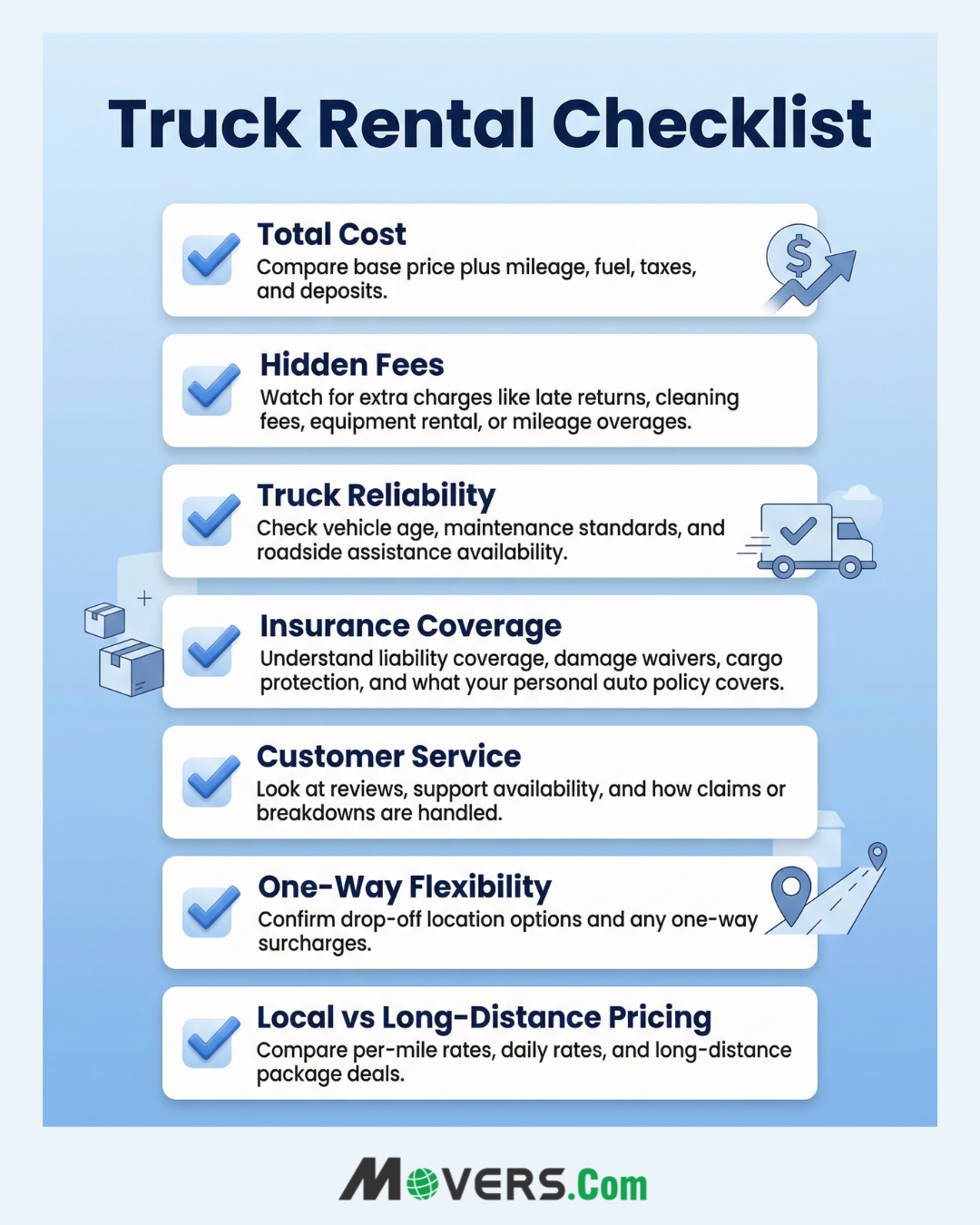
More important factors include:
- Total cost of the rental
- Extra fees added later in the bill
- Reliability and condition of the truck fleet
- Insurance coverage and liability protectio
- Customer service at the local branch
- One-way rental availabilit
- Differences between local and long-distance pricing
For example, two companies may advertise the same daily price but charge different mileage rates.
Another company may appear slightly more expensive but operate newer trucks that are less likely to break down.
When all your belongings are in the back of a truck hundreds of miles from home, reliability becomes extremely valuable.
The goal is not simply finding the cheapest truck. It is choosing the company that best fits your move.
The Three Types of Truck Rental Companies
Not all truck rental companies operate under the same model. Some focus on nationwide coverage, while others specialize in regional service or peer-to-peer rentals. Understanding these different categories makes it easier to compare companies realistically.
Truck rental companies generally fall into three categories.
- Large national rental companies
- Regional truck rental providers
- Peer-to-peer or privately owned truck rentals
Each category has advantages and limitations that vary depending on your moving situation.
Large National Truck Rental Companies
Large national companies dominate the truck rental industry in North America. They operate thousands of locations across many cities and states.
Their biggest advantage is availability.
Most large rental networks provide:
- One-way rentals between cities
- A wide range of truck size
- Extensive roadside assistance network
- Large fleets capable of handling peak moving season
For long-distance moves, that infrastructure becomes extremely valuable. Being able to pick up a truck in one city and return it in another state is something only large networks can reliably support.
However, size also introduces tradeoffs.
Because many locations operate as franchises, the experience can vary between branches. One location may provide excellent service while another may maintain older vehicles.
Large companies also advertise low starting prices but add additional costs for mileage, equipment, and insurance.
Convenience is the biggest strength of national rental companies. But convenience sometimes comes with higher overall costs.
Regional Truck Rental Companies
Regional truck rental companies operate within smaller geographic areas. Instead of serving the entire country, they focus on one region or several nearby states. At first glance this may seem limiting. However, smaller companies sometimes offer advantages larger chains cannot maintain.
These advantages may include:
- Newer vehicles
- More consistent service
- Shorter wait times at pickup locations
Because the operation is smaller, the company often maintains closer oversight of its trucks and locations.
However, regional companies usually have fewer drop-off locations and may not support cross-country moves.
For local moves, these companies can sometimes provide a very good experience. For long-distance moves, their limited network may make them less practical.
Renting a Truck from a Private Owner
Some online platforms now allow individuals to rent their trucks directly to others.
This model introduces more flexibility and sometimes lower pricing.
Potential advantages include:
- Flexible pickup schedules
- Competitive pricing in some cities
- Availability when rental locations are fully booked
However, this approach also introduces more uncertainty.
Private owners may not provide:
- regular maintenance checks
- roadside assistance
- replacement vehicles if problems occur
Because of that, peer-to-peer rentals require careful evaluation. For renters who value reliability and predictable service, traditional rental companies are usually the safer choice.
How Truck Rental Pricing Works
One of the biggest misunderstandings about truck rentals involves the advertised daily price.
Many renters assume the daily rate represents the full cost of the move. In reality, the daily rate is only one part of the total price.
Truck rentals usually include several cost components:
- Base rental rate
- Mileage charges
- Fuel costs
- Insurance or damage protection
- Equipment rentals
- Taxes and service fees
- Refundable security deposit
Mileage is often the biggest cost factor for local moves. Even small differences in mileage pricing can add up quickly during a full day of driving.
Fuel is another commonly underestimated expense. Large moving trucks typically average between 8 and 12 miles per gallon depending on size and load.
Insurance and equipment rentals add another layer of cost but often provide valuable protection and convenience.
Because of these variables, the most useful comparison is always the total estimated cost, not the advertised daily price.
Example Moving Truck Cost
Below is a typical breakdown for a short-distance move of roughly 200 miles.
Estimated total cost: $120 + $180 + $100 + $40 = $440
Actual prices vary by location, season, and truck size, but this example shows how multiple costs combine to form the final price.
Ideal Truck Rental for Local Moves
Local moves are usually influenced most by mileage pricing. Every mile you drive increases the total cost of the rental. This means the route you choose, the number of trips you make, and the distance between homes can all affect the final price.
When choosing a truck for a local move, focus on:
- Lower mileage rates
- Flexible rental hours
- Nearby pickup locations
- Availability of smaller trucks
Even a small difference in per-mile pricing can significantly change the final cost.
Convenient pickup locations also help reduce mileage before the truck is even loaded.
Ideal Truck Rental for Long Distance Moves
Long-distance moves shift the priorities in a different direction. When traveling hundreds of miles, reliability becomes far more important than small pricing differences. Mechanical issues on a long trip can cause serious disruptions, which is why dependable fleets and strong roadside support matter more.
Important factors include:
- Flat ratelong-distancepricing
- 24-hour roadside assistance
- Newer truck fleets
- Clear one-way rental policies
Even a well-maintained truck can experience problems. Strong roadside support ensures those problems can be handled quickly.
For long-distance moves, reliability and support matter more than saving a small amount of money.
Moving Truck "Size" Guide
Choosing the correct truck size prevents unnecessary stress and additional work on moving day. A truck that is too small can require multiple trips, while a truck that is too large may be harder to drive and consume more fuel.
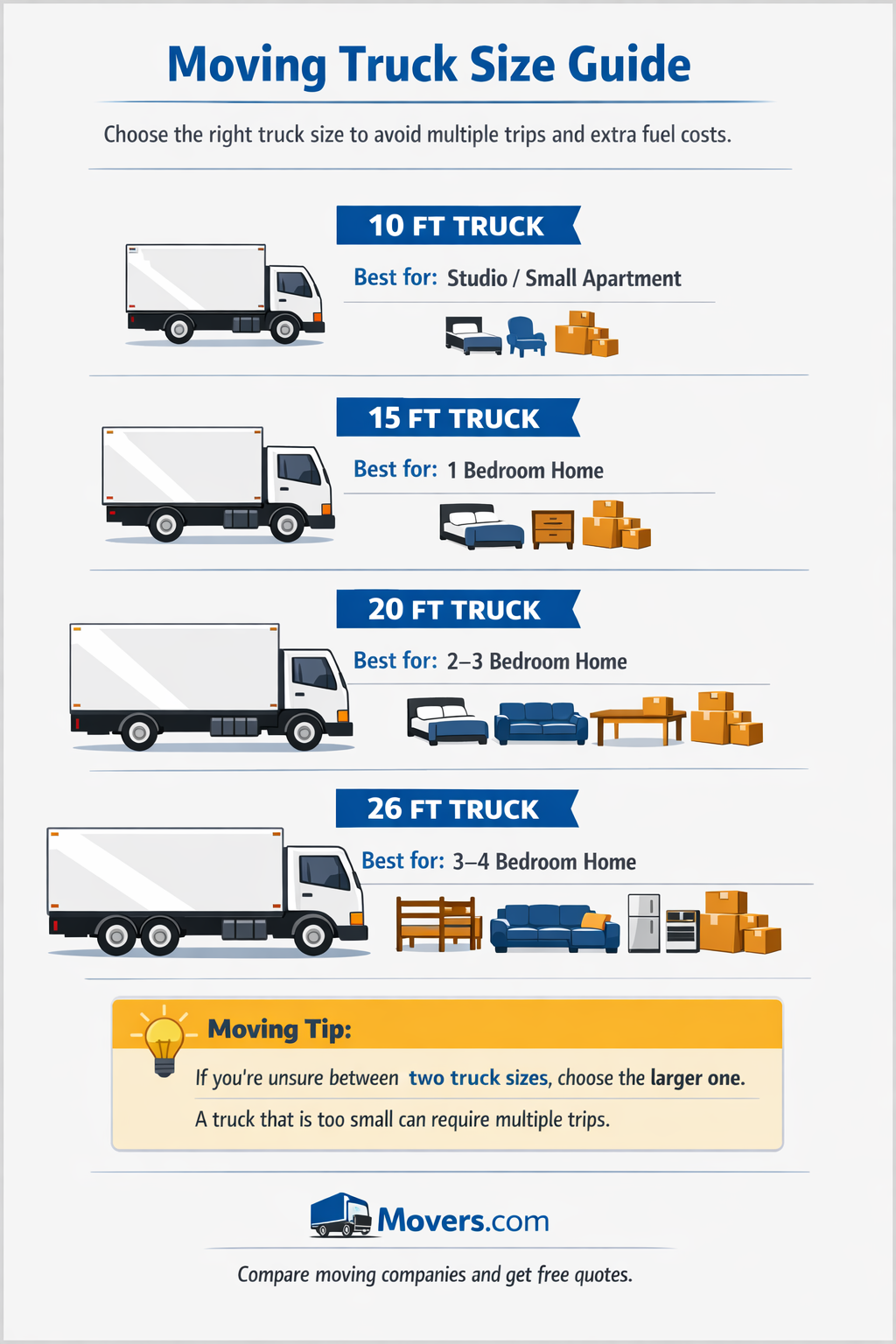
If you are unsure about the correct size, calling the rental location and describing your home is usually the easiest solution.
A short conversation can prevent hours of difficulty on moving day.
Insurance: The Risk Many Renters Overlook
Insurance coverage is one of the most misunderstood parts of renting a moving truck. Many renters assume their personal auto insurance or credit card benefits will fully cover a rental truck. That assumption is not always correct.
Before declining coverage, ask a few important questions:
- What happens if I damage the rental truck?
- What happens if another driver causes an accident?
- What happens if items inside the truck are damaged?
Understanding these risks allows you to decide whether additional protection is worth the cost.
Clear information lowers stress, especially during an already complex move.
How to Read Truck Rental Reviews Properly
Online reviews can provide valuable insight when comparing rental companies. However, star ratings alone rarely tell the full story. A better approach is to look for patterns in customer feedback.
Pay attention to repeated comments about:
- Billing disputes
- Truck breakdowns
- Poor return inspections
- Unexpected fees
Patterns across many reviews usually indicate genuine issues.
It is also helpful to read reviews of the specific branch where you plan to rent the truck. Large companies operate thousands of locations, and the service quality can vary between them.
When Renting a Truck May Not Be the Best Option
Truck rentals work well for many moves, but they are not ideal for every situation. Some moves may be easier with professional movers or container services. Situations where renting a truck may not be the best choice include:
- long distance moves over1,000 miles
- very heavy furniture or specialty items
- tight city areas with difficult parking
- situations where you cannot take time off work
- drivers uncomfortable operating large vehicles
In these cases, portable storage containers or professional movers may reduce stress and physical effort.
Editor's Note
Choosing the right moving truck rental company comes down to understanding your move. Compare total costs, choose the right truck size, and prioritize reliability for long-distance moves. With a little preparation, renting a moving truck can be a simple and affordable way to relocate.
Get expert moving tips and compare movers for free at Movers.com.
You can get free moving quotes from licensed and insured movers, compare moving companies near you, and plan your move with confidence using our step-by-step moving guides and checklists.
Whether you’re planning a local move, a long-distance relocation, or need help with packing and loading, Movers.com connects you with trusted moving professionals and practical tools to make moving easier and more affordable.
Questions? Talk to our moving specialists.