When people think about renting a moving truck, U-Haul is often the first company that comes to mind. With thousands of locations across the United States and decades in the moving industry, it has become one of the most recognizable names in DIY moving.
But brand recognition alone does not answer the real question most people have before renting a truck:
Is U-Haul actually worth it for your move?
Choosing a truck rental service affects more than just transportation. It influences your budget, timeline, and the overall stress level of moving day. Some renters love the affordability and availability of U-Haul trucks. Others run into surprises like mileage charges or limited availability during peak seasons.
This U-Haul truck rental review takes a close look at the company’s services, pricing, reliability, and overall experience so you can decide whether renting a U-Haul truck makes sense for your move.
By the end of this guide, you will understand:
- How U-Haul truck rentals work
- What customers like and dislike about the service
- U-Haul truck rental costs
- How U-Haul compares with other moving truck companies
- When renting a truck makes sense and when hiring movers may be easier
Moving should feel manageable, not overwhelming. Understanding what to expect from a rental truck service helps you plan the move with more confidence.
TL;DR - A Quick Look at U-Haul
U-Haul is the largest moving equipment rental companies in North America. The company operates through a network of corporate locations and independent dealers, which allows it to offer truck rentals in thousands of cities.
This large network is one reason U-Haul is so widely used for DIY moves.
Key services offered by U-Haul include:
- Moving truck rentals
- Cargo van and pickup truck rentals
- Moving trailers and towing equipment
- Portable storage containers
- Packing supplies and moving boxes
- Self-storage units
Because of its widespread availability, U-Haul often becomes the default option for many local moves, especially when renters need a truck quickly.
U-Haul Truck Rental Services: What You Actually Get
Renting a U-Haul truck is designed to be simple. Customers typically reserve a truck online, choose a pickup location, and select the rental period.
However, the rental itself is just one part of the service.
A typical U-Haul truck rental may include:
- A moving truck sized for your household
- Basic mileage allowance or mileage charges
- Optional insurance coverage
- Access to moving equipment like dollies and pads
- The ability to return the truck to another location for long-distance moves
Many renters appreciate the flexibility of the service, especially for short local moves where they can pick up and return the truck the same day.
However, the final cost often depends on additional factors like mileage and insurance coverage.
U-Haul Truck Rental Prices: What You Pay
One reason U-Haul attracts so many customers is the low advertised daily rate.
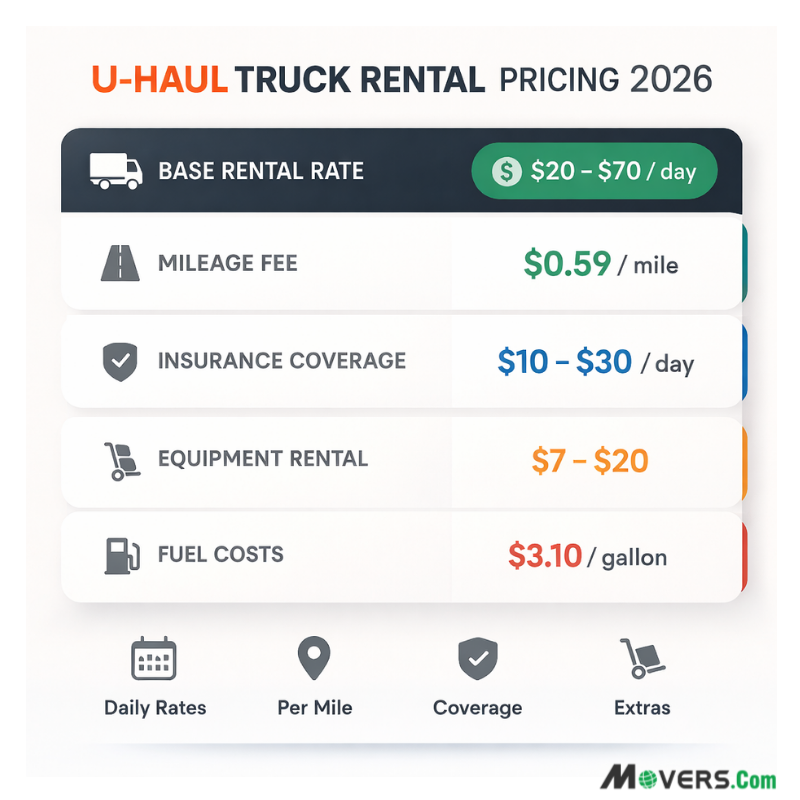
You may have seen ads offering truck rentals starting at $19.95 per day. While that base rate is technically accurate, the final U-Haul truck rental cost usually includes several additional charges.
Typical costs include:
| Base rental rate |
Price |
| Base rental rate |
$20 to $70 per day |
| Mileage fee |
$0.59 to $0.99 per mile |
| Insurance coverage |
$10 to $30 per day |
| Equipment rental |
$7 to $20 |
| Fuel costs |
$30 to $100 |
Because of these additional costs, most renters end up paying $100 to $400 for a local move.
For long-distance moves, the pricing structure is usually different. U-Haul may include a certain number of days and miles in the total rental cost, which can range from $600 to $2,000 or more depending on distance and truck size.
Understanding these costs in advance helps renters avoid surprises when returning the truck.
U-Haul Truck Sizes: Options for Different Moves
One strength of U-Haul is the wide range of truck sizes available. Customers can choose vehicles designed for small apartment moves or large household relocations.
Common U-Haul moving truck sizes include:
| Truck Type |
Best For |
| Cargo Van |
Small apartment or dorm moves |
| 10 ft truck |
Studio or small apartment |
| 15 ft truck |
1 to 2 bedroom homes |
| 20 ft truck |
2 to 3 bedroom homes |
| 26 ft truck |
3 to 4 bedroom homes |
Having multiple truck sizes allows renters to choose a vehicle that matches the size of their move, which can help reduce unnecessary costs.
However, selecting the wrong truck size can lead to multiple trips or difficulty loading large furniture.
What Customers Like About U-Haul Truck Rentals
Many customers choose U-Haul because it offers a combination of affordability, availability, and flexibility.
Common advantages include:
- Wide availability
U-Haul has one of the largest rental networks in the country, making it easy to find trucks in both large cities and smaller towns.
- Affordable base rates
The low daily rental price makes U-Haul attractive for short local moves.
- Multiple truck sizes
From cargo vans to 26-foot trucks, renters can choose a vehicle suited to their move.
- Flexible rental periods
Customers can often adjust pickup and return times depending on availability.
For simple local moves, these advantages can make U-Haul a practical option.
The Challenges Some Renters Experience
Like any service, U-Haul rentals also have limitations that customers should consider before booking.
- Mileage charges can increase the price
Local rentals often include per-mile charges that raise the total cost.
- Truck availability varies
During peak moving seasons, popular truck sizes may not be available at every location.
- Driving a large truck can be difficult
Many renters are not used to driving large vehicles, which can make navigation and parking challenging.
- DIY moving requires physical effort
Renting a truck means handling packing, loading, driving, and unloading yourself.
These factors do not make U-Haul a bad option, but they highlight why planning ahead is important.
Potential Additional Charges to Know
While U-Haul advertises low daily rental rates, the final bill can sometimes include additional fees that renters may not initially expect. These extra charges depend on the location, rental agreement, and how the truck is used during the move. Being aware of these possible costs before booking can help you budget more accurately and avoid surprises when returning the vehicle.
Some of the additional charges that may appear on a U-Haul rental include:
-
Environmental fees
Many locations charge a small environmental or regulatory fee that helps cover the cost of recycling motor oil, maintaining equipment responsibly, and meeting local environmental regulations.
-
Equipment protection packages
U-Haul offers optional protection plans that cover damage to the truck, cargo protection, and roadside assistance. While these packages provide peace of mind, they add to the daily rental cost.
-
Late return fees
Returning the truck later than the agreed rental period can result in additional charges. In some cases, you may be billed for an extra rental day if the vehicle is not returned on time.
-
Additional driver charges
If someone other than the primary renter plans to drive the truck, they may need to be added to the rental agreement. Depending on the location and policy, this may involve an extra fee.
-
Cleaning fees
Trucks are expected to be returned in reasonably clean condition. If the vehicle is returned with excessive dirt, trash, or debris, a cleaning fee may be applied.
Understanding these potential charges ahead of time makes it easier to estimate the real cost of a rental. Reviewing the rental agreement carefully and asking questions at pickup can help ensure there are no unexpected costs when your move is complete.
U-Haul vs Other Potential Additional Charges to KnowTruck Rental Companies
When comparing moving truck rental companies, U-Haul is often evaluated alongside providers like Penske and Budget.
Here is a simplified comparison.
| Feature |
U-Haul |
Penske |
Budget |
| Availability |
Very high |
Moderate |
Moderate |
| Base price |
Low |
Moderate |
Low |
| Truck condition |
Varies by location |
Generally newer |
Varies |
| Long-distance pricing |
Competitive |
Often better for long moves |
Moderate |
U-Haul tends to win in terms of availability and convenience, while some competitors may offer better pricing for certain long-distance moves. Penske is often preferred for long-distance moves because its trucks are newer and many rentals include unlimited mileage. Budget sometimes offers lower long-distance prices but has fewer locations than U-Haul.
For local moves, however, U-Haul remains one of the most accessible options.
Is U-Haul Worth It for Your Move?
Renting a U-Haul truck can be a good choice if your move is simple and manageable.
U-Haul works best when:
- The move is local
- You have help loading and unloading
- You want to keep costs low
- You are comfortable driving a moving truck
However, larger households and long-distance relocations may benefit from professional moving services.
Hiring movers can remove the stress of driving, lifting heavy furniture, and managing logistics.
When U-Haul May Not Be the Best Choice
Renting a U-Haul truck works well for many DIY moves, but it may not be the best option in every situation. Moving with a rental truck requires driving a large vehicle and handling all the packing, loading, and unloading yourself.
U-Haul may not be ideal if:
- You are moving a large household alone and do not have help with lifting or loading
- You are uncomfortable driving large vehicles like a 20-foot or 26-foot moving truck
- You need help packing or loading furniture during the move
- Your move involves tight city streets or limited parking
In these situations, hiring professional movers may save time and make the moving process less stressful.
An Easier Way to Plan Your Move
Truck rentals are only one part of the moving process. Packing, loading, transportation, and unloading all require time and effort.
Before committing to a DIY move, it can help to compare your options.
At Movers.com, you can quickly compare moving companies, services, and price estimates to find the option that fits your move.
Instead of guessing whether renting a truck or hiring movers is the better choice, you can review multiple options and choose the one that works best for your timeline and budget.
Getting moving quotes only takes a few minutes and can make planning your move significantly easier.
Editor's Note
Our guide, reviewed by our Moving Industry Analyst team, is based on publicly available pricing, customer reviews, and regular moving scenarios.
Get expert moving tips and compare movers for free at Movers.com. You can get free moving quotes from licensed and insured movers, compare moving companies near you, and plan your move with confidence using our step-by-step moving guides and checklists.
Whether you’re planning a local move, a long-distance relocation, or need help with packing and loading, Movers.com connects you with trusted moving professionals and practical tools to make moving easier and more affordable.
Questions? Talk to our moving specialists.